White-faced Whistling-Duck vs Ringed Teal
Dendrocygna viduata versus Callonetta leucophrys
Play a quiz with White-faced Whistling-Duck and Ringed Teal
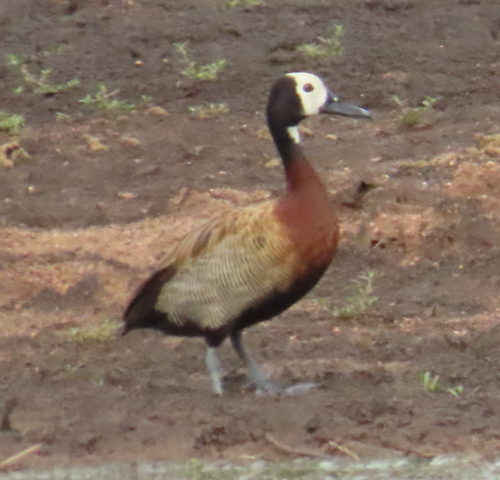
White-faced Whistling-Duck
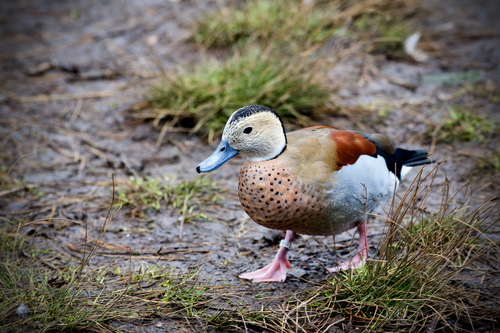
Ringed Teal
In short
The White-faced Whistling-Duck and Ringed Teal can be distinguished primarily by their facial markings and overall body shape. The White-faced Whistling-Duck has a distinctive white face and a more elongated body, while the Ringed Teal features a striking chestnut body with a white face patch and a more compact form. Both species are waterfowl but differ in behavior and habitat preferences.
Identification tips
- Look for the white face of the White-faced Whistling-Duck, contrasting with its dark neck. 2. Note the chestnut body and white face patch of the Ringed Teal. 3. Observe the body shape: elongated for the Whistling-Duck, compact for the Teal. 4. Consider the habitat: open water for Whistling-Ducks, wooded wetlands for Teals. 5. Listen for the distinctive whistling calls of the Whistling-Duck.
Size
The White-faced Whistling-Duck is generally larger and more elongated compared to the smaller, more compact Ringed Teal.
Plumage
The White-faced Whistling-Duck has a white face with a dark crown and neck, and a mostly brown body. In contrast, the Ringed Teal has a chestnut body with a white face patch and a distinctive black ring around the neck in males. Females are duller but still show the white face patch.
Behaviour
White-faced Whistling-Ducks are often seen in large flocks and are more likely to be found in open water. Ringed Teals are more solitary or found in pairs and often seen in wooded wetlands.
Habitat
White-faced Whistling-Ducks prefer open freshwater habitats like lakes and marshes, while Ringed Teals are more commonly found in wooded wetlands and forested areas near water.
Voice
White-faced Whistling-Ducks are known for their high-pitched whistling calls, often heard in flight. Ringed Teals have softer, more subdued calls that are less distinctive.