Birdr

White-headed Vulture vs White-backed Mousebird

Trigonoceps occipitalis versus Colius colius

Play a quiz with White-headed Vulture and White-backed Mousebird
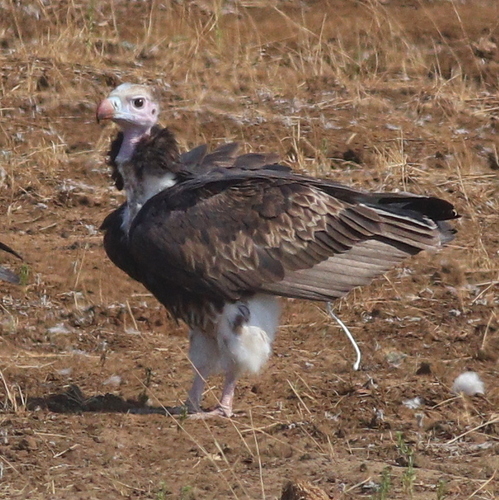
White-headed Vulture (Trigonoceps occipitalis) White-headed Vulture
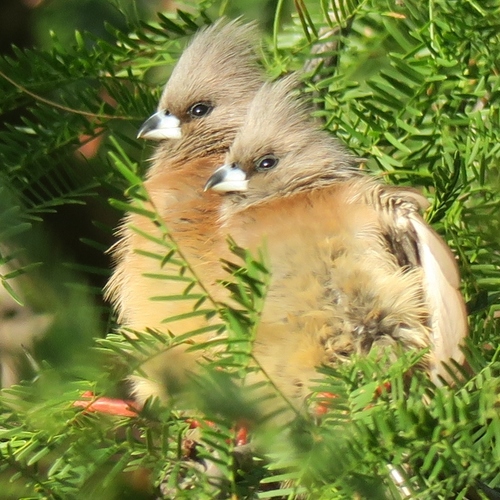
White-backed Mousebird (Colius colius) White-backed Mousebird

Media

Loading…

In short

The White-headed Vulture and the White-backed Mousebird are easily distinguished by size and structure. The vulture is a large raptor with a distinctive white head, while the mousebird is a small, slender bird with a long tail. Both species occupy different habitats and have different behaviors.

Identification tips

  1. Size and Structure: Look for the large size and broad wings of the vulture versus the small size and long tail of the mousebird. 2. Plumage: Note the white head and contrasting black body of the vulture compared to the grey body and white back of the mousebird. 3. Behavior: Observe flight patterns; vultures soar, while mousebirds flit through vegetation. 4. Habitat: Consider the environment; vultures in open areas, mousebirds in scrub.

Size

The White-headed Vulture is a large bird with a wingspan of up to 2.3 meters, whereas the White-backed Mousebird is much smaller, about the size of a sparrow with a long tail.

Plumage

The vulture has a striking white head with a black body and wings, while the mousebird has a greyish body with a white back and a long, pointed tail. The vulture's plumage is bold and contrasting, whereas the mousebird's is more subtle.

Behaviour

White-headed Vultures are often seen soaring high in the sky or perched on trees, whereas White-backed Mousebirds are typically found in small flocks, moving through vegetation in search of fruit.

Habitat

White-headed Vultures are found in open savannas and woodlands, while White-backed Mousebirds prefer scrubby areas and gardens.

Voice

The White-headed Vulture is generally silent, occasionally making hissing sounds, whereas the White-backed Mousebird has a variety of soft calls and chatters.

Submit a better description

Use the same sections as the comparison. Your text is published immediately.

The White-headed Vulture and the White-backed Mousebird are easily distinguished by size and structure. The vulture is a large raptor with a distinctive white head, while the mousebird is a small, slender bird with a long tail. Both species occupy different habitats and have different behaviors.

  1. Size and Structure: Look for the large size and broad wings of the vulture versus the small size and long tail of the mousebird. 2. Plumage: Note the white head and contrasting black body of the vulture compared to the grey body and white back of the mousebird. 3. Behavior: Observe flight patterns; vultures soar, while mousebirds flit through vegetation. 4. Habitat: Consider the environment; vultures in open areas, mousebirds in scrub.

The White-headed Vulture is a large bird with a wingspan of up to 2.3 meters, whereas the White-backed Mousebird is much smaller, about the size of a sparrow with a long tail.

The vulture has a striking white head with a black body and wings, while the mousebird has a greyish body with a white back and a long, pointed tail. The vulture's plumage is bold and contrasting, whereas the mousebird's is more subtle.

White-headed Vultures are often seen soaring high in the sky or perched on trees, whereas White-backed Mousebirds are typically found in small flocks, moving through vegetation in search of fruit.

White-headed Vultures are found in open savannas and woodlands, while White-backed Mousebirds prefer scrubby areas and gardens.

The White-headed Vulture is generally silent, occasionally making hissing sounds, whereas the White-backed Mousebird has a variety of soft calls and chatters.

Discard your changes?

You have unsaved edits. If you leave now, those changes will be lost.

White-headed Vulture · White-backed Mousebird · My Tricky Birds