
White Ibis vs Glossy Ibis
Eudocimus albus versus Plegadis falcinellus
Play a quiz with White Ibis and Glossy Ibis
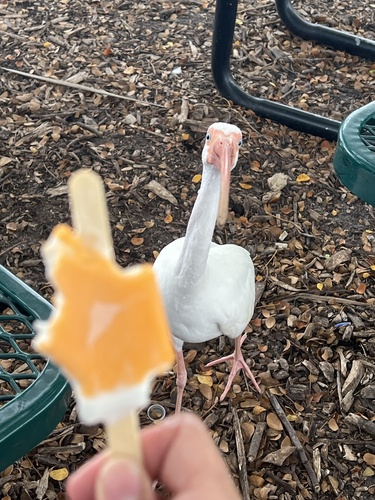 White Ibis
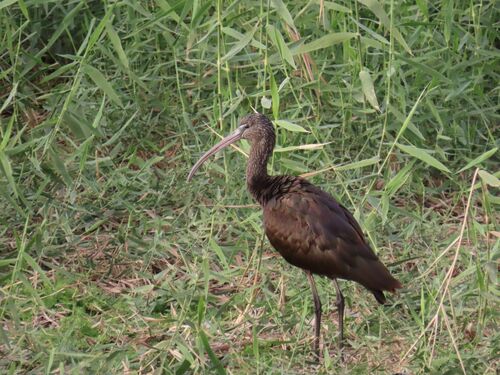 Glossy Ibis
In short
The most reliable field mark between White Ibis and Glossy Ibis is overall plumage color in adults: White Ibis is bright white with black wingtips (seen mainly in flight), while Glossy Ibis is a dark, chestnut-brown bird with iridescent green or purple wings. Immature White Ibis are brown with white underparts and rump, making them confusingly similar to Glossy Ibis at a distance, but Glossy Ibis juveniles are uniformly dark brown without white on the belly or rump. Bill and leg color also differ: adult White Ibis shows a long, bright red-orange bill and legs, while Glossy Ibis has a duller, brownish bill and dark legs. Both species fly with neck and legs outstretched, but White Ibis is bulkier and shorter-legged. Careful attention to age, especially in flight, is crucial for separating immatures.
Identification tips
- Adult plumage: White Ibis is entirely white with black wingtips (visible in flight); Glossy Ibis is dark reddish-brown with iridescent wings and never shows white plumage.
- Immature plumage: Immature White Ibis is brown above with white underparts and rump; Glossy Ibis immatures are uniformly dark brown with no white on the belly or rump. This is the most useful mark for separating juveniles and non-breeding birds, especially in flight.
- Bill color: Adult White Ibis has a long, downcurved, bright red-orange bill; Glossy Ibis has a duller, brownish bill. Bill color is less reliable in immatures but still helpful in good light.
- Leg color: White Ibis adults have red-orange legs (deepening to purple-red in peak breeding), while Glossy Ibis legs are dark reddish-brown. Leg color can be hard to see at a distance but is useful at close range.
- Facial skin: Glossy Ibis in breeding plumage shows a narrow blue or cobalt facial border; White Ibis has pink facial skin, especially obvious in adults.
- Structure: White Ibis is bulkier and relatively short-legged; Glossy Ibis is slimmer and more elongated. In mixed flocks, White Ibis stands out as heavier and more compact.
- Flight pattern: Both fly with neck and legs outstretched, but White Ibis often appears heavier and more direct; Glossy Ibis is more graceful and slender in flight.
- Wing pattern in flight: Only adult White Ibis shows black wingtips on otherwise white wings; Glossy Ibis wings are uniformly dark and iridescent, with no white or black contrast.
- Habitat: White Ibis is more coastal and favors open wetlands; Glossy Ibis prefers inland marshes with dense vegetation but can overlap in some areas.
- Group composition: In mixed flocks, look for the white or partially white birds (White Ibis) among the uniformly dark ones (Glossy Ibis).
- Posture and feeding: Both species wade and probe in shallow water, but White Ibis may appear more robust and less delicate than Glossy Ibis.
- Seasonal changes: White Ibis bill and leg color intensify in breeding season; Glossy Ibis develops a blue facial border. These marks are subtle but can help in close views.
- Sex differences: Both species show little sexual dimorphism in plumage, but male White Ibis are larger and have longer, stouter bills than females; this is not a reliable field mark unless birds are side by side.
- Juvenile confusion: Immature White Ibis can be mistaken for Glossy Ibis, but check for white underparts and rump; if absent, suspect Glossy Ibis.
- When in doubt: If the bird is uniformly dark with no white anywhere, it is a Glossy Ibis. If it shows any white on the underparts or rump, especially in a brown bird, it is an immature White Ibis.
Size
White Ibis is the larger and bulkier of the two, with an average adult mass of about 900 g compared to Glossy Ibis at 633 g [wikidata]. White Ibis appears more compact and relatively short-legged for a large wader, while Glossy Ibis is slimmer and more elongated. In mixed flocks, White Ibis stands out as the heavier, stockier bird, but size alone is not always reliable due to overlap and posture.
Plumage
- Juvenile/immature birds: Immature White Ibis are mostly brown above with white underparts and rump, and as they mature, white feathers appear on the back, eventually replacing brown over two years. Glossy Ibis juveniles and non-breeding adults are uniformly dark brown, with no white on the belly or rump at any age. This makes the presence or absence of white on the underparts and rump the key mark for immatures in flight or at rest.
- Adults: Adult White Ibis is entirely white except for black wingtips, which are usually only visible in flight. Glossy Ibis adults have a reddish-brown body with strongly iridescent (green, bronze, or purple) wings and back, and never show white plumage. During breeding, Glossy Ibis has a subtle white facial border, but this is much less obvious than in similar species and not present in White Ibis.
- Bill and legs: Adult White Ibis has a bright red-orange downcurved bill and legs, intensifying in breeding season; Glossy Ibis has a brownish bill and dark legs, with facial skin bordered in blue-grey or cobalt blue depending on season.
Behaviour
Both species fly with neck and legs outstretched, often in loose lines or V formations. White Ibis is noted for flying in undulating lines with alternating flapping and gliding, sometimes soaring in circles at high altitudes. Glossy Ibis also forms V formations and is graceful in flight, but is generally more nomadic and dispersive, especially after breeding. Both species are social, often seen in flocks, but White Ibis may appear more compact and heavier in flight.
Habitat
White Ibis is most often found in coastal and near-coastal wetlands of the southeastern US, Gulf Coast, and Caribbean, favoring open marshes, mudflats, and shallow waters. Glossy Ibis prefers freshwater or brackish wetlands with dense emergent vegetation, such as reeds and papyrus, and is less common in coastal habitats. Glossy Ibis is more likely to be found in inland marshes, floodplains, and even irrigated farmland, and roosts communally in trees, sometimes far from feeding areas. Habitat overlap does occur, especially in migration or mixed colonies, but White Ibis is more tied to open, coastal settings.