Birdr

White-lined Tanager vs Fulvous Shrike-Tanager

Tachyphonus rufus versus Lanio fulvus

Play a quiz with White-lined Tanager and Fulvous Shrike-Tanager
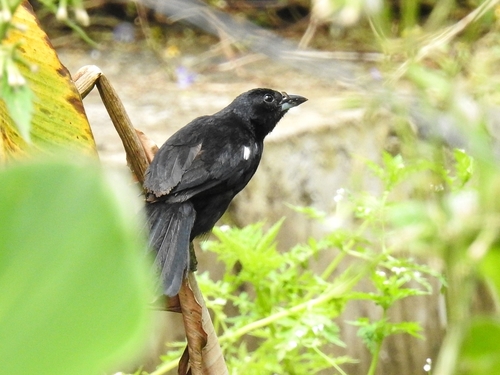
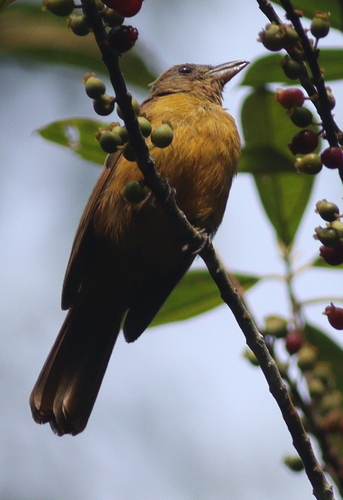
White-lined Tanager (Tachyphonus rufus) White-lined Tanager
Fulvous Shrike-Tanager (Lanio fulvus) Fulvous Shrike-Tanager

Media

Loading…

In short

The White-lined Tanager is best identified by the white underwing coverts visible in flight, while the Fulvous Shrike-Tanager is noted for its role as a sentinel in mixed-species flocks. Both species belong to the tanager family but differ in behavior and subtle plumage details.

Identification tips

  1. Look for white underwing coverts in flight for White-lined Tanager. 2. Note the fulvous coloration and flock-leading behavior for Fulvous Shrike-Tanager. 3. Observe habitat preference: edges and clearings for White-lined, forest interiors for Fulvous Shrike-Tanager.

Size

Both species are similar in size, typical of medium-sized tanagers.

Plumage

Male White-lined Tanagers are black with white underwing coverts, visible in flight, while females are rufous brown. Fulvous Shrike-Tanagers have a more uniform fulvous or tawny coloration, lacking the stark white markings.

Behaviour

White-lined Tanagers are often seen in pairs, moving through undergrowth. Fulvous Shrike-Tanagers act as leaders in mixed-species flocks, often serving as sentinels.

Habitat

White-lined Tanagers prefer open forests and edges near water, while Fulvous Shrike-Tanagers are typically found in forest interiors, often leading mixed-species flocks.

Voice

Fulvous Shrike-Tanagers are known for their loud calls that mobilize flocks, while White-lined Tanagers give contact calls as they move through their habitat.

Submit a better description

Use the same sections as the comparison. Your text is published immediately.

The White-lined Tanager is best identified by the white underwing coverts visible in flight, while the Fulvous Shrike-Tanager is noted for its role as a sentinel in mixed-species flocks. Both species belong to the tanager family but differ in behavior and subtle plumage details.

  1. Look for white underwing coverts in flight for White-lined Tanager. 2. Note the fulvous coloration and flock-leading behavior for Fulvous Shrike-Tanager. 3. Observe habitat preference: edges and clearings for White-lined, forest interiors for Fulvous Shrike-Tanager.

Both species are similar in size, typical of medium-sized tanagers.

Male White-lined Tanagers are black with white underwing coverts, visible in flight, while females are rufous brown. Fulvous Shrike-Tanagers have a more uniform fulvous or tawny coloration, lacking the stark white markings.

White-lined Tanagers are often seen in pairs, moving through undergrowth. Fulvous Shrike-Tanagers act as leaders in mixed-species flocks, often serving as sentinels.

White-lined Tanagers prefer open forests and edges near water, while Fulvous Shrike-Tanagers are typically found in forest interiors, often leading mixed-species flocks.

Fulvous Shrike-Tanagers are known for their loud calls that mobilize flocks, while White-lined Tanagers give contact calls as they move through their habitat.

Discard your changes?

You have unsaved edits. If you leave now, those changes will be lost.

White-lined Tanager · Fulvous Shrike-Tanager · My Tricky Birds