White-naped Crane vs Hooded Crane
Antigone vipio versus Grus monacha
Play a quiz with White-naped Crane and Hooded Crane
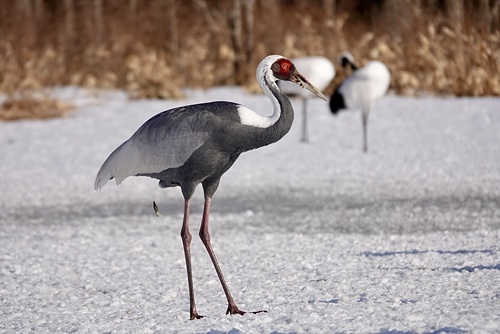
White-naped Crane
Hooded Crane
In short
The White-naped Crane and Hooded Crane can be distinguished primarily by their head and neck coloration. The White-naped Crane has a distinctive white stripe running from the crown down the back of the neck, while the Hooded Crane has a white head and neck with a contrasting dark face. Both species are similar in size and structure, making plumage the most reliable field mark.
Identification tips
- Look for the white stripe down the back of the neck for White-naped Crane. 2. Note the white head and neck with a dark face for Hooded Crane. 3. Focus on head and neck patterns rather than size or behavior. 4. Consider the location and season, but rely on plumage for accurate identification.
Size
Both species are similar in size, typical of cranes, with no significant differences in structure such as bill length or wing shape.
Plumage
The White-naped Crane features a white stripe from the crown to the nape, contrasting with its gray body. The Hooded Crane has a white head and neck but a dark face, creating a hooded appearance. These head and neck patterns are the key distinguishing features.
Behaviour
Both species exhibit typical crane behaviors, including elaborate courtship dances and similar foraging habits. Behavior alone is not a reliable differentiator.
Habitat
Both species can be found in wetlands and agricultural fields during migration and wintering. They share similar habitat preferences, so location alone may not aid in identification.
Voice
Vocalizations are not a primary distinguishing feature between these two species, as both have similar crane calls. Specific call differences are subtle and not easily distinguished in the field.