Birdr

White-necked Thrush vs Varzea Thrush

Turdus albicollis versus Turdus sanchezorum

Play a quiz with White-necked Thrush and Varzea Thrush
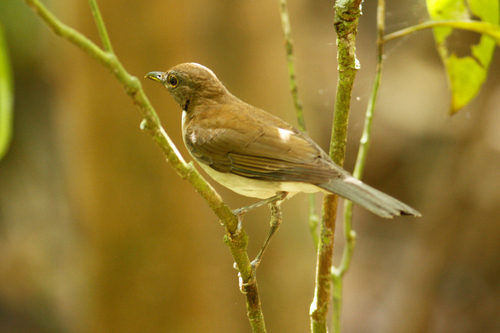
White-necked Thrush (Turdus albicollis) White-necked Thrush
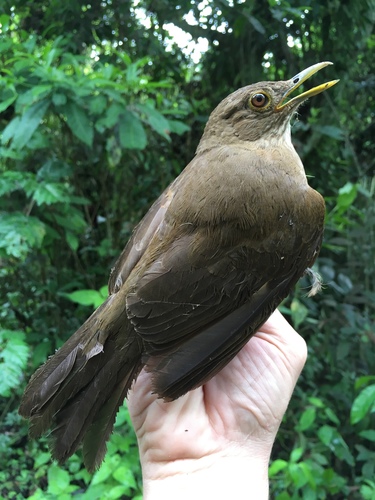
Varzea Thrush (Turdus sanchezorum) Varzea Thrush

Media

Loading…

In short

The White-necked Thrush and Varzea Thrush are similar in appearance but can be distinguished by habitat and subtle plumage differences. The White-necked Thrush is typically found in forest interiors, while the Varzea Thrush is associated with river floodplain forests. Observing their habitat and subtle plumage details can aid in identification.

Identification tips

  1. Habitat: Note the environment; White-necked Thrush in dense forest, Varzea Thrush in floodplain forests. 2. Plumage: Look for the white neck in White-necked Thrush. 3. Behavior: Observe feeding habits; White-necked Thrush may join ant swarms.

Size

Both species are similar in size, typical of medium-sized thrushes.

Plumage

The White-necked Thrush has a distinctive white throat and neck, which contrasts with its darker upperparts. The Varzea Thrush lacks this strong contrast, generally having more uniform coloration without the pronounced white neck.

Behaviour

White-necked Thrushes are often seen visiting fruiting trees and may descend to the ground at ant swarms. Varzea Thrushes are less documented in behavior but are likely to be seen in their specific habitat.

Habitat

White-necked Thrushes prefer forest interiors, while Varzea Thrushes are found in river floodplain forests and occasionally in more open forests and savannas on white sand soils.

Voice

Specific vocalization differences are not well-documented, and both species may have similar calls typical of thrushes.

Submit a better description

Use the same sections as the comparison. Your text is published immediately.

The White-necked Thrush and Varzea Thrush are similar in appearance but can be distinguished by habitat and subtle plumage differences. The White-necked Thrush is typically found in forest interiors, while the Varzea Thrush is associated with river floodplain forests. Observing their habitat and subtle plumage details can aid in identification.

  1. Habitat: Note the environment; White-necked Thrush in dense forest, Varzea Thrush in floodplain forests. 2. Plumage: Look for the white neck in White-necked Thrush. 3. Behavior: Observe feeding habits; White-necked Thrush may join ant swarms.

Both species are similar in size, typical of medium-sized thrushes.

The White-necked Thrush has a distinctive white throat and neck, which contrasts with its darker upperparts. The Varzea Thrush lacks this strong contrast, generally having more uniform coloration without the pronounced white neck.

White-necked Thrushes are often seen visiting fruiting trees and may descend to the ground at ant swarms. Varzea Thrushes are less documented in behavior but are likely to be seen in their specific habitat.

White-necked Thrushes prefer forest interiors, while Varzea Thrushes are found in river floodplain forests and occasionally in more open forests and savannas on white sand soils.

Specific vocalization differences are not well-documented, and both species may have similar calls typical of thrushes.

Discard your changes?

You have unsaved edits. If you leave now, those changes will be lost.

White-necked Thrush · Varzea Thrush · My Tricky Birds