Birdr

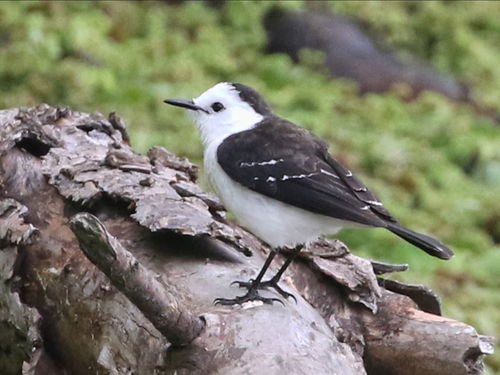
White-rumped Monjita vs Black-backed Water-Tyrant

Xolmis velatus versus Fluvicola albiventer

Play a quiz with White-rumped Monjita and Black-backed Water-Tyrant
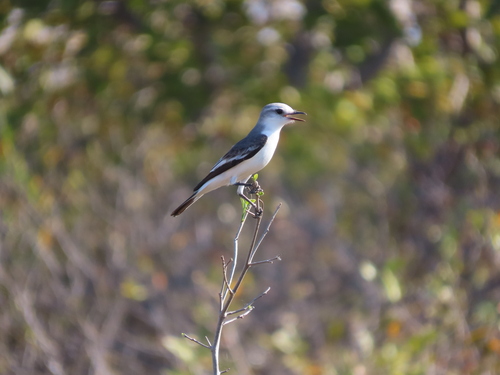
White-rumped Monjita (Xolmis velatus) White-rumped Monjita
Black-backed Water-Tyrant (Fluvicola albiventer) Black-backed Water-Tyrant

Media

Loading…

In short

The White-rumped Monjita and Black-backed Water-Tyrant can be distinguished by their contrasting back and rump colors. The White-rumped Monjita has a distinctive white rump and black back, while the Black-backed Water-Tyrant features a black back with a white underbody. Both species are part of the Tyrant Flycatchers family, but their habitat preferences and behaviors differ.

Identification tips

  1. Look for the white rump of the White-rumped Monjita when it flies. 2. Note the black mask of the Black-backed Water-Tyrant. 3. Consider the habitat: open fields for Monjita, wetland areas for Water-Tyrant. 4. Observe behavior: Monjitas perch openly, Water-Tyrants forage near water.

Size

Both species are similar in size, typical of small to medium-sized flycatchers.

Plumage

The White-rumped Monjita has a white rump and a black back, with white underparts and a black tail. In contrast, the Black-backed Water-Tyrant has a black back and a white underbody, with a black mask extending from the bill through the eyes.

Behaviour

White-rumped Monjitas often perch conspicuously on open branches or wires, while Black-backed Water-Tyrants are more likely to be seen near water, often foraging along the edges.

Habitat

White-rumped Monjitas are typically found in open habitats such as savannas and grasslands, whereas Black-backed Water-Tyrants prefer wetland areas and are often associated with water bodies.

Voice

Vocalizations are not a primary distinguishing feature between these species, and specific calls are not well-documented for field differentiation.

Submit a better description

Use the same sections as the comparison. Your text is published immediately.

The White-rumped Monjita and Black-backed Water-Tyrant can be distinguished by their contrasting back and rump colors. The White-rumped Monjita has a distinctive white rump and black back, while the Black-backed Water-Tyrant features a black back with a white underbody. Both species are part of the Tyrant Flycatchers family, but their habitat preferences and behaviors differ.

  1. Look for the white rump of the White-rumped Monjita when it flies. 2. Note the black mask of the Black-backed Water-Tyrant. 3. Consider the habitat: open fields for Monjita, wetland areas for Water-Tyrant. 4. Observe behavior: Monjitas perch openly, Water-Tyrants forage near water.

Both species are similar in size, typical of small to medium-sized flycatchers.

The White-rumped Monjita has a white rump and a black back, with white underparts and a black tail. In contrast, the Black-backed Water-Tyrant has a black back and a white underbody, with a black mask extending from the bill through the eyes.

White-rumped Monjitas often perch conspicuously on open branches or wires, while Black-backed Water-Tyrants are more likely to be seen near water, often foraging along the edges.

White-rumped Monjitas are typically found in open habitats such as savannas and grasslands, whereas Black-backed Water-Tyrants prefer wetland areas and are often associated with water bodies.

Vocalizations are not a primary distinguishing feature between these species, and specific calls are not well-documented for field differentiation.

Discard your changes?

You have unsaved edits. If you leave now, those changes will be lost.

White-rumped Monjita · Black-backed Water-Tyrant · My Tricky Birds