Birdr

White-rumped Sandpiper vs Least Sandpiper

Calidris fuscicollis versus Calidris minutilla

Play a quiz with White-rumped Sandpiper and Least Sandpiper

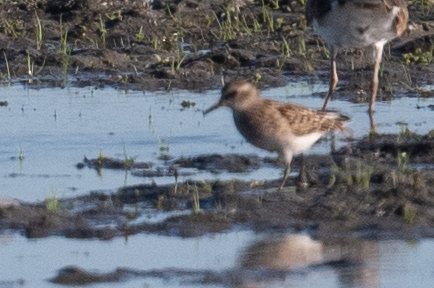
White-rumped Sandpiper (Calidris fuscicollis) White-rumped Sandpiper
Least Sandpiper (Calidris minutilla) Least Sandpiper

Media

Loading…

In short

The White-rumped Sandpiper is best identified by its distinctive white rump patch, which is visible in flight, while the Least Sandpiper lacks this feature. Both species are small sandpipers, but the Least Sandpiper is the smallest, with a more delicate structure.

Identification tips

  1. Look for the white rump patch on the White-rumped Sandpiper in flight. 2. Note the smaller size and more delicate structure of the Least Sandpiper. 3. Compare plumage tones: the Least Sandpiper is often darker and more rufous. 4. Observe habitat preferences: White-rumped Sandpipers are more likely in tundra, while Least Sandpipers prefer muddy freshwater edges.

Size

The White-rumped Sandpiper is slightly larger and more robust than the Least Sandpiper, which is the smallest sandpiper in the world.

Plumage

White-rumped Sandpipers have a white rump patch visible in flight, while Least Sandpipers do not. Both have brownish upperparts, but the Least Sandpiper often appears darker and more rufous, especially in breeding plumage.

Behaviour

Both species forage in small groups and associate with other sandpipers. The White-rumped Sandpiper may defend feeding territories, while the Least Sandpiper is known for its 'surface tension transport' feeding method.

Habitat

White-rumped Sandpipers breed in wet, hummock-tundra near marshy ponds in the Arctic, while Least Sandpipers prefer muddy edges of freshwater ponds and marshes during migration and winter.

Voice

The White-rumped Sandpiper has a distinct call, especially near its nest, while the Least Sandpiper's vocalizations are more noted on breeding grounds.

Submit a better description

Use the same sections as the comparison. Your text is published immediately.

The White-rumped Sandpiper is best identified by its distinctive white rump patch, which is visible in flight, while the Least Sandpiper lacks this feature. Both species are small sandpipers, but the Least Sandpiper is the smallest, with a more delicate structure.

  1. Look for the white rump patch on the White-rumped Sandpiper in flight. 2. Note the smaller size and more delicate structure of the Least Sandpiper. 3. Compare plumage tones: the Least Sandpiper is often darker and more rufous. 4. Observe habitat preferences: White-rumped Sandpipers are more likely in tundra, while Least Sandpipers prefer muddy freshwater edges.

The White-rumped Sandpiper is slightly larger and more robust than the Least Sandpiper, which is the smallest sandpiper in the world.

White-rumped Sandpipers have a white rump patch visible in flight, while Least Sandpipers do not. Both have brownish upperparts, but the Least Sandpiper often appears darker and more rufous, especially in breeding plumage.

Both species forage in small groups and associate with other sandpipers. The White-rumped Sandpiper may defend feeding territories, while the Least Sandpiper is known for its 'surface tension transport' feeding method.

White-rumped Sandpipers breed in wet, hummock-tundra near marshy ponds in the Arctic, while Least Sandpipers prefer muddy edges of freshwater ponds and marshes during migration and winter.

The White-rumped Sandpiper has a distinct call, especially near its nest, while the Least Sandpiper's vocalizations are more noted on breeding grounds.

Discard your changes?

You have unsaved edits. If you leave now, those changes will be lost.

White-rumped Sandpiper · Least Sandpiper · My Tricky Birds