Birdr

White-rumped Seedeater vs Black-faced Grassquit

Crithagra leucopygia versus Melanospiza bicolor

Play a quiz with White-rumped Seedeater and Black-faced Grassquit
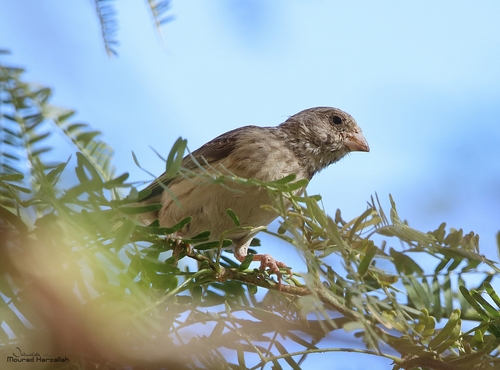
White-rumped Seedeater (Crithagra leucopygia) White-rumped Seedeater
Black-faced Grassquit (Melanospiza bicolor) Black-faced Grassquit

Media

Loading…

In short

The White-rumped Seedeater and Black-faced Grassquit can be distinguished by their distinctive facial markings and rump coloration. The White-rumped Seedeater has a prominent white rump and a more uniform brownish body, while the Black-faced Grassquit is noted for its black face and lack of a white rump. Both species are small and similar in size, but their plumage and facial features are key identifiers.

Identification tips

Check for the white rump on the White-rumped Seedeater, especially in flight. Look for the black face on the Black-faced Grassquit. Note the habitat: open areas for the seedeater and bushy areas for the grassquit. Use facial and rump coloration as primary identifiers.

Size

Both species are small finches, similar in size, making size a less reliable differentiator.

Plumage

The White-rumped Seedeater has a white rump and a generally brownish body. In contrast, the Black-faced Grassquit features a black face and lacks the white rump, with more uniform dark plumage.

Behaviour

Both species exhibit typical finch-like behavior, often seen foraging on the ground or in low vegetation. Behavioral differences are subtle and not the best field marks.

Habitat

The White-rumped Seedeater is typically found in open savannas and grasslands, while the Black-faced Grassquit prefers more scrubby and bushy areas. However, there can be overlap in edge habitats.

Voice

Vocalizations are not the most reliable field marks for these species, as they can be variable and similar. Observers should focus on visual identification.

Submit a better description

Use the same sections as the comparison. Your text is published immediately.

The White-rumped Seedeater and Black-faced Grassquit can be distinguished by their distinctive facial markings and rump coloration. The White-rumped Seedeater has a prominent white rump and a more uniform brownish body, while the Black-faced Grassquit is noted for its black face and lack of a white rump. Both species are small and similar in size, but their plumage and facial features are key identifiers.

Check for the white rump on the White-rumped Seedeater, especially in flight. Look for the black face on the Black-faced Grassquit. Note the habitat: open areas for the seedeater and bushy areas for the grassquit. Use facial and rump coloration as primary identifiers.

Both species are small finches, similar in size, making size a less reliable differentiator.

The White-rumped Seedeater has a white rump and a generally brownish body. In contrast, the Black-faced Grassquit features a black face and lacks the white rump, with more uniform dark plumage.

Both species exhibit typical finch-like behavior, often seen foraging on the ground or in low vegetation. Behavioral differences are subtle and not the best field marks.

The White-rumped Seedeater is typically found in open savannas and grasslands, while the Black-faced Grassquit prefers more scrubby and bushy areas. However, there can be overlap in edge habitats.

Vocalizations are not the most reliable field marks for these species, as they can be variable and similar. Observers should focus on visual identification.

Discard your changes?

You have unsaved edits. If you leave now, those changes will be lost.

White-rumped Seedeater · Black-faced Grassquit · My Tricky Birds