Birdr

White-rumped Shama vs Thrush Nightingale

Copsychus malabaricus versus Luscinia luscinia

Play a quiz with White-rumped Shama and Thrush Nightingale
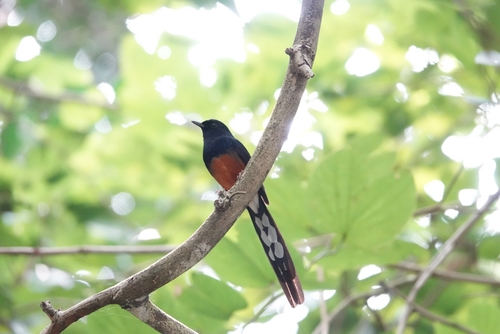
White-rumped Shama (Copsychus malabaricus) White-rumped Shama
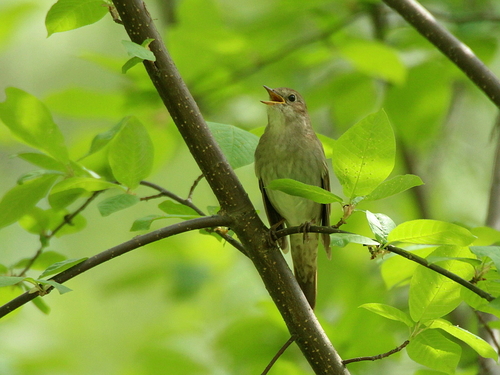
Thrush Nightingale (Luscinia luscinia) Thrush Nightingale

Media

Loading…

In short

The White-rumped Shama and the Thrush Nightingale can be distinguished by their tail and plumage. The Shama has a striking white rump and long tail, while the Nightingale is more uniformly brown. Both species are known for their melodious songs, but the Shama often mimics other birds.

Identification tips

Size

Both species are similar in size, but the White-rumped Shama has a longer tail, giving it a more elongated appearance.

Plumage

The White-rumped Shama is notable for its glossy black upperparts, white rump, and long tail. In contrast, the Thrush Nightingale is more uniformly brown with no distinct white rump.

Behaviour

The Shama is often seen in dense undergrowth and is more likely to be heard than seen due to its mimicking abilities. The Thrush Nightingale is also elusive but does not mimic other birds.

Habitat

The White-rumped Shama prefers dense undergrowth in forests and suburban areas, while the Thrush Nightingale is typically found in dense, damp woodlands and thickets.

Voice

Both species have melodious songs, but the Shama's song is more varied due to its mimicry. The Thrush Nightingale's song is rich and melodic but lacks mimicry.

Submit a better description

Use the same sections as the comparison. Your text is published immediately.

The White-rumped Shama and the Thrush Nightingale can be distinguished by their tail and plumage. The Shama has a striking white rump and long tail, while the Nightingale is more uniformly brown. Both species are known for their melodious songs, but the Shama often mimics other birds.

  • Look for the white rump and long tail of the White-rumped Shama.
  • Note the uniform brown plumage of the Thrush Nightingale.
  • Listen for the Shama's mimicking song versus the Nightingale's consistent melody.
  • Observe habitat: Shama in suburban and forest undergrowth, Nightingale in damp woodlands.

Both species are similar in size, but the White-rumped Shama has a longer tail, giving it a more elongated appearance.

The White-rumped Shama is notable for its glossy black upperparts, white rump, and long tail. In contrast, the Thrush Nightingale is more uniformly brown with no distinct white rump.

The Shama is often seen in dense undergrowth and is more likely to be heard than seen due to its mimicking abilities. The Thrush Nightingale is also elusive but does not mimic other birds.

The White-rumped Shama prefers dense undergrowth in forests and suburban areas, while the Thrush Nightingale is typically found in dense, damp woodlands and thickets.

Both species have melodious songs, but the Shama's song is more varied due to its mimicry. The Thrush Nightingale's song is rich and melodic but lacks mimicry.

Discard your changes?

You have unsaved edits. If you leave now, those changes will be lost.

White-rumped Shama · Thrush Nightingale · My Tricky Birds