Birdr

White-spotted Woodpecker vs Checkered Woodpecker

Veniliornis spilogaster versus Veniliornis mixtus

Play a quiz with White-spotted Woodpecker and Checkered Woodpecker
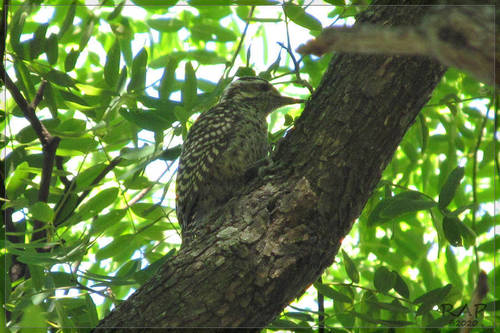
White-spotted Woodpecker (Veniliornis spilogaster) White-spotted Woodpecker
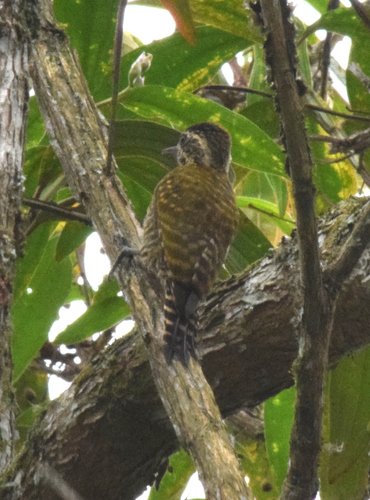
Checkered Woodpecker (Veniliornis mixtus) Checkered Woodpecker

Media

Loading…

In short

The White-spotted Woodpecker and Checkered Woodpecker are similar in appearance but can be distinguished by their plumage patterns and habitat preferences. The White-spotted Woodpecker has a more uniform spotting pattern, while the Checkered Woodpecker displays a more checkered back. Both species are small woodpeckers, but their vocalizations and behaviors can also aid in identification.

Identification tips

  1. Look for the checkered back pattern on the Checkered Woodpecker. 2. Observe the habitat: denser forests suggest White-spotted, while open woodlands suggest Checkered. 3. Listen for vocalizations, though differences may be subtle.

Size

Both species are small woodpeckers, similar in size, making size a less reliable distinguishing feature.

Plumage

The White-spotted Woodpecker has a more uniform spotting pattern on its back, whereas the Checkered Woodpecker exhibits a distinct checkered pattern. Additionally, the White-spotted Woodpecker may have a slightly paler overall appearance.

Behaviour

Both species exhibit typical woodpecker behavior, such as drumming and foraging on tree trunks. However, the Checkered Woodpecker may be more frequently observed in open woodlands compared to the White-spotted Woodpecker.

Habitat

The White-spotted Woodpecker is often found in denser forests, while the Checkered Woodpecker is more commonly associated with open woodlands and forest edges.

Voice

Vocalizations can be similar, but the Checkered Woodpecker may have a slightly higher-pitched call. Specific differences in calls are not well-documented.

Submit a better description

Use the same sections as the comparison. Your text is published immediately.

The White-spotted Woodpecker and Checkered Woodpecker are similar in appearance but can be distinguished by their plumage patterns and habitat preferences. The White-spotted Woodpecker has a more uniform spotting pattern, while the Checkered Woodpecker displays a more checkered back. Both species are small woodpeckers, but their vocalizations and behaviors can also aid in identification.

  1. Look for the checkered back pattern on the Checkered Woodpecker. 2. Observe the habitat: denser forests suggest White-spotted, while open woodlands suggest Checkered. 3. Listen for vocalizations, though differences may be subtle.

Both species are small woodpeckers, similar in size, making size a less reliable distinguishing feature.

The White-spotted Woodpecker has a more uniform spotting pattern on its back, whereas the Checkered Woodpecker exhibits a distinct checkered pattern. Additionally, the White-spotted Woodpecker may have a slightly paler overall appearance.

Both species exhibit typical woodpecker behavior, such as drumming and foraging on tree trunks. However, the Checkered Woodpecker may be more frequently observed in open woodlands compared to the White-spotted Woodpecker.

The White-spotted Woodpecker is often found in denser forests, while the Checkered Woodpecker is more commonly associated with open woodlands and forest edges.

Vocalizations can be similar, but the Checkered Woodpecker may have a slightly higher-pitched call. Specific differences in calls are not well-documented.

Discard your changes?

You have unsaved edits. If you leave now, those changes will be lost.

White-spotted Woodpecker · Checkered Woodpecker · My Tricky Birds