Birdr

White Stork vs Great Cormorant

Ciconia ciconia versus Phalacrocorax carbo

Play a quiz with White Stork and Great Cormorant
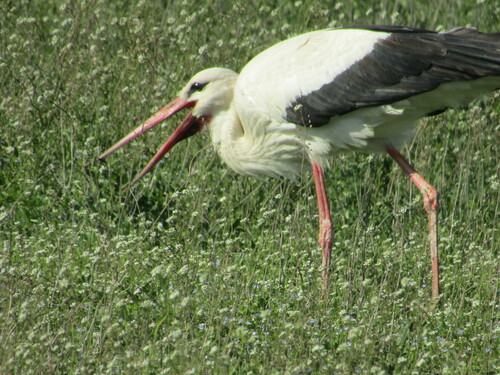
White Stork (Ciconia ciconia) White Stork
Great Cormorant (Phalacrocorax carbo) Great Cormorant

Media

Loading…

In short

The White Stork and Great Cormorant are easily distinguished by their structure and behavior. The White Stork has a long, straight bill and is often seen walking in open fields, while the Great Cormorant has a hooked bill and is typically found diving in water bodies.

Identification tips

Bill shape: White Stork has a long, straight bill; Great Cormorant has a hooked bill. Plumage: White Stork is white with black wings; Great Cormorant is mostly dark. Behavior: Storks walk in fields; Cormorants dive in water.

Size

The Great Cormorant is generally more robust and heavier than the slender White Stork.

Plumage

The White Stork is predominantly white with black flight feathers, whereas the Great Cormorant has a darker, more uniform plumage.

Behaviour

White Storks are often seen walking in fields or perched on rooftops, while Great Cormorants are frequently observed diving for fish in water.

Habitat

White Storks prefer open fields and wetlands, whereas Great Cormorants are found near large bodies of water like lakes, rivers, and coastal areas.

Submit a better description

Use the same sections as the comparison. Your text is published immediately.

The White Stork and Great Cormorant are easily distinguished by their structure and behavior. The White Stork has a long, straight bill and is often seen walking in open fields, while the Great Cormorant has a hooked bill and is typically found diving in water bodies.

Bill shape: White Stork has a long, straight bill; Great Cormorant has a hooked bill. Plumage: White Stork is white with black wings; Great Cormorant is mostly dark. Behavior: Storks walk in fields; Cormorants dive in water.

The Great Cormorant is generally more robust and heavier than the slender White Stork.

The White Stork is predominantly white with black flight feathers, whereas the Great Cormorant has a darker, more uniform plumage.

White Storks are often seen walking in fields or perched on rooftops, while Great Cormorants are frequently observed diving for fish in water.

White Storks prefer open fields and wetlands, whereas Great Cormorants are found near large bodies of water like lakes, rivers, and coastal areas.

Discard your changes?

You have unsaved edits. If you leave now, those changes will be lost.

White Stork · Great Cormorant · My Tricky Birds