Birdr

White-tailed Eagle vs Bald Eagle

Haliaeetus albicilla versus Haliaeetus leucocephalus

Play a quiz with White-tailed Eagle and Bald Eagle
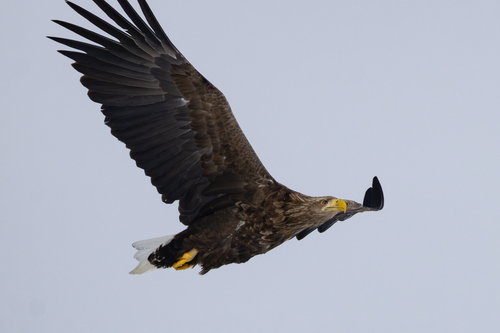
White-tailed Eagle (Haliaeetus albicilla) White-tailed Eagle
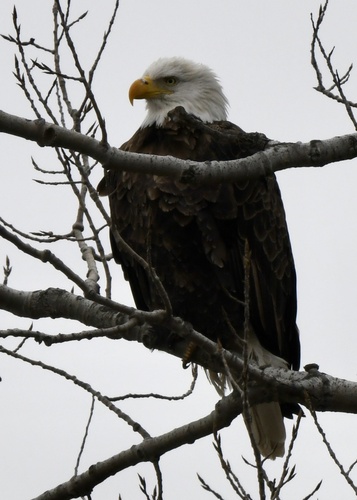
Bald Eagle (Haliaeetus leucocephalus) Bald Eagle

Media

Loading…

In short

The most reliable field mark to separate White-tailed Eagle and Bald Eagle is the adult plumage: Bald Eagles show a striking white head and tail with a dark body, while White-tailed Eagles have a pale head and neck, but their tail is shorter, wedge-shaped, and only fully white in mature adults. For immature birds, both species are mostly dark, but White-tailed Eagles tend to have a longer tail (especially in juveniles), a more uniform dark head, and a bulkier, longer-necked appearance, while Bald Eagles often show messy white streaking on the body and wings. Structure is also key: White-tailed Eagles look heavier-bodied with a longer neck and a relatively shorter, wedge-shaped tail, while Bald Eagles have a larger, more protruding beak and a flatter, straighter wing profile in flight. Both are massive sea eagles, but subtle differences in jizz and age-specific plumage are critical for field separation, especially for immature birds.

Identification tips

  1. Adult plumage is the most reliable separator: Bald Eagles have a bright white head and tail with dark body and wings; White-tailed Eagles have a pale head and neck, but only the tail is white (and shorter, wedge-shaped), with the rest of the plumage dark brown.
  2. Immature plumage is tricky: Both are mostly dark, but Bald Eagles show messy white streaking on body and wings, especially underparts, while White-tailed Eagle juveniles are more uniformly dark with a darker, more uniform head and less white overall.
  3. Tail shape and length: White-tailed Eagles have a relatively short, wedge-shaped tail (even in adults), while Bald Eagles have a longer, more rounded tail. Juvenile White-tailed Eagles have a longer tail than adults, which can be a subtle field mark in flight.
  4. Head and neck structure: White-tailed Eagles have a longer neck and a narrower, higher-crowned head, giving a somewhat vulturine look. Bald Eagles have a larger, more protruding head and bill, which can look massive, especially in northern birds.
  5. Bill color and size: Both adults have yellow bills, but Bald Eagle bills are often larger and more protruding. In juveniles, White-tailed Eagles have a half-dark, half-dull yellowish or grey bill, while Bald Eagle juveniles have a dark bill that gradually turns yellow.
  6. Wing shape in flight: Both have broad, fingered wings, but Bald Eagles hold their wings flatter and straighter, while White-tailed Eagles may show a slight dihedral and a heavier, longer-necked look.
  7. Underwing and body mottling (immatures): Bald Eagles often show more extensive and messy white mottling on the underwing coverts and body, while White-tailed Eagles develop white blotching mainly in their third year, which then fades.
  8. Head color in immatures: White-tailed Eagle juveniles have a darker, more uniform head, while Bald Eagle immatures often show patchy pale areas as they age.
  9. Tail pattern in immatures: White-tailed Eagle juveniles have a washed-out, dirty cream-grey tail with blackish edges/tips, sometimes faintly barred. Bald Eagle immatures have a dark tail with variable white, but not the same washed-out or barred look.
  10. Perched posture: White-tailed Eagles perch very upright, especially on branches or rocks, while Bald Eagles may appear more hunched or horizontal.
  11. Flight jizz: White-tailed Eagles look heavier, with a longer neck and shorter tail; Bald Eagles look more streamlined with a larger head and bill projecting in flight.
  12. Geographic context: If seen in Eurasia, expect White-tailed Eagle; in North America, Bald Eagle. Vagrants are rare but possible.
  13. Sexual dimorphism: Both species show females larger than males, but this is not a reliable field mark without direct comparison.
  14. Age progression: White-tailed Eagles take up to eight years to reach full adult plumage (white tail and pale head), while Bald Eagles usually attain adult plumage by their fifth year.
  15. Beware of overlap in subadult plumages: Both species can show confusing intermediate patterns, so rely on structure and tail/head shape if plumage is ambiguous.

Size

Both species are among the largest raptors in their respective ranges, with very similar average body mass (White-tailed Eagle: 4793 g, Bald Eagle: 4740 g [wikidata]). Regional variation in Bald Eagles can produce larger or smaller individuals, but in direct comparison, size alone is not a reliable separator. Both have broad wings and large bodies, but White-tailed Eagles may appear slightly bulkier and longer-necked, while Bald Eagles can look more streamlined, especially in flight. Bill size is variable in Bald Eagles, with northern birds having especially large bills, but this is not always apparent in the field.

Plumage

For immature birds (juvenile to subadult):
- White-tailed Eagle juveniles are overall dark brown, with a more uniform blackish-brown head and a washed-out greyish-cream tail with messy blackish edges or tips. The tail is relatively long and can show faint barring or appear dirty whitish, but is never clean white. As they age, white mottling increases on the underwing and body, peaking in the third year, then fades before the adult plumage is attained. The head gradually pales over several years, but never matches the bright white of adult Bald Eagles.
- Bald Eagle immatures are dark brown with irregular, messy white streaking on the body and wings, especially on the underparts and axillaries. The head is never as uniform as in White-tailed Eagle juveniles and often shows patchy pale areas before turning fully white. The tail is also dark with variable white, but the transition to the classic adult pattern (white head and tail) is abrupt and usually complete by the fifth year.

For adults:
- White-tailed Eagle adults have a pale head and neck, a uniform dark brown body and wings, and a short, wedge-shaped, fully white tail (not long or rounded). The bill is pale yellow and the legs are bare and yellow.
- Bald Eagle adults are unmistakable with a bright white head and tail, dark brown body and wings, and a large, bright yellow bill. The contrast is much starker than in White-tailed Eagle, and the tail is longer and more rounded.

In flight, both show broad, deeply fingered wings, but White-tailed Eagles have a slightly shorter, wedge-shaped tail and longer neck, while Bald Eagles have a flatter wing profile and a more protruding head and bill.

Behaviour

Both species perch in exposed locations and soar with broad, fingered wings. White-tailed Eagles often perch very upright on branches or rocks, but may sit more horizontally on the ground. In flight, White-tailed Eagles show shallow, sometimes surprisingly fast wingbeats for their size, interspersed with gliding, and often appear heavy and long-necked. Bald Eagles tend to hold their wings flatter and fly with a stiffer wingbeat. Both are powerful, but White-tailed Eagles can look more vulturine due to their long neck and upright posture.

Habitat

Habitat is not a strong separator outside of range: White-tailed Eagles are found across temperate Eurasia, while Bald Eagles are restricted to North America. Both prefer large bodies of water such as lakes, rivers, and coasts, where they hunt fish and waterbirds. If seen outside their typical range, vagrancy should be considered, but habitat alone will not reliably distinguish them.

Submit a better description

Use the same sections as the comparison. Your text is published immediately.

The most reliable field mark to separate White-tailed Eagle and Bald Eagle is the adult plumage: Bald Eagles show a striking white head and tail with a dark body, while White-tailed Eagles have a pale head and neck, but their tail is shorter, wedge-shaped, and only fully white in mature adults. For immature birds, both species are mostly dark, but White-tailed Eagles tend to have a longer tail (especially in juveniles), a more uniform dark head, and a bulkier, longer-necked appearance, while Bald Eagles often show messy white streaking on the body and wings. Structure is also key: White-tailed Eagles look heavier-bodied with a longer neck and a relatively shorter, wedge-shaped tail, while Bald Eagles have a larger, more protruding beak and a flatter, straighter wing profile in flight. Both are massive sea eagles, but subtle differences in jizz and age-specific plumage are critical for field separation, especially for immature birds.

  1. Adult plumage is the most reliable separator: Bald Eagles have a bright white head and tail with dark body and wings; White-tailed Eagles have a pale head and neck, but only the tail is white (and shorter, wedge-shaped), with the rest of the plumage dark brown.
  2. Immature plumage is tricky: Both are mostly dark, but Bald Eagles show messy white streaking on body and wings, especially underparts, while White-tailed Eagle juveniles are more uniformly dark with a darker, more uniform head and less white overall.
  3. Tail shape and length: White-tailed Eagles have a relatively short, wedge-shaped tail (even in adults), while Bald Eagles have a longer, more rounded tail. Juvenile White-tailed Eagles have a longer tail than adults, which can be a subtle field mark in flight.
  4. Head and neck structure: White-tailed Eagles have a longer neck and a narrower, higher-crowned head, giving a somewhat vulturine look. Bald Eagles have a larger, more protruding head and bill, which can look massive, especially in northern birds.
  5. Bill color and size: Both adults have yellow bills, but Bald Eagle bills are often larger and more protruding. In juveniles, White-tailed Eagles have a half-dark, half-dull yellowish or grey bill, while Bald Eagle juveniles have a dark bill that gradually turns yellow.
  6. Wing shape in flight: Both have broad, fingered wings, but Bald Eagles hold their wings flatter and straighter, while White-tailed Eagles may show a slight dihedral and a heavier, longer-necked look.
  7. Underwing and body mottling (immatures): Bald Eagles often show more extensive and messy white mottling on the underwing coverts and body, while White-tailed Eagles develop white blotching mainly in their third year, which then fades.
  8. Head color in immatures: White-tailed Eagle juveniles have a darker, more uniform head, while Bald Eagle immatures often show patchy pale areas as they age.
  9. Tail pattern in immatures: White-tailed Eagle juveniles have a washed-out, dirty cream-grey tail with blackish edges/tips, sometimes faintly barred. Bald Eagle immatures have a dark tail with variable white, but not the same washed-out or barred look.
  10. Perched posture: White-tailed Eagles perch very upright, especially on branches or rocks, while Bald Eagles may appear more hunched or horizontal.
  11. Flight jizz: White-tailed Eagles look heavier, with a longer neck and shorter tail; Bald Eagles look more streamlined with a larger head and bill projecting in flight.
  12. Geographic context: If seen in Eurasia, expect White-tailed Eagle; in North America, Bald Eagle. Vagrants are rare but possible.
  13. Sexual dimorphism: Both species show females larger than males, but this is not a reliable field mark without direct comparison.
  14. Age progression: White-tailed Eagles take up to eight years to reach full adult plumage (white tail and pale head), while Bald Eagles usually attain adult plumage by their fifth year.
  15. Beware of overlap in subadult plumages: Both species can show confusing intermediate patterns, so rely on structure and tail/head shape if plumage is ambiguous.

Both species are among the largest raptors in their respective ranges, with very similar average body mass (White-tailed Eagle: 4793 g, Bald Eagle: 4740 g [wikidata]). Regional variation in Bald Eagles can produce larger or smaller individuals, but in direct comparison, size alone is not a reliable separator. Both have broad wings and large bodies, but White-tailed Eagles may appear slightly bulkier and longer-necked, while Bald Eagles can look more streamlined, especially in flight. Bill size is variable in Bald Eagles, with northern birds having especially large bills, but this is not always apparent in the field.

For immature birds (juvenile to subadult):
- White-tailed Eagle juveniles are overall dark brown, with a more uniform blackish-brown head and a washed-out greyish-cream tail with messy blackish edges or tips. The tail is relatively long and can show faint barring or appear dirty whitish, but is never clean white. As they age, white mottling increases on the underwing and body, peaking in the third year, then fades before the adult plumage is attained. The head gradually pales over several years, but never matches the bright white of adult Bald Eagles.
- Bald Eagle immatures are dark brown with irregular, messy white streaking on the body and wings, especially on the underparts and axillaries. The head is never as uniform as in White-tailed Eagle juveniles and often shows patchy pale areas before turning fully white. The tail is also dark with variable white, but the transition to the classic adult pattern (white head and tail) is abrupt and usually complete by the fifth year.

For adults:
- White-tailed Eagle adults have a pale head and neck, a uniform dark brown body and wings, and a short, wedge-shaped, fully white tail (not long or rounded). The bill is pale yellow and the legs are bare and yellow.
- Bald Eagle adults are unmistakable with a bright white head and tail, dark brown body and wings, and a large, bright yellow bill. The contrast is much starker than in White-tailed Eagle, and the tail is longer and more rounded.

In flight, both show broad, deeply fingered wings, but White-tailed Eagles have a slightly shorter, wedge-shaped tail and longer neck, while Bald Eagles have a flatter wing profile and a more protruding head and bill.

Both species perch in exposed locations and soar with broad, fingered wings. White-tailed Eagles often perch very upright on branches or rocks, but may sit more horizontally on the ground. In flight, White-tailed Eagles show shallow, sometimes surprisingly fast wingbeats for their size, interspersed with gliding, and often appear heavy and long-necked. Bald Eagles tend to hold their wings flatter and fly with a stiffer wingbeat. Both are powerful, but White-tailed Eagles can look more vulturine due to their long neck and upright posture.

Habitat is not a strong separator outside of range: White-tailed Eagles are found across temperate Eurasia, while Bald Eagles are restricted to North America. Both prefer large bodies of water such as lakes, rivers, and coasts, where they hunt fish and waterbirds. If seen outside their typical range, vagrancy should be considered, but habitat alone will not reliably distinguish them.

Discard your changes?

You have unsaved edits. If you leave now, those changes will be lost.

White-tailed Eagle · Bald Eagle · My Tricky Birds