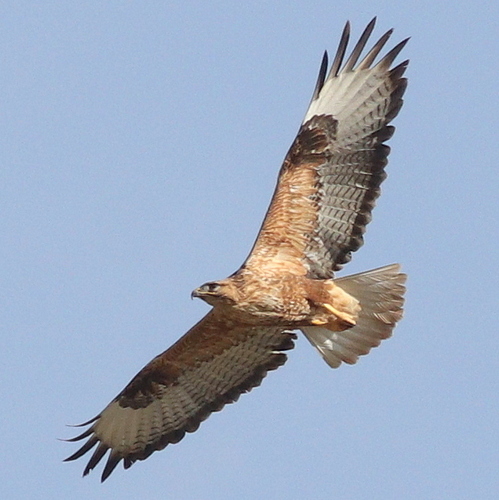
White-tailed Eagle vs Long-legged Buzzard
Haliaeetus albicilla versus Buteo rufinus
Play a quiz with White-tailed Eagle and Long-legged Buzzard
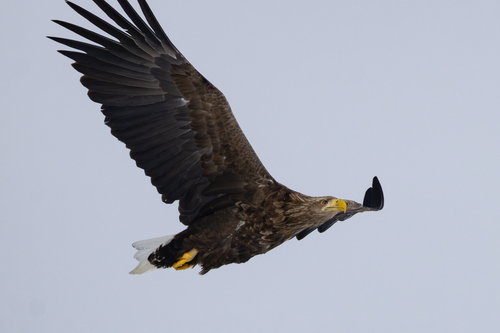
White-tailed Eagle
Long-legged Buzzard
In short
The White-tailed Eagle is a massive bird with a broad wingspan and distinct white tail, while the Long-legged Buzzard is smaller, with a more compact build and longer legs. In flight, the eagle's wings are broader and held flat, contrasting with the buzzard's slightly raised wing posture. Both species can appear similar in color, but their size and structure are the most reliable identifiers.
Identification tips
- Size and Structure: Look for the larger size and broad wings of the White-tailed Eagle versus the smaller, more compact Long-legged Buzzard. 2. Tail Color: Check for the white tail of adult White-tailed Eagles. 3. Wing Posture: Observe the wing posture in flight; eagles hold their wings flat, while buzzards have a slight dihedral. 4. Habitat: Consider the habitat; eagles are near water, buzzards in open, dry areas.
Size
The White-tailed Eagle is significantly larger, with a wingspan that can exceed 2 meters, whereas the Long-legged Buzzard is smaller, with a wingspan around 1.5 meters.
Plumage
Both species have brown plumage, but the White-tailed Eagle has a distinctive white tail in adults, which is a key identifier. The Long-legged Buzzard lacks this feature and may show a more varied plumage with rufous tones, especially on the legs.
Behaviour
White-tailed Eagles often soar with wings held flat and are more likely to be seen near large bodies of water. Long-legged Buzzards may be seen soaring over open landscapes with wings slightly raised in a dihedral.
Habitat
White-tailed Eagles are typically found near coasts, large lakes, and rivers. Long-legged Buzzards prefer open, arid landscapes such as steppes and semi-deserts.
Voice
Vocalizations are not a primary distinguishing feature, as both species have similar calls that are not often heard. White-tailed Eagles have a barking call, while Long-legged Buzzards have a more plaintive mewing sound.