Birdr

White-tailed Flycatcher vs Slaty-blue Flycatcher

Leucoptilon concretum versus Ficedula tricolor

Play a quiz with White-tailed Flycatcher and Slaty-blue Flycatcher
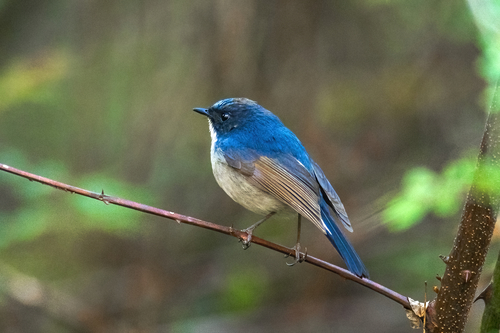
White-tailed Flycatcher (Leucoptilon concretum) White-tailed Flycatcher
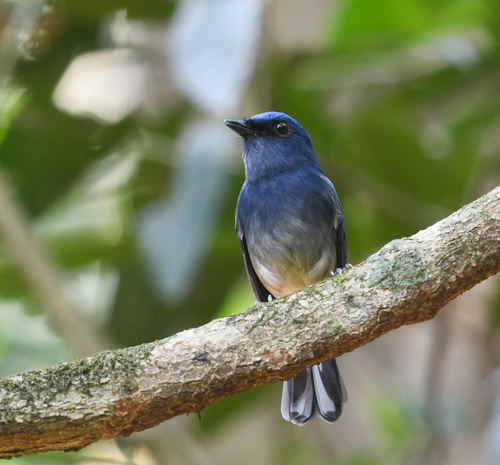
Slaty-blue Flycatcher (Ficedula tricolor) Slaty-blue Flycatcher

Media

Loading…

In short

The White-tailed Flycatcher and Slaty-blue Flycatcher are both small, Old World flycatchers, but they can be distinguished by their tail and plumage colors. The White-tailed Flycatcher has a distinctive white tail, while the Slaty-blue Flycatcher is characterized by its overall slaty-blue coloration.

Identification tips

  1. Look for the white tail on the White-tailed Flycatcher. 2. Note the uniform slaty-blue plumage of the Slaty-blue Flycatcher. 3. Consider the habitat and local range if known. 4. Listen for any vocal differences, though these are less documented.

Size

Both species are similar in size, typical of small flycatchers.

Plumage

The White-tailed Flycatcher has a white tail which is a key distinguishing feature, whereas the Slaty-blue Flycatcher has a uniform slaty-blue plumage. Both species may have subtle differences in the shade of blue, but the tail color is the most reliable field mark.

Behaviour

Both species exhibit typical flycatcher behavior, such as sallying from perches to catch insects. Behavior is not a reliable differentiator.

Habitat

Both species inhabit forested areas, but specific habitat preferences may vary regionally. Observers should note the local context.

Voice

Vocalizations are not well-documented for field differentiation, but any differences in song or call should be noted if known.

Submit a better description

Use the same sections as the comparison. Your text is published immediately.

The White-tailed Flycatcher and Slaty-blue Flycatcher are both small, Old World flycatchers, but they can be distinguished by their tail and plumage colors. The White-tailed Flycatcher has a distinctive white tail, while the Slaty-blue Flycatcher is characterized by its overall slaty-blue coloration.

  1. Look for the white tail on the White-tailed Flycatcher. 2. Note the uniform slaty-blue plumage of the Slaty-blue Flycatcher. 3. Consider the habitat and local range if known. 4. Listen for any vocal differences, though these are less documented.

Both species are similar in size, typical of small flycatchers.

The White-tailed Flycatcher has a white tail which is a key distinguishing feature, whereas the Slaty-blue Flycatcher has a uniform slaty-blue plumage. Both species may have subtle differences in the shade of blue, but the tail color is the most reliable field mark.

Both species exhibit typical flycatcher behavior, such as sallying from perches to catch insects. Behavior is not a reliable differentiator.

Both species inhabit forested areas, but specific habitat preferences may vary regionally. Observers should note the local context.

Vocalizations are not well-documented for field differentiation, but any differences in song or call should be noted if known.

Discard your changes?

You have unsaved edits. If you leave now, those changes will be lost.

White-tailed Flycatcher · Slaty-blue Flycatcher · My Tricky Birds