Birdr

White-tailed Hawk vs Grey Hawk

Geranoaetus albicaudatus versus Buteo plagiatus

Play a quiz with White-tailed Hawk and Grey Hawk
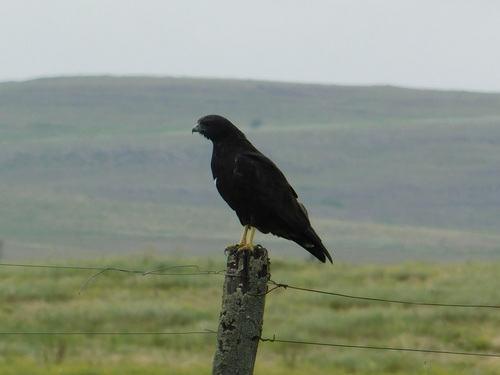
White-tailed Hawk (Geranoaetus albicaudatus) White-tailed Hawk
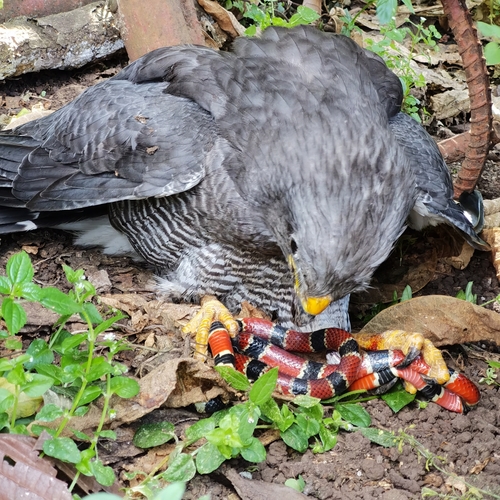
Grey Hawk (Buteo plagiatus) Grey Hawk

Media

Loading…

In short

The White-tailed Hawk and Grey Hawk can be distinguished primarily by their tail patterns: the White-tailed Hawk has a white tail with a black subterminal band, while the Grey Hawk has a black tail with multiple white bands. Both species inhabit open areas but differ in their preferred habitats and behaviors.

Identification tips

  1. Tail Pattern: Look for the White-tailed Hawk's white tail with a black subterminal band versus the Grey Hawk's black tail with white bands. 2. Plumage: Note the White-tailed Hawk's white breast and rufous shoulders compared to the Grey Hawk's gray and white barred underparts. 3. Size and Build: The White-tailed Hawk is larger and more robust. 4. Flight Style: Observe the White-tailed Hawk's soaring and hovering versus the Grey Hawk's accipiter-like flight.

Size

The White-tailed Hawk is generally larger than the Grey Hawk, with a more robust build.

Plumage

The White-tailed Hawk features a brilliant white breast and rufous shoulder patches, with a distinctive white tail and black subterminal band. In contrast, the Grey Hawk has a medium gray upperpart with finely barred gray and white underparts, and a black tail with narrow gray-brown terminal band and multiple white bands.

Behaviour

The White-tailed Hawk is more likely to be seen soaring or hovering in open areas, while the Grey Hawk exhibits an accipiter-like flight with rapid beats followed by glides.

Habitat

White-tailed Hawks are found in open to sparsely wooded, arid regions, while Grey Hawks prefer riparian woodlands and areas with more tree cover.

Submit a better description

Use the same sections as the comparison. Your text is published immediately.

The White-tailed Hawk and Grey Hawk can be distinguished primarily by their tail patterns: the White-tailed Hawk has a white tail with a black subterminal band, while the Grey Hawk has a black tail with multiple white bands. Both species inhabit open areas but differ in their preferred habitats and behaviors.

  1. Tail Pattern: Look for the White-tailed Hawk's white tail with a black subterminal band versus the Grey Hawk's black tail with white bands. 2. Plumage: Note the White-tailed Hawk's white breast and rufous shoulders compared to the Grey Hawk's gray and white barred underparts. 3. Size and Build: The White-tailed Hawk is larger and more robust. 4. Flight Style: Observe the White-tailed Hawk's soaring and hovering versus the Grey Hawk's accipiter-like flight.

The White-tailed Hawk is generally larger than the Grey Hawk, with a more robust build.

The White-tailed Hawk features a brilliant white breast and rufous shoulder patches, with a distinctive white tail and black subterminal band. In contrast, the Grey Hawk has a medium gray upperpart with finely barred gray and white underparts, and a black tail with narrow gray-brown terminal band and multiple white bands.

The White-tailed Hawk is more likely to be seen soaring or hovering in open areas, while the Grey Hawk exhibits an accipiter-like flight with rapid beats followed by glides.

White-tailed Hawks are found in open to sparsely wooded, arid regions, while Grey Hawks prefer riparian woodlands and areas with more tree cover.

Discard your changes?

You have unsaved edits. If you leave now, those changes will be lost.

White-tailed Hawk · Grey Hawk · My Tricky Birds