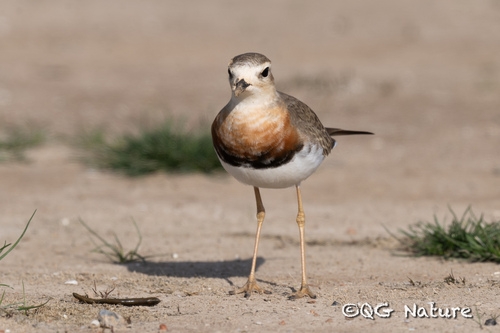
White-tailed Lapwing vs Oriental Plover
Vanellus leucurus versus Anarhynchus veredus
Play a quiz with White-tailed Lapwing and Oriental Plover
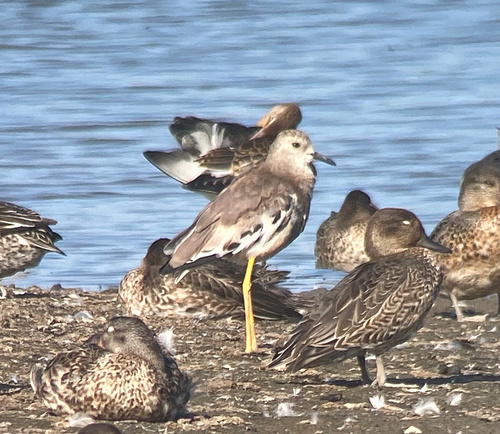
White-tailed Lapwing
Oriental Plover
In short
The White-tailed Lapwing and Oriental Plover can be distinguished primarily by their tail and wing coloration. The White-tailed Lapwing has a distinctive white tail and white wing patches visible in flight, while the Oriental Plover lacks these features. Both species are similar in size and structure, but their preferred habitats and behaviors can also aid in identification.
Identification tips
- Look for the white tail and wing patches in flight for the White-tailed Lapwing.
- Observe habitat: wetlands suggest White-tailed Lapwing, while dry grasslands suggest Oriental Plover.
- Note behavior: White-tailed Lapwings are more likely to be seen wading in water.
- Check for flocking: White-tailed Lapwings often in small flocks, Oriental Plovers more solitary.
Size
Both species are similar in size, typical of medium-sized plovers and lapwings.
Plumage
The White-tailed Lapwing has a white tail and prominent white wing patches visible in flight, contrasting with its otherwise brownish body. The Oriental Plover lacks these white features, instead having a more uniform brown upperparts and a less contrasting underwing pattern.
Behaviour
White-tailed Lapwings are often found in small flocks and may be seen wading in shallow water. Oriental Plovers are more likely to be seen in open, dry habitats and can be more solitary or in loose groups.
Habitat
White-tailed Lapwings prefer wetland habitats, such as marshes and flooded fields. In contrast, Oriental Plovers are typically found in dry grasslands and open plains.
Voice
Vocalizations are not a primary distinguishing feature between these species, but any differences in calls should be noted if heard.