Birdr

White-tailed Tropicbird vs Wood Stork

Phaethon lepturus versus Mycteria americana

Play a quiz with White-tailed Tropicbird and Wood Stork
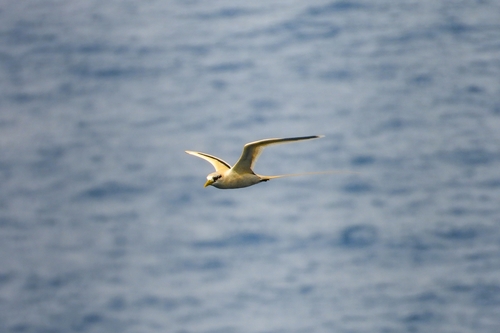
White-tailed Tropicbird (Phaethon lepturus) White-tailed Tropicbird
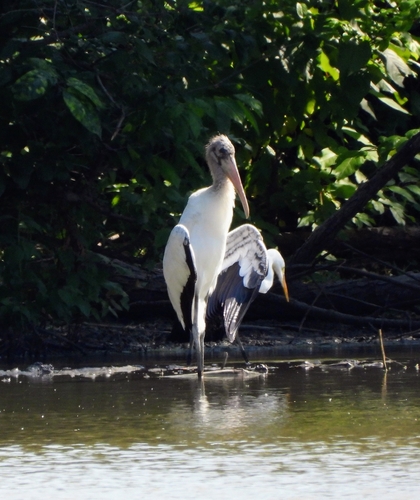
Wood Stork (Mycteria americana) Wood Stork

Media

Loading…

In short

The White-tailed Tropicbird and Wood Stork are distinct in both appearance and habitat. The tropicbird is a pelagic seabird with a striking white body and long tail streamers, while the stork is a large wading bird with a bald head and heavy bill, typically found in wetlands.

Identification tips

  1. Location: If seen over open ocean, likely a White-tailed Tropicbird; if in a wetland, likely a Wood Stork. 2. Size and Shape: Wood Storks are larger with a heavy bill and long legs, while tropicbirds are smaller with long tail streamers. 3. Head and Bill: Wood Storks have a bald, scaly head and thick bill; tropicbirds have a sleek head and slender bill. 4. Plumage: Look for the long tail streamers of the tropicbird and the dark iridescent wings of the stork.

Size

The Wood Stork is significantly larger than the White-tailed Tropicbird, with a more robust body and longer legs.

Plumage

White-tailed Tropicbirds are predominantly white with long, slender tail streamers and black markings on the wings. Wood Storks have a white body with dark iridescent wing and tail feathers, and a distinctive bald, scaly head.

Behaviour

White-tailed Tropicbirds are often seen flying over open ocean, sometimes investigating boats. Wood Storks are tactile feeders, often seen wading in wetlands and foraging by feel.

Habitat

White-tailed Tropicbirds inhabit tropical and subtropical seas, rarely seen near land except during breeding. Wood Storks are found in wetlands, particularly in the southeastern United States.

Voice

Vocalizations are not a primary distinguishing feature, as both species are generally quiet, but specific calls may differ.

Submit a better description

Use the same sections as the comparison. Your text is published immediately.

The White-tailed Tropicbird and Wood Stork are distinct in both appearance and habitat. The tropicbird is a pelagic seabird with a striking white body and long tail streamers, while the stork is a large wading bird with a bald head and heavy bill, typically found in wetlands.

  1. Location: If seen over open ocean, likely a White-tailed Tropicbird; if in a wetland, likely a Wood Stork. 2. Size and Shape: Wood Storks are larger with a heavy bill and long legs, while tropicbirds are smaller with long tail streamers. 3. Head and Bill: Wood Storks have a bald, scaly head and thick bill; tropicbirds have a sleek head and slender bill. 4. Plumage: Look for the long tail streamers of the tropicbird and the dark iridescent wings of the stork.

The Wood Stork is significantly larger than the White-tailed Tropicbird, with a more robust body and longer legs.

White-tailed Tropicbirds are predominantly white with long, slender tail streamers and black markings on the wings. Wood Storks have a white body with dark iridescent wing and tail feathers, and a distinctive bald, scaly head.

White-tailed Tropicbirds are often seen flying over open ocean, sometimes investigating boats. Wood Storks are tactile feeders, often seen wading in wetlands and foraging by feel.

White-tailed Tropicbirds inhabit tropical and subtropical seas, rarely seen near land except during breeding. Wood Storks are found in wetlands, particularly in the southeastern United States.

Vocalizations are not a primary distinguishing feature, as both species are generally quiet, but specific calls may differ.

Discard your changes?

You have unsaved edits. If you leave now, those changes will be lost.

White-tailed Tropicbird · Wood Stork · My Tricky Birds