Birdr

White-throated Crake vs Collared Aracari

Laterallus albigularis versus Pteroglossus torquatus

Play a quiz with White-throated Crake and Collared Aracari
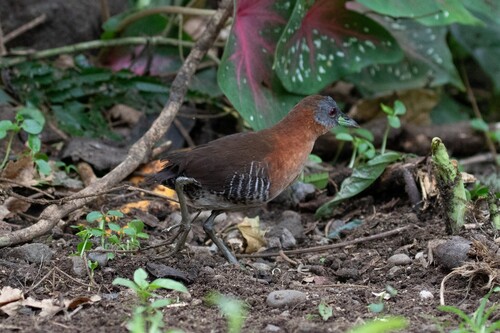
White-throated Crake (Laterallus albigularis) White-throated Crake
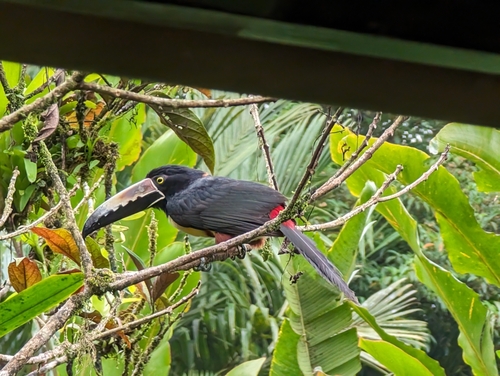
Collared Aracari (Pteroglossus torquatus) Collared Aracari

Media

Loading…

In short

The White-throated Crake and the Collared Aracari are easily distinguished by their size and structure. The crake is a small, secretive rail with a short bill, while the aracari is a larger, colorful toucan with a prominent, long bill. These species occupy different habitats and have distinct behaviors.

Identification tips

  1. Size and structure: Note the small size and short bill of the crake versus the large size and long bill of the aracari. 2. Plumage: Look for the white throat on the crake and the colorful plumage of the aracari. 3. Habitat: Consider the habitat—crakes are in marshes, aracaris in forests. 4. Behavior: Crakes are secretive, aracaris are social and visible. 5. Vocalization: Listen for the crake's high-pitched calls versus the aracari's yelping notes.

Size

The White-throated Crake is much smaller, about the size of a sparrow, while the Collared Aracari is larger, comparable to a crow.

Plumage

The White-throated Crake has a mostly brown body with a distinctive white throat and a grayish face. In contrast, the Collared Aracari is strikingly colorful, with a black head, yellow underparts, and a red band across the chest.

Behaviour

The White-throated Crake is often seen skulking in dense vegetation and is more likely to be heard than seen. The Collared Aracari is more conspicuous, often seen in groups and perching openly in trees.

Habitat

White-throated Crakes are typically found in marshy areas and dense undergrowth near water. Collared Aracaris inhabit forest edges and open woodlands.

Voice

The White-throated Crake has a series of high-pitched, repetitive calls, while the Collared Aracari produces a series of sharp, yelping notes.

Submit a better description

Use the same sections as the comparison. Your text is published immediately.

The White-throated Crake and the Collared Aracari are easily distinguished by their size and structure. The crake is a small, secretive rail with a short bill, while the aracari is a larger, colorful toucan with a prominent, long bill. These species occupy different habitats and have distinct behaviors.

  1. Size and structure: Note the small size and short bill of the crake versus the large size and long bill of the aracari. 2. Plumage: Look for the white throat on the crake and the colorful plumage of the aracari. 3. Habitat: Consider the habitat—crakes are in marshes, aracaris in forests. 4. Behavior: Crakes are secretive, aracaris are social and visible. 5. Vocalization: Listen for the crake's high-pitched calls versus the aracari's yelping notes.

The White-throated Crake is much smaller, about the size of a sparrow, while the Collared Aracari is larger, comparable to a crow.

The White-throated Crake has a mostly brown body with a distinctive white throat and a grayish face. In contrast, the Collared Aracari is strikingly colorful, with a black head, yellow underparts, and a red band across the chest.

The White-throated Crake is often seen skulking in dense vegetation and is more likely to be heard than seen. The Collared Aracari is more conspicuous, often seen in groups and perching openly in trees.

White-throated Crakes are typically found in marshy areas and dense undergrowth near water. Collared Aracaris inhabit forest edges and open woodlands.

The White-throated Crake has a series of high-pitched, repetitive calls, while the Collared Aracari produces a series of sharp, yelping notes.

Discard your changes?

You have unsaved edits. If you leave now, those changes will be lost.

White-throated Crake · Collared Aracari · My Tricky Birds