
Birdr

White-throated Kingfisher vs Black-capped Kingfisher

Halcyon smyrnensis versus Halcyon pileata

Play a quiz with White-throated Kingfisher and Black-capped Kingfisher

White-throated Kingfisher (Halcyon smyrnensis) White-throated Kingfisher
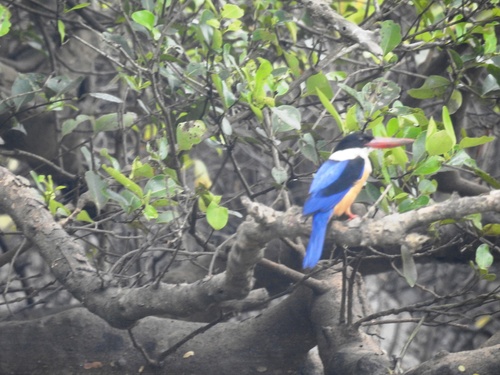
Black-capped Kingfisher (Halcyon pileata) Black-capped Kingfisher

Media

Loading…

In short

The White-throated Kingfisher and Black-capped Kingfisher can be distinguished by their head coloration and throat markings. The White-throated Kingfisher has a distinctive white throat and chest, while the Black-capped Kingfisher features a black cap and lacks the white throat patch.

Identification tips

  1. Look for the white throat and chest on the White-throated Kingfisher. 2. Note the black cap on the Black-capped Kingfisher. 3. Consider habitat: coastal areas may favor Black-capped, while urban and varied habitats may indicate White-throated. 4. Listen for vocalizations: loud and harsh for White-throated, softer for Black-capped.

Size

Both species are similar in size, typical of medium-sized kingfishers.

Plumage

The White-throated Kingfisher has a bright blue back and wings with a chestnut head and a prominent white throat and chest. In contrast, the Black-capped Kingfisher has a black cap, a blue back, and wings with a rufous belly and lacks the white throat patch.

Behaviour

Both species are often found perched conspicuously and are known for their swift, direct flight. They hunt from perches, diving for prey.

Habitat

White-throated Kingfishers are more adaptable, found in a variety of habitats including forests, wetlands, and urban areas. Black-capped Kingfishers prefer coastal and mangrove habitats but can also be found in inland wetlands.

Voice

The White-throated Kingfisher is known for its loud, harsh calls, while the Black-capped Kingfisher's calls are softer and less frequent.

Submit a better description

Use the same sections as the comparison. Your text is published immediately.

The White-throated Kingfisher and Black-capped Kingfisher can be distinguished by their head coloration and throat markings. The White-throated Kingfisher has a distinctive white throat and chest, while the Black-capped Kingfisher features a black cap and lacks the white throat patch.

  1. Look for the white throat and chest on the White-throated Kingfisher. 2. Note the black cap on the Black-capped Kingfisher. 3. Consider habitat: coastal areas may favor Black-capped, while urban and varied habitats may indicate White-throated. 4. Listen for vocalizations: loud and harsh for White-throated, softer for Black-capped.

Both species are similar in size, typical of medium-sized kingfishers.

The White-throated Kingfisher has a bright blue back and wings with a chestnut head and a prominent white throat and chest. In contrast, the Black-capped Kingfisher has a black cap, a blue back, and wings with a rufous belly and lacks the white throat patch.

Both species are often found perched conspicuously and are known for their swift, direct flight. They hunt from perches, diving for prey.

White-throated Kingfishers are more adaptable, found in a variety of habitats including forests, wetlands, and urban areas. Black-capped Kingfishers prefer coastal and mangrove habitats but can also be found in inland wetlands.

The White-throated Kingfisher is known for its loud, harsh calls, while the Black-capped Kingfisher's calls are softer and less frequent.

Discard your changes?

You have unsaved edits. If you leave now, those changes will be lost.

White-throated Kingfisher · Black-capped Kingfisher · My Tricky Birds