Birdr

White-throated Kingfisher vs Common Flameback

Halcyon smyrnensis versus Dinopium javanense

Play a quiz with White-throated Kingfisher and Common Flameback

White-throated Kingfisher (Halcyon smyrnensis) White-throated Kingfisher
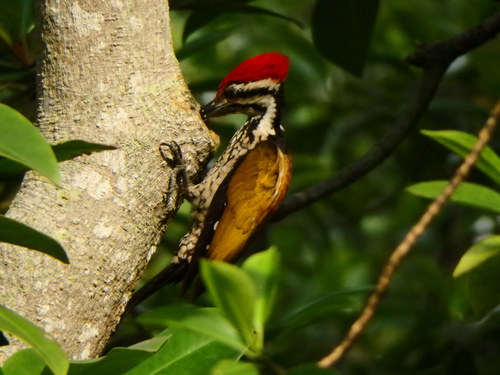
Common Flameback (Dinopium javanense) Common Flameback

Media

Loading…

In short

The White-throated Kingfisher and Common Flameback are visually distinct, with the kingfisher's bright blue wings and white throat contrasting the flameback's golden back and red crest. Both species are found in overlapping habitats, but their behaviors and calls differ significantly.

Identification tips

  1. Look for the bright blue wings and white throat of the White-throated Kingfisher. 2. Note the golden back and red crest of the Common Flameback. 3. Observe behavior: kingfishers perch and dive, while flamebacks climb trees. 4. Listen for calls: the kingfisher's harsh 'kek-kek-kek' versus the flameback's sharp notes.

Size

The White-throated Kingfisher is generally stockier with a large head and bill, while the Common Flameback is more slender and elongated, typical of woodpeckers.

Plumage

White-throated Kingfisher has a bright blue back and wings, a chestnut head and belly, and a white throat. In contrast, the Common Flameback displays a golden-yellow back, black wings with white spots, and a red crest on the head.

Behaviour

White-throated Kingfisher often perches conspicuously on wires or branches near water, diving for prey. Common Flameback is more arboreal, frequently seen climbing tree trunks in search of insects.

Habitat

Both species can be found in a variety of habitats, including forests and open areas, but the White-throated Kingfisher is more associated with water bodies, while the Common Flameback prefers wooded areas.

Voice

The White-throated Kingfisher has a loud, harsh call, often described as a 'kek-kek-kek'. The Common Flameback's call is a series of sharp, repetitive notes, differing in tone and rhythm.

Submit a better description

Use the same sections as the comparison. Your text is published immediately.

The White-throated Kingfisher and Common Flameback are visually distinct, with the kingfisher's bright blue wings and white throat contrasting the flameback's golden back and red crest. Both species are found in overlapping habitats, but their behaviors and calls differ significantly.

  1. Look for the bright blue wings and white throat of the White-throated Kingfisher. 2. Note the golden back and red crest of the Common Flameback. 3. Observe behavior: kingfishers perch and dive, while flamebacks climb trees. 4. Listen for calls: the kingfisher's harsh 'kek-kek-kek' versus the flameback's sharp notes.

The White-throated Kingfisher is generally stockier with a large head and bill, while the Common Flameback is more slender and elongated, typical of woodpeckers.

White-throated Kingfisher has a bright blue back and wings, a chestnut head and belly, and a white throat. In contrast, the Common Flameback displays a golden-yellow back, black wings with white spots, and a red crest on the head.

White-throated Kingfisher often perches conspicuously on wires or branches near water, diving for prey. Common Flameback is more arboreal, frequently seen climbing tree trunks in search of insects.

Both species can be found in a variety of habitats, including forests and open areas, but the White-throated Kingfisher is more associated with water bodies, while the Common Flameback prefers wooded areas.

The White-throated Kingfisher has a loud, harsh call, often described as a 'kek-kek-kek'. The Common Flameback's call is a series of sharp, repetitive notes, differing in tone and rhythm.

Discard your changes?

You have unsaved edits. If you leave now, those changes will be lost.

White-throated Kingfisher · Common Flameback · My Tricky Birds