Birdr

White-throated Needletail vs White-throated Swift

Hirundapus caudacutus versus Aeronautes saxatalis

Play a quiz with White-throated Needletail and White-throated Swift
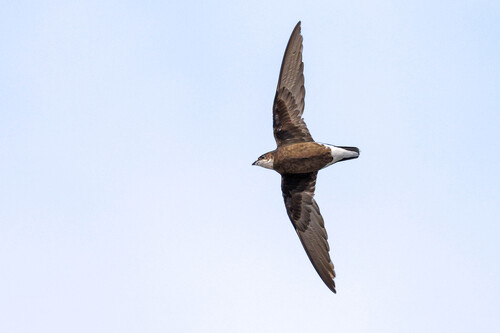
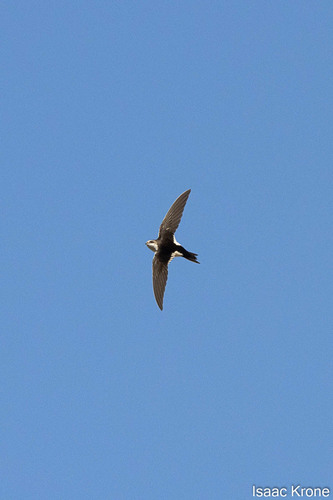
White-throated Needletail (Hirundapus caudacutus) White-throated Needletail
White-throated Swift (Aeronautes saxatalis) White-throated Swift

Media

Loading…

In short

The White-throated Needletail and White-throated Swift are both fast-flying swifts, but they can be distinguished by size and plumage details. The Needletail is larger and has a distinctive white throat patch, while the Swift is smaller with a contrasting black-and-white pattern.

Identification tips

  1. Size: Look for the larger size of the Needletail. 2. Throat Patch: The Needletail has a white throat patch, absent in the Swift. 3. Plumage: Note the Needletail's glossy blue upperparts versus the Swift's black-and-white contrast. 4. Habitat: Consider the environment; Needletails prefer open skies, Swifts are often near cliffs. 5. Flight Style: Observe flight; Needletails are powerful and fast, Swifts are agile and often near rocky areas.

Size

The White-throated Needletail is significantly larger than the White-throated Swift.

Plumage

The Needletail has a white throat and darker, glossy blue upperparts, while the Swift features a striking black-and-white pattern with a white belly and underparts.

Behaviour

Both species are aerial feeders, but the Needletail is known for its powerful, fast flight, often seen in open skies, whereas the Swift is more commonly seen near cliffs and rocky areas.

Habitat

The White-throated Needletail is often found in open areas and mountainous regions, while the White-throated Swift prefers cliffs and canyons, often near human-made structures.

Voice

Vocalizations are not well-documented for the Needletail, while the Swift has a high-pitched, twittering call.

Submit a better description

Use the same sections as the comparison. Your text is published immediately.

The White-throated Needletail and White-throated Swift are both fast-flying swifts, but they can be distinguished by size and plumage details. The Needletail is larger and has a distinctive white throat patch, while the Swift is smaller with a contrasting black-and-white pattern.

  1. Size: Look for the larger size of the Needletail. 2. Throat Patch: The Needletail has a white throat patch, absent in the Swift. 3. Plumage: Note the Needletail's glossy blue upperparts versus the Swift's black-and-white contrast. 4. Habitat: Consider the environment; Needletails prefer open skies, Swifts are often near cliffs. 5. Flight Style: Observe flight; Needletails are powerful and fast, Swifts are agile and often near rocky areas.

The White-throated Needletail is significantly larger than the White-throated Swift.

The Needletail has a white throat and darker, glossy blue upperparts, while the Swift features a striking black-and-white pattern with a white belly and underparts.

Both species are aerial feeders, but the Needletail is known for its powerful, fast flight, often seen in open skies, whereas the Swift is more commonly seen near cliffs and rocky areas.

The White-throated Needletail is often found in open areas and mountainous regions, while the White-throated Swift prefers cliffs and canyons, often near human-made structures.

Vocalizations are not well-documented for the Needletail, while the Swift has a high-pitched, twittering call.

Discard your changes?

You have unsaved edits. If you leave now, those changes will be lost.

White-throated Needletail · White-throated Swift · My Tricky Birds