Birdr

White-throated Robin vs Common Nightingale

Irania gutturalis versus Luscinia megarhynchos

Play a quiz with White-throated Robin and Common Nightingale
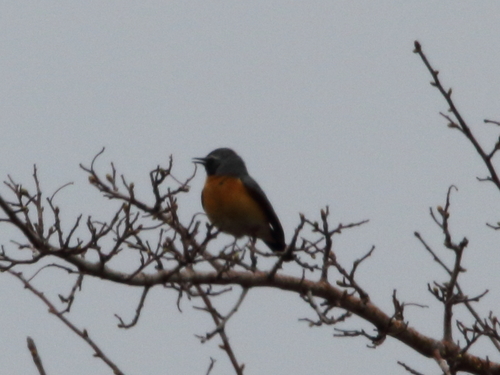
White-throated Robin (Irania gutturalis) White-throated Robin
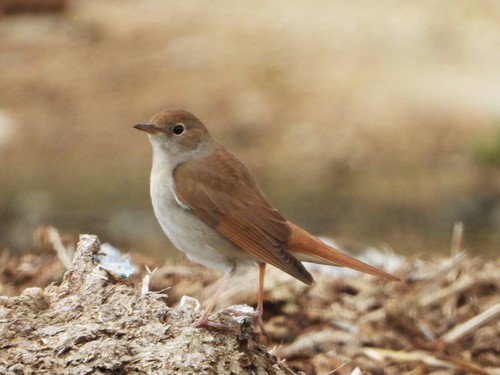
Common Nightingale (Luscinia megarhynchos) Common Nightingale

Media

Loading…

In short

The White-throated Robin and Common Nightingale are both Old World flycatchers, but they can be distinguished by their plumage and behavior. The White-throated Robin has a striking white throat and darker upperparts, while the Common Nightingale is more uniformly brown with a rusty tail. Both are often heard rather than seen, but their songs differ significantly.

Identification tips

Look for the white throat and contrasting dark upperparts of the White-throated Robin. In contrast, the Common Nightingale has a uniform brown appearance with a rusty tail. Listen for the Nightingale's melodious song, which is a key identifier, especially in dense vegetation.

Size

Both species are similar in size, typical of small passerines, but the Common Nightingale may appear slightly bulkier.

Plumage

The White-throated Robin features a white throat, dark slate-blue upperparts, and a rufous tail, whereas the Common Nightingale is uniformly brown with a rusty tail and pale underparts. The Nightingale lacks the contrasting throat patch.

Behaviour

The Common Nightingale is known for staying in dense cover, making it difficult to spot, while the White-throated Robin may be more visible in open areas during migration.

Habitat

White-throated Robins are often found in rocky, arid regions and scrublands, especially during migration, while Common Nightingales prefer dense underbrush in woodlands and gardens.

Voice

The Common Nightingale is famous for its rich, melodious song, often delivered from deep cover. The White-throated Robin's song is less well-known but typically consists of a series of whistles and trills.

Submit a better description

Use the same sections as the comparison. Your text is published immediately.

The White-throated Robin and Common Nightingale are both Old World flycatchers, but they can be distinguished by their plumage and behavior. The White-throated Robin has a striking white throat and darker upperparts, while the Common Nightingale is more uniformly brown with a rusty tail. Both are often heard rather than seen, but their songs differ significantly.

Look for the white throat and contrasting dark upperparts of the White-throated Robin. In contrast, the Common Nightingale has a uniform brown appearance with a rusty tail. Listen for the Nightingale's melodious song, which is a key identifier, especially in dense vegetation.

Both species are similar in size, typical of small passerines, but the Common Nightingale may appear slightly bulkier.

The White-throated Robin features a white throat, dark slate-blue upperparts, and a rufous tail, whereas the Common Nightingale is uniformly brown with a rusty tail and pale underparts. The Nightingale lacks the contrasting throat patch.

The Common Nightingale is known for staying in dense cover, making it difficult to spot, while the White-throated Robin may be more visible in open areas during migration.

White-throated Robins are often found in rocky, arid regions and scrublands, especially during migration, while Common Nightingales prefer dense underbrush in woodlands and gardens.

The Common Nightingale is famous for its rich, melodious song, often delivered from deep cover. The White-throated Robin's song is less well-known but typically consists of a series of whistles and trills.

Discard your changes?

You have unsaved edits. If you leave now, those changes will be lost.

White-throated Robin · Common Nightingale · My Tricky Birds