Birdr

White-throated Swift vs Antillean Palm Swift

Aeronautes saxatalis versus Tachornis phoenicobia

Play a quiz with White-throated Swift and Antillean Palm Swift
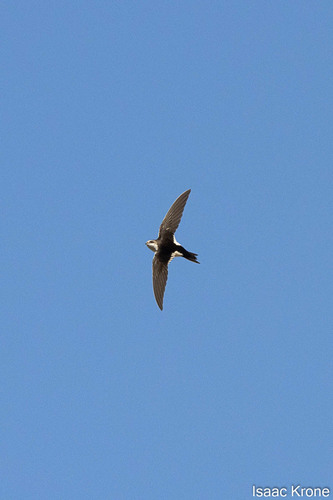
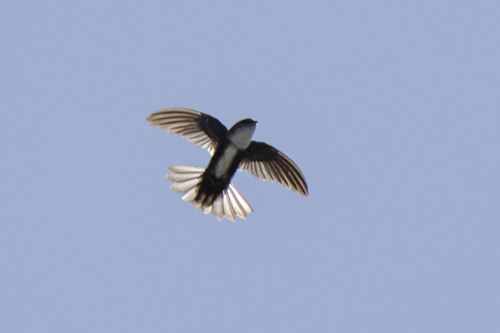
White-throated Swift (Aeronautes saxatalis) White-throated Swift
Antillean Palm Swift (Tachornis phoenicobia) Antillean Palm Swift

Media

Loading…

In short

The White-throated Swift and Antillean Palm Swift are both small, fast-flying swifts, but they can be distinguished by their plumage and habitat preferences. The White-throated Swift has distinctive white markings on its throat and flanks, while the Antillean Palm Swift is more uniformly colored and often associated with palm habitats.

Identification tips

  1. Look for the white throat and flank patches on the White-throated Swift, especially in flight. 2. Observe the habitat: White-throated Swifts are often near cliffs, while Antillean Palm Swifts are near palms. 3. Note the overall size and shape: White-throated Swifts are slightly larger and more robust. 4. If in the Caribbean, it's more likely to be an Antillean Palm Swift.

Size

Both species are small swifts, but the White-throated Swift is generally slightly larger and more robust compared to the slender Antillean Palm Swift.

Plumage

The White-throated Swift features a striking white throat and white patches on the flanks, contrasting with its dark body. The Antillean Palm Swift is more uniformly brownish-gray with less contrasting plumage, lacking the distinctive white markings.

Behaviour

White-throated Swifts are often seen in fast, acrobatic flight, sometimes in association with cliffs or human-made structures. Antillean Palm Swifts are also agile flyers but are more commonly associated with palm trees, where they often nest.

Habitat

White-throated Swifts prefer open areas with cliffs or canyons in the western United States, while Antillean Palm Swifts are found in the Caribbean, often near palm groves and open lowland areas.

Voice

Vocalizations are not a primary distinguishing feature in the field; both species produce high-pitched calls typical of swifts.

Submit a better description

Use the same sections as the comparison. Your text is published immediately.

The White-throated Swift and Antillean Palm Swift are both small, fast-flying swifts, but they can be distinguished by their plumage and habitat preferences. The White-throated Swift has distinctive white markings on its throat and flanks, while the Antillean Palm Swift is more uniformly colored and often associated with palm habitats.

  1. Look for the white throat and flank patches on the White-throated Swift, especially in flight. 2. Observe the habitat: White-throated Swifts are often near cliffs, while Antillean Palm Swifts are near palms. 3. Note the overall size and shape: White-throated Swifts are slightly larger and more robust. 4. If in the Caribbean, it's more likely to be an Antillean Palm Swift.

Both species are small swifts, but the White-throated Swift is generally slightly larger and more robust compared to the slender Antillean Palm Swift.

The White-throated Swift features a striking white throat and white patches on the flanks, contrasting with its dark body. The Antillean Palm Swift is more uniformly brownish-gray with less contrasting plumage, lacking the distinctive white markings.

White-throated Swifts are often seen in fast, acrobatic flight, sometimes in association with cliffs or human-made structures. Antillean Palm Swifts are also agile flyers but are more commonly associated with palm trees, where they often nest.

White-throated Swifts prefer open areas with cliffs or canyons in the western United States, while Antillean Palm Swifts are found in the Caribbean, often near palm groves and open lowland areas.

Vocalizations are not a primary distinguishing feature in the field; both species produce high-pitched calls typical of swifts.

Discard your changes?

You have unsaved edits. If you leave now, those changes will be lost.

White-throated Swift · Antillean Palm Swift · My Tricky Birds