Birdr

White-throated Swift vs White-tipped Swift

Aeronautes saxatalis versus Aeronautes montivagus

Play a quiz with White-throated Swift and White-tipped Swift
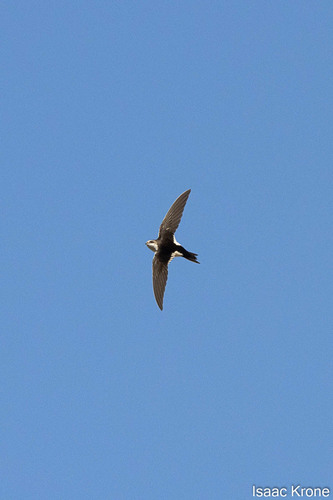
White-throated Swift (Aeronautes saxatalis) White-throated Swift
White-tipped Swift (Aeronautes montivagus) White-tipped Swift

Media

Loading…

In short

White-throated Swift and White-tipped Swift are both slender, fast-flying swifts with white markings, but they differ in the extent of white on their underparts and their preferred habitats. White-throated Swift has more extensive white on the throat and belly, while White-tipped Swift has a more restricted white throat and white thighs.

Identification tips

1. Look for the extent of white on the underparts: White-throated Swift has more white. 2. Note the habitat: White-tipped Swift is more likely in humid, forested areas. 3. Observe flocking behavior: White-tipped Swift often feeds in small flocks.

Size

Both species are similar in size, with slender bodies and long wings typical of swifts.

Plumage

White-throated Swift has a more extensive white throat and belly, contrasting sharply with its dark upperparts. White-tipped Swift has a white throat and white thighs but less white on the belly, giving it a darker overall appearance.

Behaviour

Both species are aerial insectivores, often seen flying rapidly in small flocks. White-tipped Swift is more likely to be seen feeding in small groups.

Habitat

White-throated Swift is often associated with open areas and cliffs, sometimes near human structures. White-tipped Swift prefers more humid and forested habitats and is found at lower elevations.

Submit a better description

Use the same sections as the comparison. Your text is published immediately.

White-throated Swift and White-tipped Swift are both slender, fast-flying swifts with white markings, but they differ in the extent of white on their underparts and their preferred habitats. White-throated Swift has more extensive white on the throat and belly, while White-tipped Swift has a more restricted white throat and white thighs.

1. Look for the extent of white on the underparts: White-throated Swift has more white. 2. Note the habitat: White-tipped Swift is more likely in humid, forested areas. 3. Observe flocking behavior: White-tipped Swift often feeds in small flocks.

Both species are similar in size, with slender bodies and long wings typical of swifts.

White-throated Swift has a more extensive white throat and belly, contrasting sharply with its dark upperparts. White-tipped Swift has a white throat and white thighs but less white on the belly, giving it a darker overall appearance.

Both species are aerial insectivores, often seen flying rapidly in small flocks. White-tipped Swift is more likely to be seen feeding in small groups.

White-throated Swift is often associated with open areas and cliffs, sometimes near human structures. White-tipped Swift prefers more humid and forested habitats and is found at lower elevations.

Discard your changes?

You have unsaved edits. If you leave now, those changes will be lost.

White-throated Swift · White-tipped Swift · My Tricky Birds