Birdr

White-throated Thrush vs Brown-capped Rosy-Finch

Turdus assimilis versus Leucosticte australis

Play a quiz with White-throated Thrush and Brown-capped Rosy-Finch
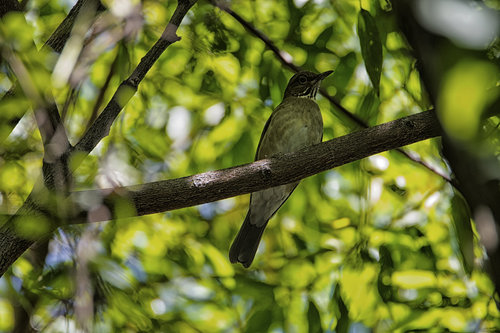
White-throated Thrush (Turdus assimilis) White-throated Thrush
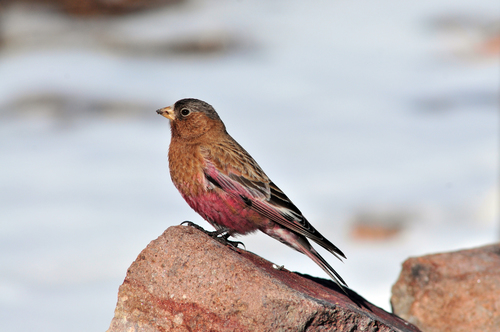
Brown-capped Rosy-Finch (Leucosticte australis) Brown-capped Rosy-Finch

Media

Loading…

In short

The White-throated Thrush and Brown-capped Rosy-Finch are distinct in both appearance and habitat. The White-throated Thrush is typically found in humid forests and has a prominent white 'collar' across its chest, while the Brown-capped Rosy-Finch is associated with alpine environments and has a brown cap and rosy body tones.

Identification tips

Size

The White-throated Thrush is generally larger than the Brown-capped Rosy-Finch, which is more compact and finch-like.

Plumage

The White-throated Thrush features a white 'collar' across the chest and varies in shades of gray and brown. In contrast, the Brown-capped Rosy-Finch has a brown cap and rosy hues on its body, with a more uniform appearance.

Behaviour

The White-throated Thrush is often seen foraging in forests and gardens, while the Brown-capped Rosy-Finch is more likely to be observed in alpine areas, sometimes nesting on cliffs.

Habitat

White-throated Thrushes inhabit humid forests, foothills, and gardens, while Brown-capped Rosy-Finches are found in high-altitude alpine environments.

Voice

Vocalizations differ significantly, but specific details are not provided. The White-throated Thrush has distinct calls compared to the Brown-capped Rosy-Finch.

Submit a better description

Use the same sections as the comparison. Your text is published immediately.

The White-throated Thrush and Brown-capped Rosy-Finch are distinct in both appearance and habitat. The White-throated Thrush is typically found in humid forests and has a prominent white 'collar' across its chest, while the Brown-capped Rosy-Finch is associated with alpine environments and has a brown cap and rosy body tones.

  • White-throated Thrush: Look for the white 'collar' across the chest, and its presence in forested or garden areas.
  • Brown-capped Rosy-Finch: Note the brown cap and rosy body tones, and its preference for alpine habitats.
  • Consider the habitat: forested areas suggest White-throated Thrush, while alpine regions indicate Brown-capped Rosy-Finch.

The White-throated Thrush is generally larger than the Brown-capped Rosy-Finch, which is more compact and finch-like.

The White-throated Thrush features a white 'collar' across the chest and varies in shades of gray and brown. In contrast, the Brown-capped Rosy-Finch has a brown cap and rosy hues on its body, with a more uniform appearance.

The White-throated Thrush is often seen foraging in forests and gardens, while the Brown-capped Rosy-Finch is more likely to be observed in alpine areas, sometimes nesting on cliffs.

White-throated Thrushes inhabit humid forests, foothills, and gardens, while Brown-capped Rosy-Finches are found in high-altitude alpine environments.

Vocalizations differ significantly, but specific details are not provided. The White-throated Thrush has distinct calls compared to the Brown-capped Rosy-Finch.

Discard your changes?

You have unsaved edits. If you leave now, those changes will be lost.

White-throated Thrush · Brown-capped Rosy-Finch · My Tricky Birds