Birdr

White-tipped Dove vs Zenaida Dove

Leptotila verreauxi versus Zenaida aurita

Play a quiz with White-tipped Dove and Zenaida Dove
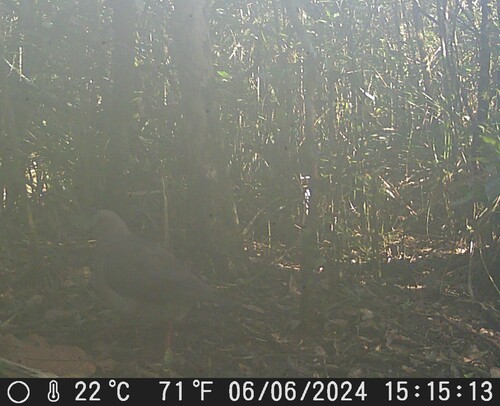
White-tipped Dove (Leptotila verreauxi) White-tipped Dove
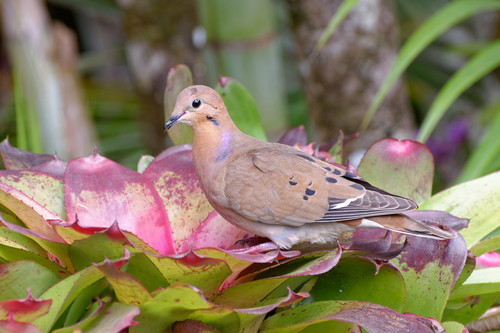
Zenaida Dove (Zenaida aurita) Zenaida Dove

Media

Loading…

In short

The White-tipped Dove and Zenaida Dove can be distinguished by their tail patterns and overall coloration. The White-tipped Dove has a distinctive white tip on its tail, while the Zenaida Dove lacks this feature and has a more uniform tail color. Both species are similar in size and shape, making plumage and tail markings crucial for identification.

Identification tips

Size

Both species are similar in size, typical of medium-sized doves, making size an unreliable distinguishing feature.

Plumage

The White-tipped Dove has a pale grayish-brown body with a white-tipped tail. In contrast, the Zenaida Dove has a more uniform brown coloration without the white tail tips. The Zenaida Dove may also show a slight pinkish wash on the breast.

Behaviour

Both species exhibit similar behaviors typical of doves, such as ground foraging and a preference for walking rather than flying when disturbed.

Habitat

White-tipped Doves are often found in dense vegetation and forest edges, while Zenaida Doves are more commonly observed in open woodlands and scrub areas. Both species can overlap in some habitats, but their preferences can aid in identification.

Voice

The vocalizations of these species differ, with the White-tipped Dove producing a series of soft coos, while the Zenaida Dove has a more mournful, drawn-out cooing sound. These calls can be useful for identification if heard.

Submit a better description

Use the same sections as the comparison. Your text is published immediately.

The White-tipped Dove and Zenaida Dove can be distinguished by their tail patterns and overall coloration. The White-tipped Dove has a distinctive white tip on its tail, while the Zenaida Dove lacks this feature and has a more uniform tail color. Both species are similar in size and shape, making plumage and tail markings crucial for identification.

  • Look for the white-tipped tail in the White-tipped Dove.
  • Note the uniform tail color in the Zenaida Dove.
  • Observe the overall coloration: White-tipped Dove is paler, while Zenaida Dove is more uniformly brown.
  • Listen for vocalizations: White-tipped Dove has soft coos, while Zenaida Dove has a mournful coo.

Both species are similar in size, typical of medium-sized doves, making size an unreliable distinguishing feature.

The White-tipped Dove has a pale grayish-brown body with a white-tipped tail. In contrast, the Zenaida Dove has a more uniform brown coloration without the white tail tips. The Zenaida Dove may also show a slight pinkish wash on the breast.

Both species exhibit similar behaviors typical of doves, such as ground foraging and a preference for walking rather than flying when disturbed.

White-tipped Doves are often found in dense vegetation and forest edges, while Zenaida Doves are more commonly observed in open woodlands and scrub areas. Both species can overlap in some habitats, but their preferences can aid in identification.

The vocalizations of these species differ, with the White-tipped Dove producing a series of soft coos, while the Zenaida Dove has a more mournful, drawn-out cooing sound. These calls can be useful for identification if heard.

Discard your changes?

You have unsaved edits. If you leave now, those changes will be lost.

White-tipped Dove · Zenaida Dove · My Tricky Birds