Birdr

White-vented Violetear vs Grey-flanked Cinclodes

Colibri serrirostris versus Cinclodes oustaleti

Play a quiz with White-vented Violetear and Grey-flanked Cinclodes
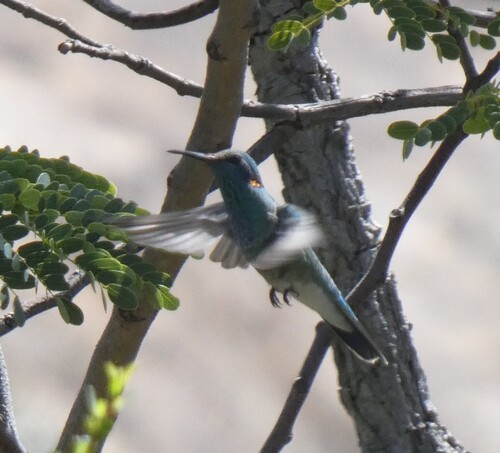
White-vented Violetear (Colibri serrirostris) White-vented Violetear
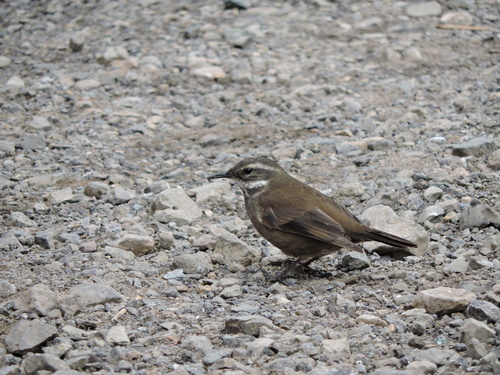
Grey-flanked Cinclodes (Cinclodes oustaleti) Grey-flanked Cinclodes

Media

Loading…

In short

The White-vented Violetear is a hummingbird with iridescent plumage and a distinctive white vent, while the Grey-flanked Cinclodes is a larger, more robust bird with earthy tones and a stout bill. These species differ significantly in both appearance and behavior, making them distinguishable in the field.

Identification tips

1. Look for the iridescent plumage and white vent of the White-vented Violetear. 2. Note the size and robust build of the Grey-flanked Cinclodes, along with its earthy tones. 3. Observe behavior: hovering and territorial aggression suggest the Violetear, while ground foraging indicates the Cinclodes. 4. Consider habitat: flower-rich areas for Violetear and rocky or grassy areas for Cinclodes.

Size

The White-vented Violetear is a small hummingbird, whereas the Grey-flanked Cinclodes is larger and more robust.

Plumage

The White-vented Violetear has iridescent green and blue plumage with a white vent, while the Grey-flanked Cinclodes features earthy brown and grey tones with cream-colored wing markings.

Behaviour

White-vented Violetears are aggressive defenders of their feeding territories and often forage early in the morning. Grey-flanked Cinclodes are more terrestrial, often seen foraging on the ground or along water edges.

Habitat

White-vented Violetears are typically found in open areas with rich flower sources, often at elevations between 1000-1500 meters. Grey-flanked Cinclodes inhabit rocky or grassy areas, often near water, and are more widespread across various elevations.

Voice

White-vented Violetears are known for their steady calling, especially when defending territory. Grey-flanked Cinclodes have different vocalizations, but specific details are less documented.

Submit a better description

Use the same sections as the comparison. Your text is published immediately.

The White-vented Violetear is a hummingbird with iridescent plumage and a distinctive white vent, while the Grey-flanked Cinclodes is a larger, more robust bird with earthy tones and a stout bill. These species differ significantly in both appearance and behavior, making them distinguishable in the field.

1. Look for the iridescent plumage and white vent of the White-vented Violetear. 2. Note the size and robust build of the Grey-flanked Cinclodes, along with its earthy tones. 3. Observe behavior: hovering and territorial aggression suggest the Violetear, while ground foraging indicates the Cinclodes. 4. Consider habitat: flower-rich areas for Violetear and rocky or grassy areas for Cinclodes.

The White-vented Violetear is a small hummingbird, whereas the Grey-flanked Cinclodes is larger and more robust.

The White-vented Violetear has iridescent green and blue plumage with a white vent, while the Grey-flanked Cinclodes features earthy brown and grey tones with cream-colored wing markings.

White-vented Violetears are aggressive defenders of their feeding territories and often forage early in the morning. Grey-flanked Cinclodes are more terrestrial, often seen foraging on the ground or along water edges.

White-vented Violetears are typically found in open areas with rich flower sources, often at elevations between 1000-1500 meters. Grey-flanked Cinclodes inhabit rocky or grassy areas, often near water, and are more widespread across various elevations.

White-vented Violetears are known for their steady calling, especially when defending territory. Grey-flanked Cinclodes have different vocalizations, but specific details are less documented.

Discard your changes?

You have unsaved edits. If you leave now, those changes will be lost.

White-vented Violetear · Grey-flanked Cinclodes · My Tricky Birds