Birdr

White-winged Black Tern vs White-cheeked Tern

Chlidonias leucopterus versus Sterna repressa

Play a quiz with White-winged Black Tern and White-cheeked Tern
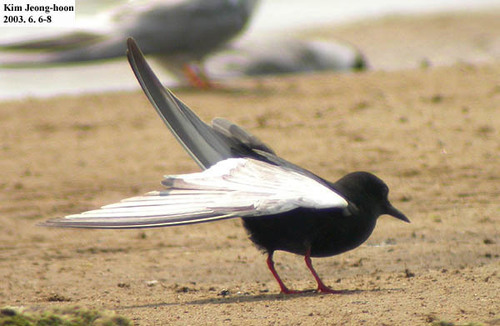
White-winged Black Tern (Chlidonias leucopterus) White-winged Black Tern
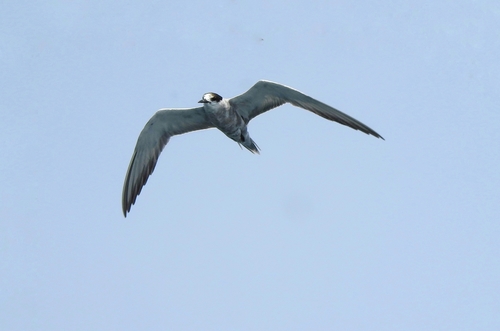
White-cheeked Tern (Sterna repressa) White-cheeked Tern

Media

Loading…

In short

The White-winged Black Tern (Chlidonias leucopterus) and the White-cheeked Tern (Sterna repressa) can be distinguished by their wing patterns and cheek coloration. The White-winged Black Tern has striking white wings with black markings, while the White-cheeked Tern has a more uniform grey wing and distinct white cheeks.

Identification tips

  1. Look for the white wings with black markings on the White-winged Black Tern, especially in flight. 2. Note the white cheeks and grey wings of the White-cheeked Tern. 3. Consider the habitat: freshwater for White-winged Black Tern and coastal for White-cheeked Tern. 4. Observe foraging behavior: dipping and hovering for White-winged Black Tern, plunge-diving for White-cheeked Tern.

Size

Both species are similar in size, but the White-cheeked Tern may appear slightly more slender.

Plumage

The White-winged Black Tern in breeding plumage has a black head and body with white wings, whereas the White-cheeked Tern has a grey body with a white cheek and a black cap. In non-breeding plumage, the White-winged Black Tern becomes paler with a greyish body and retains some black on the head.

Behaviour

White-winged Black Terns often forage by dipping and hovering over water, while White-cheeked Terns are more likely to be seen plunge-diving.

Habitat

White-winged Black Terns are typically found in freshwater wetlands, whereas White-cheeked Terns prefer coastal areas and are often seen around sandy beaches and coral islands.

Voice

The vocalizations of these species are not well-documented in the sources, but terns generally have harsh, grating calls.

Submit a better description

Use the same sections as the comparison. Your text is published immediately.

The White-winged Black Tern (Chlidonias leucopterus) and the White-cheeked Tern (Sterna repressa) can be distinguished by their wing patterns and cheek coloration. The White-winged Black Tern has striking white wings with black markings, while the White-cheeked Tern has a more uniform grey wing and distinct white cheeks.

  1. Look for the white wings with black markings on the White-winged Black Tern, especially in flight. 2. Note the white cheeks and grey wings of the White-cheeked Tern. 3. Consider the habitat: freshwater for White-winged Black Tern and coastal for White-cheeked Tern. 4. Observe foraging behavior: dipping and hovering for White-winged Black Tern, plunge-diving for White-cheeked Tern.

Both species are similar in size, but the White-cheeked Tern may appear slightly more slender.

The White-winged Black Tern in breeding plumage has a black head and body with white wings, whereas the White-cheeked Tern has a grey body with a white cheek and a black cap. In non-breeding plumage, the White-winged Black Tern becomes paler with a greyish body and retains some black on the head.

White-winged Black Terns often forage by dipping and hovering over water, while White-cheeked Terns are more likely to be seen plunge-diving.

White-winged Black Terns are typically found in freshwater wetlands, whereas White-cheeked Terns prefer coastal areas and are often seen around sandy beaches and coral islands.

The vocalizations of these species are not well-documented in the sources, but terns generally have harsh, grating calls.

Discard your changes?

You have unsaved edits. If you leave now, those changes will be lost.

White-winged Black Tern · White-cheeked Tern · My Tricky Birds