Birdr

White-winged Dove vs Zenaida Dove

Zenaida asiatica versus Zenaida aurita

Play a quiz with White-winged Dove and Zenaida Dove
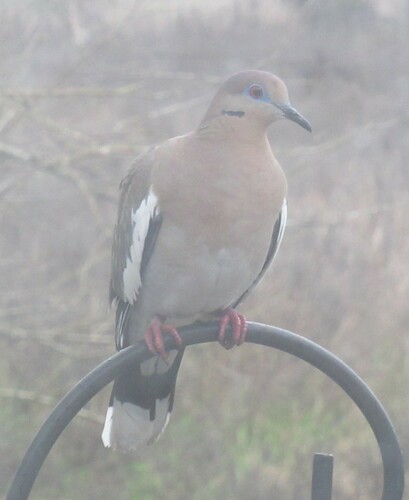
White-winged Dove (Zenaida asiatica) White-winged Dove
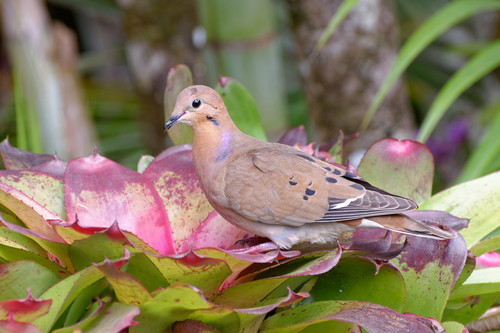
Zenaida Dove (Zenaida aurita) Zenaida Dove

Media

Loading…

In short

The White-winged Dove and Zenaida Dove are similar in appearance but can be distinguished by their wing markings and habitat preferences. The White-winged Dove has a distinctive white edge on its wings, while the Zenaida Dove lacks this feature. Both species are similar in size and structure, making plumage and habitat the most reliable field marks.

Identification tips

  1. Look for the white edge on the wings of the White-winged Dove, especially in flight. 2. Note the habitat: White-winged Doves are more common in open and urban areas, while Zenaida Doves prefer wooded or shrubby areas. 3. Check for the blue eye ring in White-winged Doves as a supporting feature.

Size

Both species are similar in size, with a robust body typical of doves.

Plumage

The White-winged Dove has a prominent white edge on its wings, visible both at rest and in flight, and a blue eye ring. In contrast, the Zenaida Dove lacks the white wing edge and has a more subdued plumage overall, with a pinkish hue on the chest and a more muted eye ring.

Behaviour

Both species exhibit similar behaviors typical of doves, such as ground foraging and perching in trees.

Habitat

The White-winged Dove is often found in more arid, open areas and urban environments, while the Zenaida Dove prefers more wooded or shrubby areas, often near water.

Voice

The vocalizations of these species are similar, with both producing cooing sounds, though specific differences in pitch and pattern may exist but are not well-documented here.

Submit a better description

Use the same sections as the comparison. Your text is published immediately.

The White-winged Dove and Zenaida Dove are similar in appearance but can be distinguished by their wing markings and habitat preferences. The White-winged Dove has a distinctive white edge on its wings, while the Zenaida Dove lacks this feature. Both species are similar in size and structure, making plumage and habitat the most reliable field marks.

  1. Look for the white edge on the wings of the White-winged Dove, especially in flight. 2. Note the habitat: White-winged Doves are more common in open and urban areas, while Zenaida Doves prefer wooded or shrubby areas. 3. Check for the blue eye ring in White-winged Doves as a supporting feature.

Both species are similar in size, with a robust body typical of doves.

The White-winged Dove has a prominent white edge on its wings, visible both at rest and in flight, and a blue eye ring. In contrast, the Zenaida Dove lacks the white wing edge and has a more subdued plumage overall, with a pinkish hue on the chest and a more muted eye ring.

Both species exhibit similar behaviors typical of doves, such as ground foraging and perching in trees.

The White-winged Dove is often found in more arid, open areas and urban environments, while the Zenaida Dove prefers more wooded or shrubby areas, often near water.

The vocalizations of these species are similar, with both producing cooing sounds, though specific differences in pitch and pattern may exist but are not well-documented here.

Discard your changes?

You have unsaved edits. If you leave now, those changes will be lost.

White-winged Dove · Zenaida Dove · My Tricky Birds