
Birdr

White-winged Nightjar vs Sickle-winged Nightjar

Eleothreptus candicans versus Eleothreptus anomalus

Play a quiz with White-winged Nightjar and Sickle-winged Nightjar
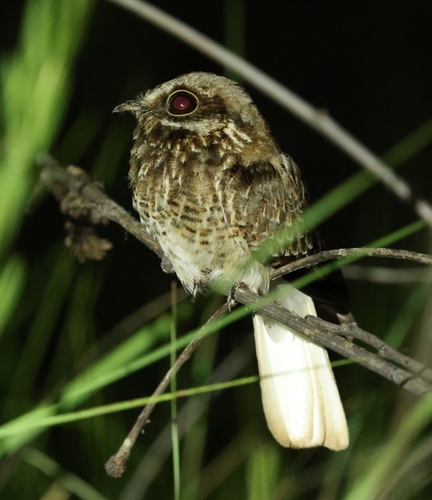
White-winged Nightjar (Eleothreptus candicans) White-winged Nightjar
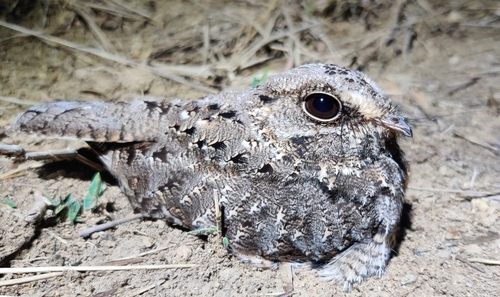
Sickle-winged Nightjar (Eleothreptus anomalus) Sickle-winged Nightjar

Media

Loading…

In short

The White-winged Nightjar and Sickle-winged Nightjar are both members of the Eleothreptus genus, making them structurally similar. The most reliable field mark is the presence of white in the wings of the White-winged Nightjar, which is absent in the Sickle-winged Nightjar. Both species inhabit grassland areas, but their ranges and conservation statuses differ.

Identification tips

  1. Look for the white wing patches in the White-winged Nightjar during flight. 2. Observe the habitat: White-winged Nightjar is more likely in cerrado, while Sickle-winged Nightjar prefers marshy grasslands. 3. Note the absence of contrasting wing markings in the Sickle-winged Nightjar.

Size

Both species are similar in size, typical of nightjars, with no significant size difference noted.

Plumage

The White-winged Nightjar has distinctive white patches on its wings, visible in flight, which are absent in the Sickle-winged Nightjar. The Sickle-winged Nightjar has more uniform plumage without such contrasting wing markings.

Behaviour

Both species exhibit typical nightjar behavior, being crepuscular and nocturnal, and are often seen flying low over open areas.

Habitat

The White-winged Nightjar is found in cerrado habitats in northern Bolivia, south central Brazil, and eastern Paraguay, while the Sickle-winged Nightjar prefers grassland and marshy edges. Both species are affected by habitat degradation.

Voice

There is limited information on vocal differences, but nightjars typically have distinctive calls. Specific vocalizations for these species are not well-documented.

Submit a better description

Use the same sections as the comparison. Your text is published immediately.

The White-winged Nightjar and Sickle-winged Nightjar are both members of the Eleothreptus genus, making them structurally similar. The most reliable field mark is the presence of white in the wings of the White-winged Nightjar, which is absent in the Sickle-winged Nightjar. Both species inhabit grassland areas, but their ranges and conservation statuses differ.

  1. Look for the white wing patches in the White-winged Nightjar during flight. 2. Observe the habitat: White-winged Nightjar is more likely in cerrado, while Sickle-winged Nightjar prefers marshy grasslands. 3. Note the absence of contrasting wing markings in the Sickle-winged Nightjar.

Both species are similar in size, typical of nightjars, with no significant size difference noted.

The White-winged Nightjar has distinctive white patches on its wings, visible in flight, which are absent in the Sickle-winged Nightjar. The Sickle-winged Nightjar has more uniform plumage without such contrasting wing markings.

Both species exhibit typical nightjar behavior, being crepuscular and nocturnal, and are often seen flying low over open areas.

The White-winged Nightjar is found in cerrado habitats in northern Bolivia, south central Brazil, and eastern Paraguay, while the Sickle-winged Nightjar prefers grassland and marshy edges. Both species are affected by habitat degradation.

There is limited information on vocal differences, but nightjars typically have distinctive calls. Specific vocalizations for these species are not well-documented.

Discard your changes?

You have unsaved edits. If you leave now, those changes will be lost.

White-winged Nightjar · Sickle-winged Nightjar · My Tricky Birds