Birdr

White-winged Scoter vs Kauai Amakihi

Melanitta deglandi versus Chlorodrepanis stejnegeri

Play a quiz with White-winged Scoter and Kauai Amakihi
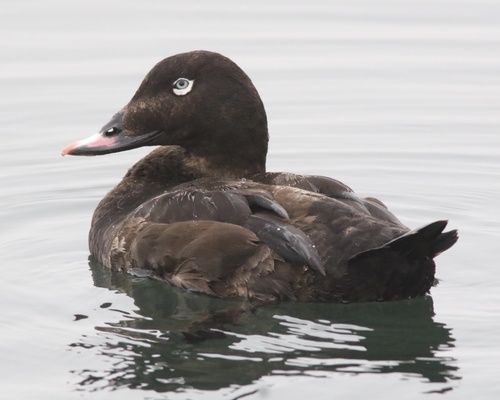
White-winged Scoter (Melanitta deglandi) White-winged Scoter
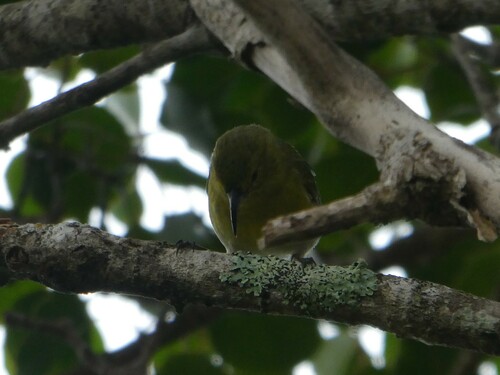
Kauai Amakihi (Chlorodrepanis stejnegeri) Kauai Amakihi

Media

Loading…

In short

The White-winged Scoter and Kauai Amakihi are vastly different species, with the former being a large sea duck and the latter a small Hawaiian honeycreeper. They differ greatly in habitat, behavior, and appearance, making them unlikely to be confused in the field.

Identification tips

1. Look for size: White-winged Scoter is much larger. 2. Check plumage: White-winged Scoter has white wing patches; Kauai Amakihi is yellow-green. 3. Consider habitat: White-winged Scoter is found in coastal waters; Kauai Amakihi is in forests on Kauai. 4. Observe behavior: White-winged Scoter dives for food; Kauai Amakihi forages in trees.

Size

The White-winged Scoter is significantly larger, being a sea duck, while the Kauai Amakihi is a small passerine.

Plumage

The White-winged Scoter has dark plumage with distinctive white patches on its wings, whereas the Kauai Amakihi is primarily yellow-green with no white wing patches.

Behaviour

White-winged Scoters are often seen diving for food in coastal waters, while Kauai Amakihi forage for nectar and insects in trees.

Habitat

White-winged Scoters inhabit open coastal environments and large wetlands, while Kauai Amakihi are found in a variety of forested areas on Kauai, including lower elevations and suburban areas.

Voice

The vocalizations of these species are not similar; the Kauai Amakihi has a typical songbird call, while the White-winged Scoter's vocalizations are more duck-like.

Submit a better description

Use the same sections as the comparison. Your text is published immediately.

The White-winged Scoter and Kauai Amakihi are vastly different species, with the former being a large sea duck and the latter a small Hawaiian honeycreeper. They differ greatly in habitat, behavior, and appearance, making them unlikely to be confused in the field.

1. Look for size: White-winged Scoter is much larger. 2. Check plumage: White-winged Scoter has white wing patches; Kauai Amakihi is yellow-green. 3. Consider habitat: White-winged Scoter is found in coastal waters; Kauai Amakihi is in forests on Kauai. 4. Observe behavior: White-winged Scoter dives for food; Kauai Amakihi forages in trees.

The White-winged Scoter is significantly larger, being a sea duck, while the Kauai Amakihi is a small passerine.

The White-winged Scoter has dark plumage with distinctive white patches on its wings, whereas the Kauai Amakihi is primarily yellow-green with no white wing patches.

White-winged Scoters are often seen diving for food in coastal waters, while Kauai Amakihi forage for nectar and insects in trees.

White-winged Scoters inhabit open coastal environments and large wetlands, while Kauai Amakihi are found in a variety of forested areas on Kauai, including lower elevations and suburban areas.

The vocalizations of these species are not similar; the Kauai Amakihi has a typical songbird call, while the White-winged Scoter's vocalizations are more duck-like.

Discard your changes?

You have unsaved edits. If you leave now, those changes will be lost.

White-winged Scoter · Kauai Amakihi · My Tricky Birds