Birdr

White-winged Swallow vs White-rumped Swallow

Tachycineta albiventer versus Tachycineta leucorrhoa

Play a quiz with White-winged Swallow and White-rumped Swallow
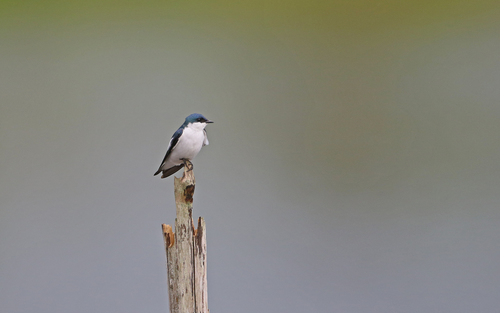
White-winged Swallow (Tachycineta albiventer) White-winged Swallow
White-rumped Swallow (Tachycineta leucorrhoa) White-rumped Swallow

Media

Loading…

In short

The White-winged Swallow and White-rumped Swallow are similar Tachycineta species often confused due to their overlapping ranges and similar plumage. The most reliable field mark is the presence of white on the wings of the White-winged Swallow, which is absent in the White-rumped Swallow. Both species share similar habitats, but subtle differences in behavior and vocalizations can aid identification.

Identification tips

  1. Look for white patches on the wings to identify the White-winged Swallow. 2. Check for a white rump to confirm a White-rumped Swallow. 3. Observe nesting behavior; White-rumped Swallows often use man-made structures. 4. Consider habitat: White-rumped Swallows are more common in urban and agricultural areas.

Size

Both species are similar in size, typical of small swallows.

Plumage

The White-winged Swallow has distinct white patches on its wings, which are absent in the White-rumped Swallow. The White-rumped Swallow, as its name suggests, has a prominent white rump that contrasts with its darker back.

Behaviour

Both species exhibit typical swallow behavior, such as agile flight and perching on wires. However, the White-rumped Swallow is more likely to be seen nesting in man-made structures.

Habitat

Both species inhabit open areas near water, but the White-rumped Swallow is more adaptable to agricultural and urban areas.

Voice

Vocalizations are not a primary distinguishing feature, but the White-rumped Swallow's song is described as a bubbly series of notes, often delivered from a perch or in flight.

Submit a better description

Use the same sections as the comparison. Your text is published immediately.

The White-winged Swallow and White-rumped Swallow are similar Tachycineta species often confused due to their overlapping ranges and similar plumage. The most reliable field mark is the presence of white on the wings of the White-winged Swallow, which is absent in the White-rumped Swallow. Both species share similar habitats, but subtle differences in behavior and vocalizations can aid identification.

  1. Look for white patches on the wings to identify the White-winged Swallow. 2. Check for a white rump to confirm a White-rumped Swallow. 3. Observe nesting behavior; White-rumped Swallows often use man-made structures. 4. Consider habitat: White-rumped Swallows are more common in urban and agricultural areas.

Both species are similar in size, typical of small swallows.

The White-winged Swallow has distinct white patches on its wings, which are absent in the White-rumped Swallow. The White-rumped Swallow, as its name suggests, has a prominent white rump that contrasts with its darker back.

Both species exhibit typical swallow behavior, such as agile flight and perching on wires. However, the White-rumped Swallow is more likely to be seen nesting in man-made structures.

Both species inhabit open areas near water, but the White-rumped Swallow is more adaptable to agricultural and urban areas.

Vocalizations are not a primary distinguishing feature, but the White-rumped Swallow's song is described as a bubbly series of notes, often delivered from a perch or in flight.

Discard your changes?

You have unsaved edits. If you leave now, those changes will be lost.

White-winged Swallow · White-rumped Swallow · My Tricky Birds