Birdr

White-winged Widowbird vs Long-tailed Widowbird

Euplectes albonotatus versus Euplectes progne

Play a quiz with White-winged Widowbird and Long-tailed Widowbird
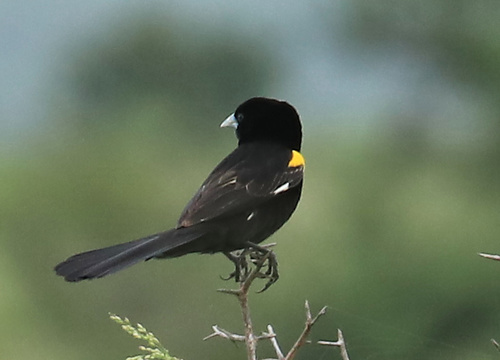
White-winged Widowbird (Euplectes albonotatus) White-winged Widowbird
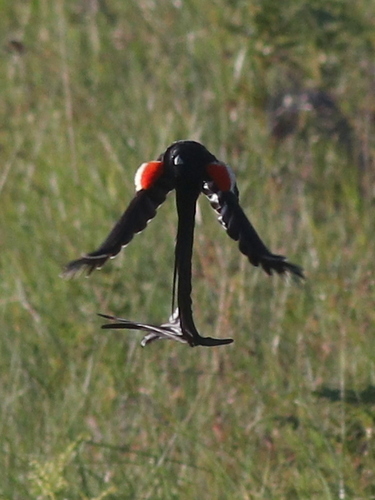
Long-tailed Widowbird (Euplectes progne) Long-tailed Widowbird

Media

Loading…

In short

The White-winged Widowbird and Long-tailed Widowbird are similar in appearance but can be distinguished by tail length and wing markings. The Long-tailed Widowbird is notable for its extremely long tail in breeding males, while the White-winged Widowbird has distinctive white wing patches visible in flight.

Identification tips

  1. Tail Length: Look for the extremely long tail of the breeding male Long-tailed Widowbird. 2. Wing Markings: Check for white wing patches in the White-winged Widowbird, especially visible in flight. 3. Seasonal Changes: Note that non-breeding males and females are less distinctive, requiring closer observation of wing markings and tail length.

Size

Both species are similar in size, but the Long-tailed Widowbird appears larger due to its elongated tail during the breeding season.

Plumage

Breeding male Long-tailed Widowbirds have a strikingly long tail and are mostly black with a slight sheen. White-winged Widowbirds have a shorter tail and prominent white wing patches that are visible in flight. Non-breeding males and females of both species are more subdued in color, making them harder to distinguish.

Behaviour

Both species exhibit similar behaviors, often seen in flocks and displaying prominently during the breeding season.

Habitat

Both species inhabit grasslands and wetlands, but the Long-tailed Widowbird is more commonly found in higher altitude grasslands.

Voice

Their vocalizations are similar, consisting of chirps and whistles, making them difficult to distinguish by sound alone.

Submit a better description

Use the same sections as the comparison. Your text is published immediately.

The White-winged Widowbird and Long-tailed Widowbird are similar in appearance but can be distinguished by tail length and wing markings. The Long-tailed Widowbird is notable for its extremely long tail in breeding males, while the White-winged Widowbird has distinctive white wing patches visible in flight.

  1. Tail Length: Look for the extremely long tail of the breeding male Long-tailed Widowbird. 2. Wing Markings: Check for white wing patches in the White-winged Widowbird, especially visible in flight. 3. Seasonal Changes: Note that non-breeding males and females are less distinctive, requiring closer observation of wing markings and tail length.

Both species are similar in size, but the Long-tailed Widowbird appears larger due to its elongated tail during the breeding season.

Breeding male Long-tailed Widowbirds have a strikingly long tail and are mostly black with a slight sheen. White-winged Widowbirds have a shorter tail and prominent white wing patches that are visible in flight. Non-breeding males and females of both species are more subdued in color, making them harder to distinguish.

Both species exhibit similar behaviors, often seen in flocks and displaying prominently during the breeding season.

Both species inhabit grasslands and wetlands, but the Long-tailed Widowbird is more commonly found in higher altitude grasslands.

Their vocalizations are similar, consisting of chirps and whistles, making them difficult to distinguish by sound alone.

Discard your changes?

You have unsaved edits. If you leave now, those changes will be lost.

White-winged Widowbird · Long-tailed Widowbird · My Tricky Birds