Birdr

Whooping Crane vs Baird's Sandpiper

Grus americana versus Calidris bairdii

Play a quiz with Whooping Crane and Baird's Sandpiper
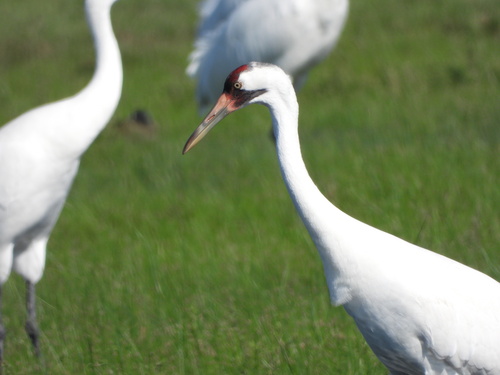
Whooping Crane (Grus americana) Whooping Crane
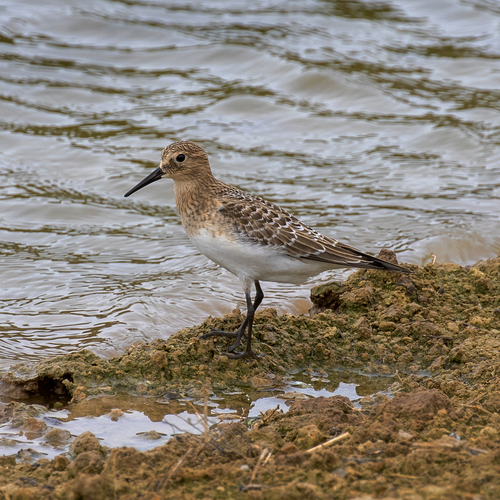
Baird's Sandpiper (Calidris bairdii) Baird's Sandpiper

Media

Loading…

In short

The Whooping Crane and Baird's Sandpiper are easily distinguished by size and habitat. The Whooping Crane is a large, white bird found in wetlands, while the Baird's Sandpiper is a small, brownish shorebird seen in tundra and coastal areas.

Identification tips

Size and habitat are the most reliable identifiers: look for a large white bird in wetlands for Whooping Crane, and a small brown shorebird in tundra or coastal areas for Baird's Sandpiper. Plumage differences are also clear, with Whooping Cranes showing a striking white with black wingtips and red crown, versus the Baird's Sandpiper's brown and buff tones. Behavior can help too, as Whooping Cranes are more deliberate in movement compared to the active foraging of Baird's Sandpipers. Listen for the loud trumpeting of the crane versus the softer calls of the sandpiper.

Size

The Whooping Crane is significantly larger, standing over 1.5 meters tall, whereas the Baird's Sandpiper is a small bird, about 18 cm in length.

Plumage

Whooping Cranes are predominantly white with black wingtips visible in flight, and a distinctive red crown. Baird's Sandpipers have a mottled brown and buff plumage with a white belly, more cryptic and suited for their tundra habitat.

Behaviour

Whooping Cranes are often seen in pairs or small family groups, walking slowly in wetlands. Baird's Sandpipers are more solitary or in small flocks, actively foraging on the ground.

Habitat

Whooping Cranes inhabit freshwater wetlands and coastal marshes, while Baird's Sandpipers breed in Arctic tundra and migrate through grasslands and coastal mudflats.

Voice

Whooping Cranes have a loud, trumpeting call, while Baird's Sandpipers produce softer, more subtle calls.

Submit a better description

Use the same sections as the comparison. Your text is published immediately.

The Whooping Crane and Baird's Sandpiper are easily distinguished by size and habitat. The Whooping Crane is a large, white bird found in wetlands, while the Baird's Sandpiper is a small, brownish shorebird seen in tundra and coastal areas.

Size and habitat are the most reliable identifiers: look for a large white bird in wetlands for Whooping Crane, and a small brown shorebird in tundra or coastal areas for Baird's Sandpiper. Plumage differences are also clear, with Whooping Cranes showing a striking white with black wingtips and red crown, versus the Baird's Sandpiper's brown and buff tones. Behavior can help too, as Whooping Cranes are more deliberate in movement compared to the active foraging of Baird's Sandpipers. Listen for the loud trumpeting of the crane versus the softer calls of the sandpiper.

The Whooping Crane is significantly larger, standing over 1.5 meters tall, whereas the Baird's Sandpiper is a small bird, about 18 cm in length.

Whooping Cranes are predominantly white with black wingtips visible in flight, and a distinctive red crown. Baird's Sandpipers have a mottled brown and buff plumage with a white belly, more cryptic and suited for their tundra habitat.

Whooping Cranes are often seen in pairs or small family groups, walking slowly in wetlands. Baird's Sandpipers are more solitary or in small flocks, actively foraging on the ground.

Whooping Cranes inhabit freshwater wetlands and coastal marshes, while Baird's Sandpipers breed in Arctic tundra and migrate through grasslands and coastal mudflats.

Whooping Cranes have a loud, trumpeting call, while Baird's Sandpipers produce softer, more subtle calls.

Discard your changes?

You have unsaved edits. If you leave now, those changes will be lost.

Whooping Crane · Baird's Sandpiper · My Tricky Birds