Birdr

Williamson's Sapsucker vs Bronzed Cowbird

Sphyrapicus thyroideus versus Molothrus aeneus

Play a quiz with Williamson's Sapsucker and Bronzed Cowbird
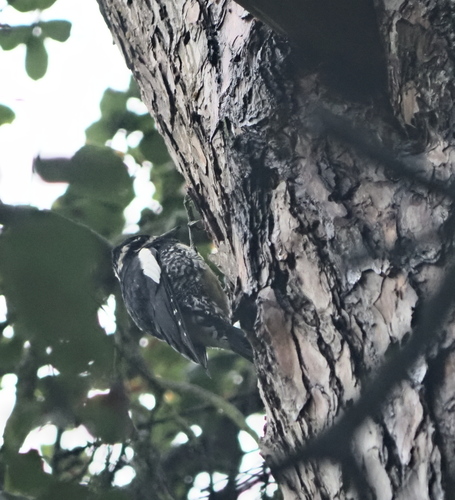
Williamson's Sapsucker (Sphyrapicus thyroideus) Williamson's Sapsucker
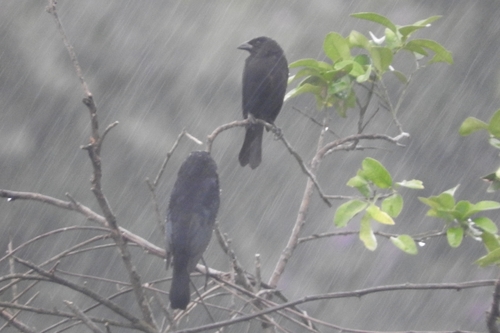
Bronzed Cowbird (Molothrus aeneus) Bronzed Cowbird

Media

Loading…

In short

Williamson's Sapsucker and Bronzed Cowbird are not closely related and differ significantly in appearance and behavior. The sapsucker is a woodpecker with distinct sexual dimorphism, while the cowbird is a brood parasite with a more uniform appearance. Key differences are in plumage and habitat preferences.

Identification tips

1. Look for the distinct sexual dimorphism in Williamson's Sapsucker: males are colorful, females are cryptic. 2. Observe habitat: sapsuckers in forests, cowbirds in open areas. 3. Note behavior: sapsuckers drill sap wells, cowbirds engage in brood parasitism. 4. Use size as a guide: sapsuckers are larger and more robust than cowbirds.

Size

Williamson's Sapsucker is a medium-sized woodpecker, while the Bronzed Cowbird is a smaller passerine.

Plumage

Male Williamson's Sapsuckers are black with bright red, yellow, and white, whereas females are cryptic brown with yellow bellies. Bronzed Cowbirds have a more uniform dark plumage, with males showing a glossy bronzed sheen and females being duller.

Behaviour

Williamson's Sapsuckers drill sap wells in trees and switch to ants during breeding. Bronzed Cowbirds are brood parasites, laying eggs in other birds' nests.

Habitat

Williamson's Sapsuckers are found in coniferous forests, while Bronzed Cowbirds are more adaptable, often seen in open and semi-open areas, including agricultural lands.

Voice

Vocalizations are not well-documented in the provided notes, but generally, sapsuckers have drumming patterns, while cowbirds have a variety of calls and songs.

Submit a better description

Use the same sections as the comparison. Your text is published immediately.

Williamson's Sapsucker and Bronzed Cowbird are not closely related and differ significantly in appearance and behavior. The sapsucker is a woodpecker with distinct sexual dimorphism, while the cowbird is a brood parasite with a more uniform appearance. Key differences are in plumage and habitat preferences.

1. Look for the distinct sexual dimorphism in Williamson's Sapsucker: males are colorful, females are cryptic. 2. Observe habitat: sapsuckers in forests, cowbirds in open areas. 3. Note behavior: sapsuckers drill sap wells, cowbirds engage in brood parasitism. 4. Use size as a guide: sapsuckers are larger and more robust than cowbirds.

Williamson's Sapsucker is a medium-sized woodpecker, while the Bronzed Cowbird is a smaller passerine.

Male Williamson's Sapsuckers are black with bright red, yellow, and white, whereas females are cryptic brown with yellow bellies. Bronzed Cowbirds have a more uniform dark plumage, with males showing a glossy bronzed sheen and females being duller.

Williamson's Sapsuckers drill sap wells in trees and switch to ants during breeding. Bronzed Cowbirds are brood parasites, laying eggs in other birds' nests.

Williamson's Sapsuckers are found in coniferous forests, while Bronzed Cowbirds are more adaptable, often seen in open and semi-open areas, including agricultural lands.

Vocalizations are not well-documented in the provided notes, but generally, sapsuckers have drumming patterns, while cowbirds have a variety of calls and songs.

Discard your changes?

You have unsaved edits. If you leave now, those changes will be lost.

Williamson's Sapsucker · Bronzed Cowbird · My Tricky Birds