
Willow Warbler vs Common Chiffchaff
Phylloscopus trochilus versus Phylloscopus collybita
Play a quiz with Willow Warbler and Common Chiffchaff
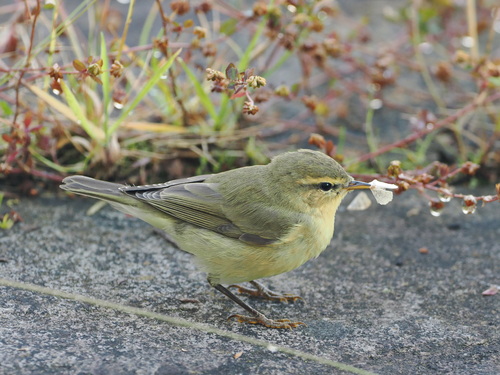 Willow Warbler
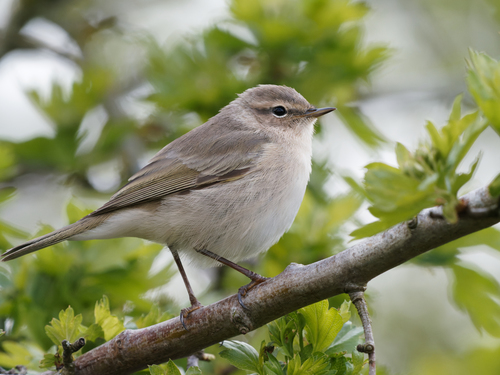 Common Chiffchaff
In short
The most reliable field mark between Willow Warbler and Common Chiffchaff is leg color: Willow Warbler shows pale pinkish-yellow legs, while Chiffchaff’s are always dark brown to blackish. If you get a good look at the wings, Willow Warbler has a longer primary projection (the tips of the longest flight feathers extend further beyond the tertials), giving it a sleeker, more elegant appearance; Chiffchaff’s wings look shorter and rounder. Willow Warbler also tends to look brighter and more yellowish below, especially in juveniles, while Chiffchaff is generally duller and browner. In the field, structure and subtle plumage differences are key, as both species are extremely similar and overlap in habitat. Voice is distinctive if heard: Willow Warbler’s song is a sweet descending whistle, Chiffchaff’s is a repetitive “chiff-chaff.”
Identification tips
- Leg color: Willow Warbler always has pale pinkish-yellow legs; Chiffchaff’s are dark brown to blackish. This is the single most reliable field mark in all ages and seasons, but beware of mud or shadow making pale legs look dark.
- Primary projection: When perched, Willow Warbler shows a long extension of the primaries beyond the tertials (long primary projection), giving a sleeker, more elongated look. Chiffchaff’s primary projection is short, making the wing look more rounded and the bird dumpier. This is visible in all plumages but easiest in fresh birds.
- Bill shape and color: Willow Warbler has a longer, paler bill; Chiffchaff’s bill is shorter and darker. Useful if seen well, but subtle.
- Overall shape (jizz): Willow Warbler appears more elegant and elongated, with a longer body and tail; Chiffchaff is more compact and rounded.
- Underpart color: Willow Warbler is off-white to yellowish below, often quite yellow in juveniles. Chiffchaff is off-white, sometimes with a faint yellow wash on the flanks in spring, but never as yellow as Willow Warbler.
- Upperpart tone: Willow Warbler is greener above, especially after molt; Chiffchaff is browner, especially in juveniles and worn adults.
- Supercilium: Willow Warbler’s pale eyebrow is longer and more distinct; Chiffchaff’s is shorter and less contrasting, but this is variable and not always reliable.
- Tail movement: Chiffchaff frequently dips and wags its tail side-to-side; Willow Warbler does not show this behavior.
- Wingbars: Both species lack wingbars, so presence of any is a sign you have a different species.
- Juvenile plumage: Willow Warbler juveniles are much yellower below than Chiffchaff juveniles, which are browner above and yellowish-white below. After molt, both become greener above, but Willow Warbler remains yellower below.
- Song: Willow Warbler’s song is a sweet, descending whistle; Chiffchaff’s is a repetitive “chiff-chaff.” Only use this mark if you are confident in the song, as mixed singers can occur.
- Call: Willow Warbler gives a disyllabic 'hoo-eet'; Chiffchaff gives a sharper, monosyllabic 'hweet.' This can be subtle and takes practice.
- Habitat: Both species overlap extensively in habitat. Willow Warbler is more likely in birch, alder, and willow with ground cover, but this is not diagnostic.
- Season: Willow Warbler is a long-distance migrant, absent from much of Europe in winter; Chiffchaff winters in southern and western Europe and can be found year-round in some areas. In early spring or late autumn, a silent warbler is more likely to be Chiffchaff.
- Pitfalls: Poor light, mud on the legs, or worn plumage can obscure key marks. Use a combination of features—never rely on a single mark unless it is the leg color seen clearly in good light.
Size
Willow Warbler is slightly larger and longer overall (11–12.5 cm) than Common Chiffchaff (10–12 cm), but the difference is subtle and rarely diagnostic in the field. Both are small, slim leaf warblers, but Willow Warbler often appears more elongated, partly due to its longer wings and primary projection. Weight overlaps considerably: Willow Warbler (7–15 g), Chiffchaff (male 7–8 g, female 6–7 g), so mass is not a useful field mark.
Plumage
- Juvenile and first-year birds: Willow Warbler juveniles are noticeably yellower below than adults and than Chiffchaff juveniles, which are browner above and have yellowish-white underparts. After their first post-juvenile molt, both species become brighter and greener above, but Willow Warbler retains a more yellowish tone below, while Chiffchaff is off-white to buff on the flanks and belly.
- Wings: Both species lack wingbars, but Willow Warbler has a longer, more pointed primary projection (visible as a longer extension of the primaries beyond the tertials when perched), while Chiffchaff’s wings are shorter and rounder. This is most apparent in fresh-plumaged birds in spring and summer, but can be seen year-round with practice.
- Legs and bill: Willow Warbler has pale pinkish-yellow legs and a longer, paler bill; Chiffchaff’s legs are always dark brown to blackish, and the bill is shorter and darker. These marks are reliable in all ages and seasons.
- Supercilium: Both show a pale supercilium, but Willow Warbler’s is often brighter and more distinct, especially in fresh plumage. Chiffchaff’s supercilium is shorter and less contrasting.
- Underparts: Willow Warbler is off-white to yellowish below, with juveniles especially yellow; Chiffchaff is off-white, sometimes with a yellowish wash on the flanks in spring, but generally duller and less yellow overall.
Behaviour
Both species are active, restless foragers in low trees and shrubs, often flicking wings and tails. Chiffchaff is famous for its tail movement: a dip followed by a sideways wag, repeated frequently. Willow Warbler does not show this tail-wagging behavior. In flight, Willow Warbler’s longer wings can make it look more graceful and less compact than Chiffchaff, which appears dumpier and more rounded. Both species are commonly seen flitting through foliage in open woodland and scrub.
Habitat
Habitat overlap is extensive: both breed in open woodlands throughout northern and temperate Europe and the Palearctic. Willow Warbler is especially associated with birch, alder, and willow habitats with ground cover, while Chiffchaff is less specific but also favors open woodland. In migration and winter, both can be found in a wide range of wooded and shrubby habitats. Habitat alone is not a reliable separator where both occur.
Voice
Song is the most straightforward separator: Willow Warbler sings a sweet, descending, musical whistle, while Chiffchaff’s song is a repetitive, rhythmic “chiff-chaff.” The contact call is also different: Willow Warbler gives a disyllabic 'hoo-eet', while Chiffchaff’s call is a sharper, more monosyllabic 'hweet.' Mixed singers and hybrids can occur, but most individuals are easily separated by voice if heard well.