Birdr

Wilson's Snipe vs Wilson's Phalarope

Gallinago delicata versus Phalaropus tricolor

Play a quiz with Wilson's Snipe and Wilson's Phalarope
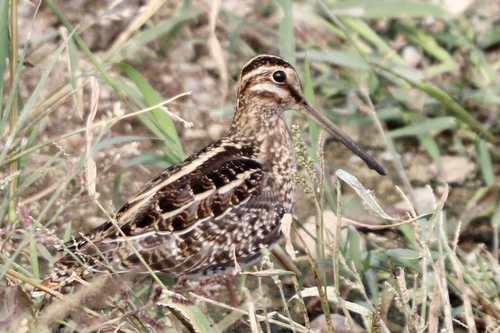
Wilson's Snipe (Gallinago delicata) Wilson's Snipe
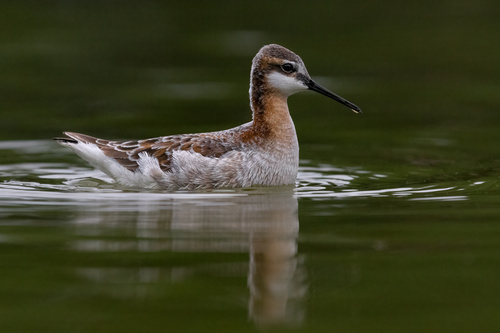
Wilson's Phalarope (Phalaropus tricolor) Wilson's Phalarope

Media

Loading…

In short

Wilson's Snipe and Wilson's Phalarope are both members of the Scolopacidae family but differ significantly in habitat preference and behavior. The snipe is a cryptic, terrestrial bird often found in marshes, while the phalarope is an aquatic bird seen swimming in open water. Key differences include their bill shape and leg color.

Identification tips

Size

Wilson's Snipe is slightly smaller and more compact than Wilson's Phalarope, which is more slender and has a longer neck.

Plumage

Wilson's Snipe has a cryptic brown and buff plumage with bold stripes and bars, ideal for camouflage in marshy habitats. In contrast, Wilson's Phalarope in breeding plumage has a striking pattern with a black stripe down the neck and chestnut scapulars, while in nonbreeding plumage it is plain pale gray above and white below.

Behaviour

Wilson's Snipe is often seen probing in mud with its long, straight bill, while Wilson's Phalarope is known for its unique spinning behavior on water to stir up food.

Habitat

Wilson's Snipe is typically found in marshes, wet meadows, and bogs. Wilson's Phalarope, however, prefers open water bodies like lakes and ponds, often seen swimming.

Voice

Wilson's Snipe has a distinctive winnowing sound produced during display flights, whereas Wilson's Phalarope is generally silent, with occasional soft calls.

Submit a better description

Use the same sections as the comparison. Your text is published immediately.

Wilson's Snipe and Wilson's Phalarope are both members of the Scolopacidae family but differ significantly in habitat preference and behavior. The snipe is a cryptic, terrestrial bird often found in marshes, while the phalarope is an aquatic bird seen swimming in open water. Key differences include their bill shape and leg color.

  • Bill Shape: Wilson's Snipe has a long, straight bill, while Wilson's Phalarope has a thin, needle-like bill.
  • Leg Color: Wilson's Phalarope has grayish to black legs, which are taller and more slender than the snipe's.
  • Plumage: Look for the snipe's cryptic plumage versus the phalarope's more colorful breeding plumage.
  • Behavior: Observe the snipe's probing behavior versus the phalarope's swimming and spinning on water.
  • Habitat: Note the snipe in marshy areas and the phalarope on open water.

Wilson's Snipe is slightly smaller and more compact than Wilson's Phalarope, which is more slender and has a longer neck.

Wilson's Snipe has a cryptic brown and buff plumage with bold stripes and bars, ideal for camouflage in marshy habitats. In contrast, Wilson's Phalarope in breeding plumage has a striking pattern with a black stripe down the neck and chestnut scapulars, while in nonbreeding plumage it is plain pale gray above and white below.

Wilson's Snipe is often seen probing in mud with its long, straight bill, while Wilson's Phalarope is known for its unique spinning behavior on water to stir up food.

Wilson's Snipe is typically found in marshes, wet meadows, and bogs. Wilson's Phalarope, however, prefers open water bodies like lakes and ponds, often seen swimming.

Wilson's Snipe has a distinctive winnowing sound produced during display flights, whereas Wilson's Phalarope is generally silent, with occasional soft calls.

Discard your changes?

You have unsaved edits. If you leave now, those changes will be lost.

Wilson's Snipe · Wilson's Phalarope · My Tricky Birds