Birdr

Winter Wren vs Marsh Wren

Troglodytes hiemalis versus Cistothorus palustris

Play a quiz with Winter Wren and Marsh Wren
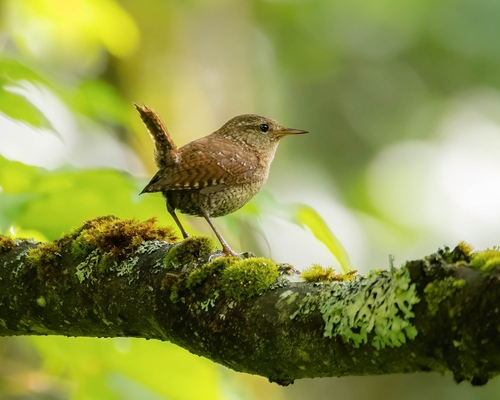
Winter Wren (Troglodytes hiemalis) Winter Wren
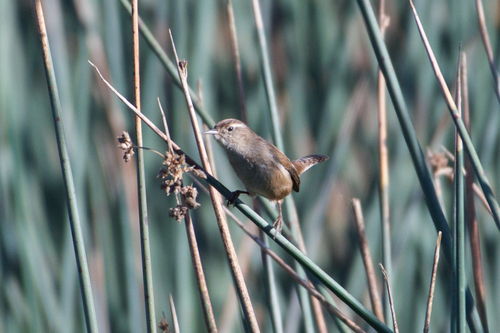
Marsh Wren (Cistothorus palustris) Marsh Wren

Media

Loading…

In short

The Winter Wren and Marsh Wren are both small, brown wrens, but they differ in habitat preference and vocal behavior. The Winter Wren is typically found in dense, mature forests, while the Marsh Wren inhabits wetlands and marshes. Their songs are distinctive, with the Winter Wren having a complex, melodious song and the Marsh Wren known for its harsh, chattering notes.

Identification tips

  1. Habitat: Check the habitat; dense forest suggests Winter Wren, while marshes indicate Marsh Wren. 2. Plumage: Look for the more uniform brown and fine barring of the Winter Wren versus the streaked back and bright supercilium of the Marsh Wren. 3. Song: Listen for the melodious song of the Winter Wren compared to the harsh, chattering notes of the Marsh Wren. 4. Behavior: Note the Marsh Wren's tendency to be more visible and aggressive in its marsh habitat.

Size

Both species are small wrens, but the Marsh Wren may appear slightly more elongated due to its longer tail.

Plumage

Winter Wrens have a more uniformly dark brown plumage with fine barring on the wings and tail, while Marsh Wrens have a more contrasting appearance with a streaked back and a brighter, more distinct supercilium.

Behaviour

Winter Wrens are often seen flitting low in dense forest undergrowth, while Marsh Wrens are more conspicuous, often seen climbing among cattails and reeds. Marsh Wrens are also known for their aggressive territorial behavior, including nest destruction.

Habitat

Winter Wrens prefer dense, mature forests with complex understory, whereas Marsh Wrens are found in wetlands, marshes, and cattail stands.

Voice

Winter Wrens have a complex, melodious song with a rapid series of trills and whistles. In contrast, Marsh Wrens produce a series of harsh, chattering notes and have a large repertoire of song types.

Submit a better description

Use the same sections as the comparison. Your text is published immediately.

The Winter Wren and Marsh Wren are both small, brown wrens, but they differ in habitat preference and vocal behavior. The Winter Wren is typically found in dense, mature forests, while the Marsh Wren inhabits wetlands and marshes. Their songs are distinctive, with the Winter Wren having a complex, melodious song and the Marsh Wren known for its harsh, chattering notes.

  1. Habitat: Check the habitat; dense forest suggests Winter Wren, while marshes indicate Marsh Wren. 2. Plumage: Look for the more uniform brown and fine barring of the Winter Wren versus the streaked back and bright supercilium of the Marsh Wren. 3. Song: Listen for the melodious song of the Winter Wren compared to the harsh, chattering notes of the Marsh Wren. 4. Behavior: Note the Marsh Wren's tendency to be more visible and aggressive in its marsh habitat.

Both species are small wrens, but the Marsh Wren may appear slightly more elongated due to its longer tail.

Winter Wrens have a more uniformly dark brown plumage with fine barring on the wings and tail, while Marsh Wrens have a more contrasting appearance with a streaked back and a brighter, more distinct supercilium.

Winter Wrens are often seen flitting low in dense forest undergrowth, while Marsh Wrens are more conspicuous, often seen climbing among cattails and reeds. Marsh Wrens are also known for their aggressive territorial behavior, including nest destruction.

Winter Wrens prefer dense, mature forests with complex understory, whereas Marsh Wrens are found in wetlands, marshes, and cattail stands.

Winter Wrens have a complex, melodious song with a rapid series of trills and whistles. In contrast, Marsh Wrens produce a series of harsh, chattering notes and have a large repertoire of song types.

Discard your changes?

You have unsaved edits. If you leave now, those changes will be lost.

Winter Wren · Marsh Wren · My Tricky Birds