Birdr

Wood Duck vs Garganey

Aix sponsa versus Spatula querquedula

Play a quiz with Wood Duck and Garganey
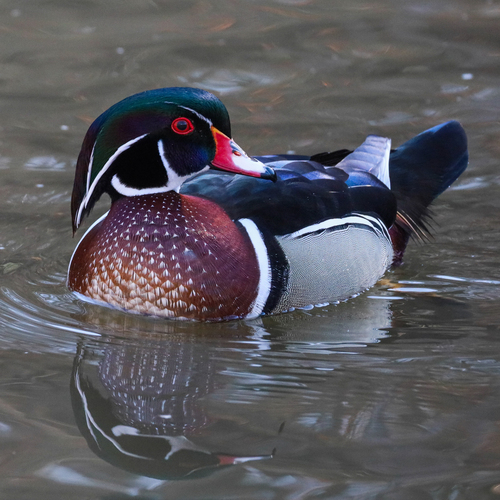
Wood Duck (Aix sponsa) Wood Duck
Garganey (Spatula querquedula) Garganey

Media

Loading…

In short

The Wood Duck and Garganey are both small, colorful ducks, but they differ significantly in plumage and habitat preferences. The Wood Duck is primarily found in wooded swamps and freshwater marshes in North America, while the Garganey is a migratory species found in Europe, Asia, and Africa, favoring shallow wetlands.

Identification tips

  1. Location and Habitat: Wood Ducks are in North America, often in wooded areas; Garganeys are migratory, found in Europe, Asia, and Africa in wetlands. 2. Male Plumage: Look for the Wood Duck's iridescent head and chestnut breast versus the Garganey's white supercilium and brown head. 3. Female Markings: Note the Wood Duck female's white eye-ring compared to the plainer Garganey female. 4. Behavior: Wood Ducks may be seen perching in trees, unlike Garganeys. 5. Calls: Listen for the Wood Duck's rising whistle and the Garganey's rattling call.

Size

Both species are small ducks, but the Wood Duck is slightly larger and more robust than the Garganey.

Plumage

The male Wood Duck is unmistakable with its iridescent green and purple head, white throat with finger-like extensions, and chestnut breast. In contrast, the male Garganey has a distinctive white supercilium and a more subdued greyish body with a brown head. Females of both species are more cryptically colored, but the Wood Duck female has a distinctive white eye-ring and a more patterned body compared to the plainer Garganey female.

Behaviour

Wood Ducks are often seen perching in trees due to their cavity-nesting habits, while Garganeys are more often found dabbling in shallow waters.

Habitat

Wood Ducks are typically found in wooded swamps and freshwater marshes in North America. Garganeys prefer shallow wetlands and are found across Europe, Asia, and Africa during migration.

Voice

The Wood Duck's call is a distinctive rising whistle, while the Garganey's call is a soft, rapid 'rattling' sound. These vocalizations are quite different and can aid in identification.

Submit a better description

Use the same sections as the comparison. Your text is published immediately.

The Wood Duck and Garganey are both small, colorful ducks, but they differ significantly in plumage and habitat preferences. The Wood Duck is primarily found in wooded swamps and freshwater marshes in North America, while the Garganey is a migratory species found in Europe, Asia, and Africa, favoring shallow wetlands.

  1. Location and Habitat: Wood Ducks are in North America, often in wooded areas; Garganeys are migratory, found in Europe, Asia, and Africa in wetlands. 2. Male Plumage: Look for the Wood Duck's iridescent head and chestnut breast versus the Garganey's white supercilium and brown head. 3. Female Markings: Note the Wood Duck female's white eye-ring compared to the plainer Garganey female. 4. Behavior: Wood Ducks may be seen perching in trees, unlike Garganeys. 5. Calls: Listen for the Wood Duck's rising whistle and the Garganey's rattling call.

Both species are small ducks, but the Wood Duck is slightly larger and more robust than the Garganey.

The male Wood Duck is unmistakable with its iridescent green and purple head, white throat with finger-like extensions, and chestnut breast. In contrast, the male Garganey has a distinctive white supercilium and a more subdued greyish body with a brown head. Females of both species are more cryptically colored, but the Wood Duck female has a distinctive white eye-ring and a more patterned body compared to the plainer Garganey female.

Wood Ducks are often seen perching in trees due to their cavity-nesting habits, while Garganeys are more often found dabbling in shallow waters.

Wood Ducks are typically found in wooded swamps and freshwater marshes in North America. Garganeys prefer shallow wetlands and are found across Europe, Asia, and Africa during migration.

The Wood Duck's call is a distinctive rising whistle, while the Garganey's call is a soft, rapid 'rattling' sound. These vocalizations are quite different and can aid in identification.

Discard your changes?

You have unsaved edits. If you leave now, those changes will be lost.

Wood Duck · Garganey · My Tricky Birds