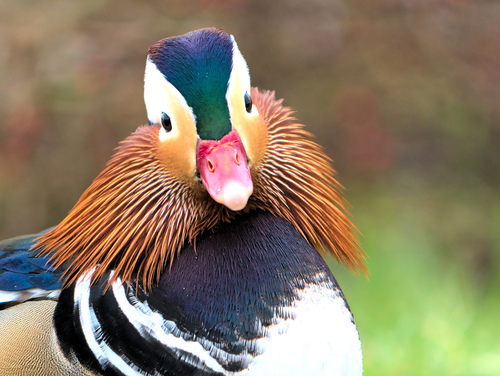
Wood Duck vs Mandarin Duck
Aix sponsa versus Aix galericulata
Play a quiz with Wood Duck and Mandarin Duck
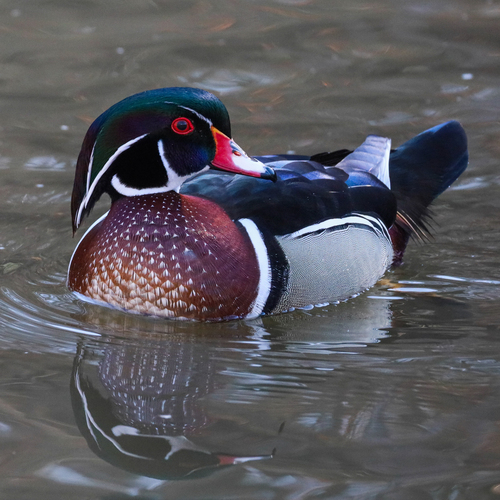
Wood Duck
Mandarin Duck
In short
The Wood Duck and Mandarin Duck are both strikingly colorful, medium-sized ducks often found in wooded wetlands. The most reliable field mark is the male's plumage: Wood Ducks have a distinctive iridescent green head with white stripes, while Mandarin Ducks have a more ornate crest and a unique orange 'sail' on the back. Females are more similar, but the Mandarin female has a more prominent white eye-ring and stripe.
Identification tips
Males in breeding plumage: Look for the Wood Duck's iridescent green head and white stripes versus the Mandarin's ornate crest and orange 'sail'. Females: Note the more pronounced white eye-ring and stripe of the Mandarin. Behavior: Observe group size and social behavior; Mandarins are often in pairs. Habitat: Consider geographic location; Wood Ducks are native to North America, Mandarins to East Asia.
Size
Both species are similar in size, with the Mandarin Duck being slightly smaller.
Plumage
Male Wood Ducks have a glossy green head with white facial stripes and a chestnut breast, while male Mandarin Ducks have a more elaborate crest, orange 'sail' feathers on the back, and a white face with a red bill. Female Wood Ducks are gray-brown with a white teardrop around the eye, whereas female Mandarins have a more pronounced white eye-ring and stripe.
Behaviour
Both species are cavity nesters and can be seen perching in trees, but Mandarins are more often seen in pairs or small groups, while Wood Ducks are more solitary or in small family groups.
Habitat
Both species favor wooded wetlands, but Wood Ducks are more common in North America, while Mandarin Ducks are native to East Asia and often found in park ponds in Europe.
Voice
Wood Ducks have a distinctive rising whistle, while Mandarin Ducks produce softer, more subdued calls.