Birdr

Wood Duck vs Maned Duck

Aix sponsa versus Chenonetta jubata

Play a quiz with Wood Duck and Maned Duck
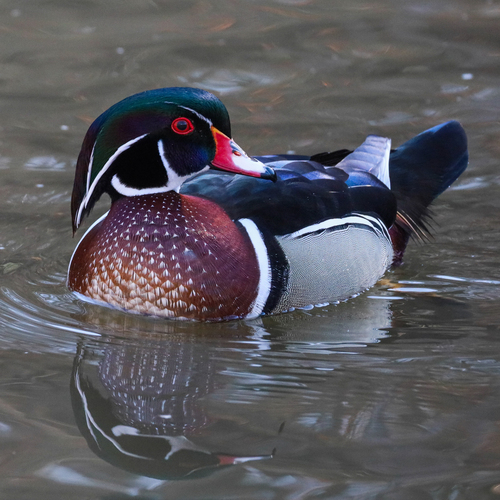
Wood Duck (Aix sponsa) Wood Duck
Maned Duck (Chenonetta jubata) Maned Duck

Media

Loading…

In short

The Wood Duck and Maned Duck are both part of the Anatidae family but differ significantly in appearance and habitat preferences. The Wood Duck is more colorful and prefers wooded swamps, while the Maned Duck is more subdued in color and is often found in open grasslands and wetlands.

Identification tips

1. Look for the Wood Duck's iridescent head and white throat markings in males, and the white eye-ring in females. 2. Note the Maned Duck's white face and dark mane-like stripe in males. 3. Observe habitat: Wood Ducks in wooded areas, Maned Ducks in open grasslands. 4. Listen for vocalizations: Wood Duck's squeal vs. Maned Duck's whistle.

Size

Both species are medium-sized ducks, but the Wood Duck is slightly more compact with a shorter neck compared to the more elongated appearance of the Maned Duck.

Plumage

The male Wood Duck is highly distinctive with its iridescent green and purple head, white throat with finger-like extensions, and chestnut breast. The female is more muted with a gray-brown body and white eye-ring. The Maned Duck, in contrast, has a more uniform gray-brown plumage with a distinctive white face and dark mane-like stripe on the male, while the female is plainer with a speckled face.

Behaviour

Wood Ducks are often seen perching in trees or flying through wooded areas, while Maned Ducks are more likely to be found grazing on land or swimming in open water.

Habitat

Wood Ducks prefer wooded swamps and freshwater marshes, often nesting in tree cavities. Maned Ducks are typically found in open grasslands, wetlands, and occasionally in urban parks.

Voice

Wood Ducks have a distinctive rising squeal, while Maned Ducks produce a more subdued, soft whistle.

Submit a better description

Use the same sections as the comparison. Your text is published immediately.

The Wood Duck and Maned Duck are both part of the Anatidae family but differ significantly in appearance and habitat preferences. The Wood Duck is more colorful and prefers wooded swamps, while the Maned Duck is more subdued in color and is often found in open grasslands and wetlands.

1. Look for the Wood Duck's iridescent head and white throat markings in males, and the white eye-ring in females. 2. Note the Maned Duck's white face and dark mane-like stripe in males. 3. Observe habitat: Wood Ducks in wooded areas, Maned Ducks in open grasslands. 4. Listen for vocalizations: Wood Duck's squeal vs. Maned Duck's whistle.

Both species are medium-sized ducks, but the Wood Duck is slightly more compact with a shorter neck compared to the more elongated appearance of the Maned Duck.

The male Wood Duck is highly distinctive with its iridescent green and purple head, white throat with finger-like extensions, and chestnut breast. The female is more muted with a gray-brown body and white eye-ring. The Maned Duck, in contrast, has a more uniform gray-brown plumage with a distinctive white face and dark mane-like stripe on the male, while the female is plainer with a speckled face.

Wood Ducks are often seen perching in trees or flying through wooded areas, while Maned Ducks are more likely to be found grazing on land or swimming in open water.

Wood Ducks prefer wooded swamps and freshwater marshes, often nesting in tree cavities. Maned Ducks are typically found in open grasslands, wetlands, and occasionally in urban parks.

Wood Ducks have a distinctive rising squeal, while Maned Ducks produce a more subdued, soft whistle.

Discard your changes?

You have unsaved edits. If you leave now, those changes will be lost.

Wood Duck · Maned Duck · My Tricky Birds