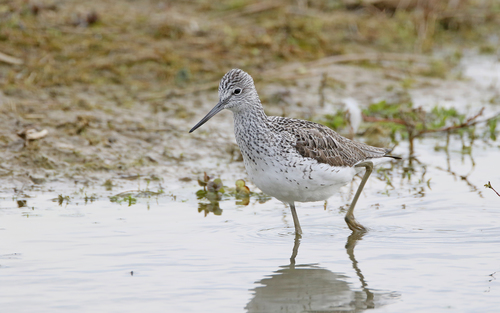
Wood Sandpiper vs Common Greenshank
Tringa glareola versus Tringa nebularia
Play a quiz with Wood Sandpiper and Common Greenshank
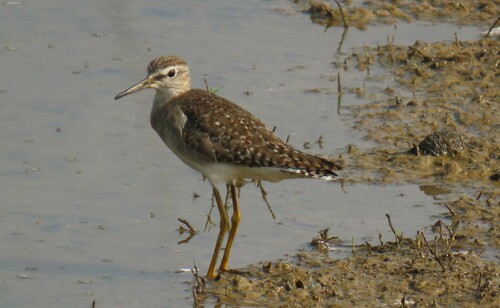
Wood Sandpiper
Common Greenshank
In short
The Wood Sandpiper and Common Greenshank can be distinguished by size and bill shape. The Greenshank is larger with a longer, slightly upturned bill, while the Wood Sandpiper is smaller with a straight, slender bill. Both species have similar plumage patterns but differ in size and structure.
Identification tips
- Size and Structure: Look for the larger size and longer, slightly upturned bill of the Greenshank. 2. Bill Shape: The Wood Sandpiper has a straight, slender bill. 3. Supercilium: The Wood Sandpiper shows a more pronounced white supercilium. 4. Leg Length: The Greenshank's longer legs allow it to wade deeper. 5. Vocalization: Listen for the high-pitched call of the Wood Sandpiper versus the melodious call of the Greenshank.
Size
The Common Greenshank is noticeably larger than the Wood Sandpiper.
Plumage
Both species have mottled brown upperparts and paler underparts, but the Wood Sandpiper has a more pronounced white supercilium and finer streaking on the breast.
Behaviour
Both species forage in shallow water, but the Greenshank often wades deeper due to its longer legs.
Habitat
Both species are found in wetlands, but the Wood Sandpiper is more likely to be seen in freshwater marshes, while the Greenshank can also be found in coastal areas.
Voice
The Wood Sandpiper has a high-pitched, rapid call, while the Greenshank's call is more melodious and ringing.