
Birdr

Wood Sandpiper vs Common Redshank

Tringa glareola versus Tringa totanus

Play a quiz with Wood Sandpiper and Common Redshank
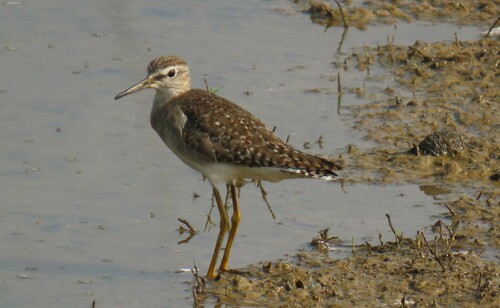
Wood Sandpiper (Tringa glareola) Wood Sandpiper
Common Redshank (Tringa totanus) Common Redshank

Media

Loading…

In short

The Wood Sandpiper and Common Redshank are both waders but can be distinguished by size and leg color. The Common Redshank is larger with striking red legs, while the Wood Sandpiper is smaller with greenish legs.

Identification tips

  1. Leg color: Common Redshank has bright red legs; Wood Sandpiper has greenish legs. 2. Size: Common Redshank is larger and bulkier. 3. Supercilium: Wood Sandpiper has a more pronounced white supercilium. 4. Habitat: Check for habitat preference; Wood Sandpipers are more likely in freshwater areas. 5. Call: Listen for the Redshank's loud 'tew-tew-tew' versus the Wood Sandpiper's softer call.

Size

The Common Redshank is larger and more robust compared to the more delicate and smaller Wood Sandpiper.

Plumage

Wood Sandpipers have a more intricate pattern on their back with a prominent white supercilium, whereas Common Redshanks have a plainer back and less pronounced supercilium.

Behaviour

Both species forage in shallow waters, but the Common Redshank often wades deeper and is more likely to be seen in open mudflats.

Habitat

Wood Sandpipers prefer freshwater wetlands and marshes, while Common Redshanks are more often found in coastal mudflats and estuaries.

Voice

The Common Redshank has a loud, distinctive 'tew-tew-tew' call, while the Wood Sandpiper's call is softer and more musical.

Submit a better description

Use the same sections as the comparison. Your text is published immediately.

The Wood Sandpiper and Common Redshank are both waders but can be distinguished by size and leg color. The Common Redshank is larger with striking red legs, while the Wood Sandpiper is smaller with greenish legs.

  1. Leg color: Common Redshank has bright red legs; Wood Sandpiper has greenish legs. 2. Size: Common Redshank is larger and bulkier. 3. Supercilium: Wood Sandpiper has a more pronounced white supercilium. 4. Habitat: Check for habitat preference; Wood Sandpipers are more likely in freshwater areas. 5. Call: Listen for the Redshank's loud 'tew-tew-tew' versus the Wood Sandpiper's softer call.

The Common Redshank is larger and more robust compared to the more delicate and smaller Wood Sandpiper.

Wood Sandpipers have a more intricate pattern on their back with a prominent white supercilium, whereas Common Redshanks have a plainer back and less pronounced supercilium.

Both species forage in shallow waters, but the Common Redshank often wades deeper and is more likely to be seen in open mudflats.

Wood Sandpipers prefer freshwater wetlands and marshes, while Common Redshanks are more often found in coastal mudflats and estuaries.

The Common Redshank has a loud, distinctive 'tew-tew-tew' call, while the Wood Sandpiper's call is softer and more musical.

Discard your changes?

You have unsaved edits. If you leave now, those changes will be lost.

Wood Sandpiper · Common Redshank · My Tricky Birds