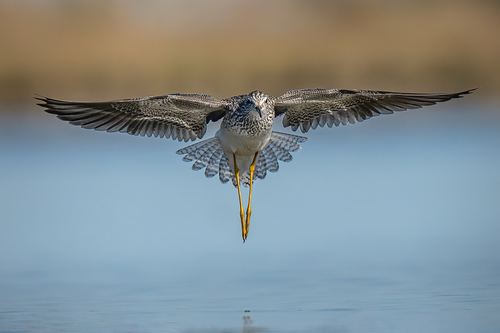
Wood Sandpiper vs Lesser Yellowlegs
Tringa glareola versus Tringa flavipes
Play a quiz with Wood Sandpiper and Lesser Yellowlegs
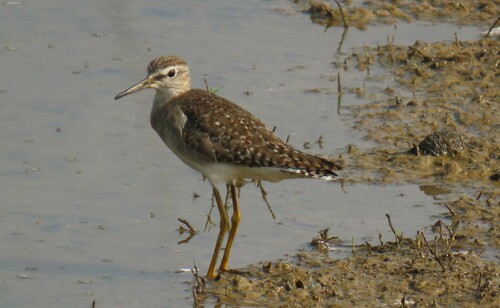
Wood Sandpiper
Lesser Yellowlegs
In short
The Wood Sandpiper and Lesser Yellowlegs are both medium-sized shorebirds, but they can be distinguished by leg color and overall size. The Wood Sandpiper has greenish legs and is generally smaller, while the Lesser Yellowlegs has bright yellow legs and is larger.
Identification tips
- Leg Color: Wood Sandpiper has greenish legs; Lesser Yellowlegs has bright yellow legs.
- Size: Wood Sandpiper is smaller.
- Supercilium: More distinct in Wood Sandpiper.
- Call: Lesser Yellowlegs has a sharper call.
- Habitat: Consider geographic location; Wood Sandpiper is more Eurasian, Lesser Yellowlegs is North American.
Size
The Wood Sandpiper is smaller than the Lesser Yellowlegs. The Lesser Yellowlegs is more similar in size to the Greater Yellowlegs, though smaller.
Plumage
Both species have mottled brown upperparts and lighter underparts, but the Wood Sandpiper often shows a more distinct supercilium (eyebrow) and less streaking on the breast compared to the Lesser Yellowlegs.
Behaviour
Both species are active foragers, but the Lesser Yellowlegs often travels in small, loosely structured flocks, while the Wood Sandpiper is more solitary or found in smaller groups.
Habitat
The Wood Sandpiper is typically found in freshwater wetlands and marshes, often in Europe and Asia, while the Lesser Yellowlegs is common in North American wetlands, especially during migration.
Voice
The Lesser Yellowlegs has a distinctive, sharp call often described as 'tu-tu-tu', whereas the Wood Sandpiper's call is softer and less piercing.