Birdr

Wood Snipe vs Pin-tailed Snipe

Gallinago nemoricola versus Gallinago stenura

Play a quiz with Wood Snipe and Pin-tailed Snipe
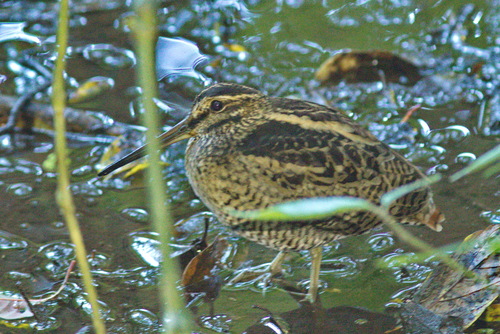
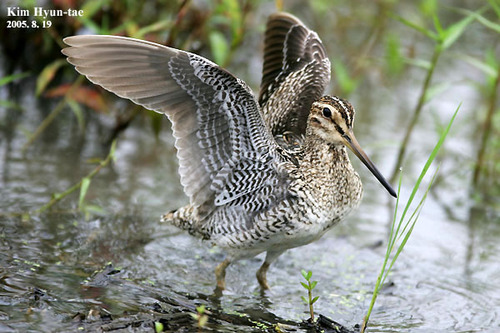
Wood Snipe (Gallinago nemoricola) Wood Snipe
Pin-tailed Snipe (Gallinago stenura) Pin-tailed Snipe

Media

Loading…

In short

The tail shape is the most reliable field mark: the Wood Snipe has a more rounded tail, while the Pin-tailed Snipe has a distinctive pin-like tail with central feathers extending beyond the others. Both species have similar plumage patterns, making structural differences crucial for identification.

Identification tips

Size

Both species are similar in size, typical of snipes, with no significant size difference to aid in identification.

Plumage

Both have cryptic brown plumage with intricate patterns, making them hard to distinguish by color alone. The Wood Snipe may appear slightly darker overall.

Behaviour

Both species exhibit typical snipe behavior, such as skulking in vegetation and flushing when approached closely.

Habitat

Wood Snipes prefer montane forests and grassy clearings, while Pin-tailed Snipes are often found in wet grasslands and marshes, especially during migration.

Voice

Vocalizations are not the most reliable field marks, but the Wood Snipe's calls are generally less frequent and less well-documented than the Pin-tailed Snipe's, which may give a distinctive 'chip' call when flushed.

Submit a better description

Use the same sections as the comparison. Your text is published immediately.

The tail shape is the most reliable field mark: the Wood Snipe has a more rounded tail, while the Pin-tailed Snipe has a distinctive pin-like tail with central feathers extending beyond the others. Both species have similar plumage patterns, making structural differences crucial for identification.

  • Tail shape: Look for the rounded tail of the Wood Snipe versus the pin-like tail of the Pin-tailed Snipe.
  • Habitat: Consider the habitat; Wood Snipes are more likely in montane forests, while Pin-tailed Snipes prefer wet grasslands.
  • Behavior: Observe the behavior; both species flush easily, but the Pin-tailed Snipe may give a 'chip' call when flushed.
  • Plumage: Note the overall darker appearance of the Wood Snipe, though this can be subtle.

Both species are similar in size, typical of snipes, with no significant size difference to aid in identification.

Both have cryptic brown plumage with intricate patterns, making them hard to distinguish by color alone. The Wood Snipe may appear slightly darker overall.

Both species exhibit typical snipe behavior, such as skulking in vegetation and flushing when approached closely.

Wood Snipes prefer montane forests and grassy clearings, while Pin-tailed Snipes are often found in wet grasslands and marshes, especially during migration.

Vocalizations are not the most reliable field marks, but the Wood Snipe's calls are generally less frequent and less well-documented than the Pin-tailed Snipe's, which may give a distinctive 'chip' call when flushed.

Discard your changes?

You have unsaved edits. If you leave now, those changes will be lost.

Wood Snipe · Pin-tailed Snipe · My Tricky Birds