Birdr

Wood Thrush vs Aztec Thrush

Hylocichla mustelina versus Ridgwayia pinicola

Play a quiz with Wood Thrush and Aztec Thrush
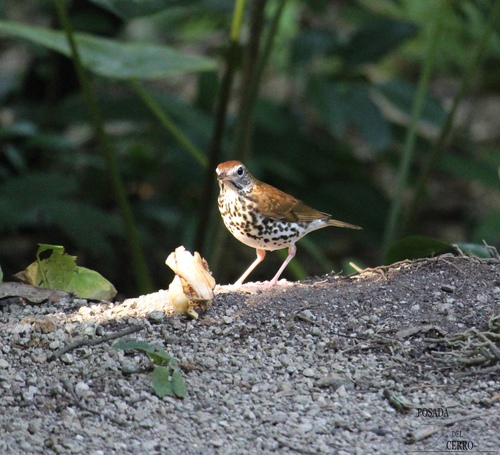
Wood Thrush (Hylocichla mustelina) Wood Thrush
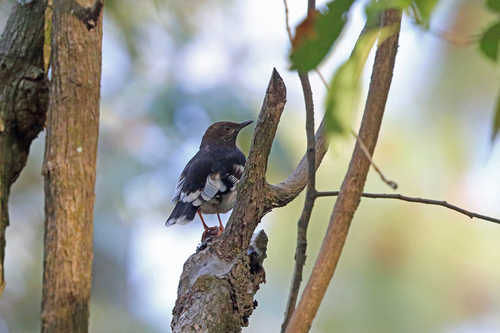
Aztec Thrush (Ridgwayia pinicola) Aztec Thrush

Media

Loading…

In short

The Wood Thrush and Aztec Thrush can be differentiated by their plumage and habitat preferences. The Wood Thrush is known for its distinctive reddish-brown upperparts and spotted breast, while the Aztec Thrush has a striking black and white plumage. Habitat also plays a key role, with the Wood Thrush favoring eastern deciduous forests and the Aztec Thrush being found in montane forests of Mexico.

Identification tips

  1. Look for the reddish-brown upperparts and spotted breast of the Wood Thrush. 2. Note the black and white plumage of the Aztec Thrush. 3. Consider the habitat: Wood Thrushes in eastern U.S. forests, Aztec Thrushes in Mexican montane forests. 4. Listen for the Wood Thrush's distinctive song during dawn and dusk.

Size

Both species are similar in size, typical of medium-sized thrushes, but the Wood Thrush may appear slightly bulkier.

Plumage

The Wood Thrush has reddish-brown upperparts and a white underbelly with bold black spots. In contrast, the Aztec Thrush displays a black and white plumage, with a black head, back, and wings, and a white belly.

Behaviour

Wood Thrushes are often seen foraging on the forest floor, while Aztec Thrushes may be observed feeding in the canopy or on fruiting trees.

Habitat

Wood Thrushes inhabit eastern deciduous forests in the U.S., while Aztec Thrushes are found in montane forests of Mexico, often at higher elevations.

Voice

The Wood Thrush is renowned for its flutelike, ethereal song, often heard at dawn and dusk. The Aztec Thrush's vocalizations are less documented but are not noted for the same musical quality.

Submit a better description

Use the same sections as the comparison. Your text is published immediately.

The Wood Thrush and Aztec Thrush can be differentiated by their plumage and habitat preferences. The Wood Thrush is known for its distinctive reddish-brown upperparts and spotted breast, while the Aztec Thrush has a striking black and white plumage. Habitat also plays a key role, with the Wood Thrush favoring eastern deciduous forests and the Aztec Thrush being found in montane forests of Mexico.

  1. Look for the reddish-brown upperparts and spotted breast of the Wood Thrush. 2. Note the black and white plumage of the Aztec Thrush. 3. Consider the habitat: Wood Thrushes in eastern U.S. forests, Aztec Thrushes in Mexican montane forests. 4. Listen for the Wood Thrush's distinctive song during dawn and dusk.

Both species are similar in size, typical of medium-sized thrushes, but the Wood Thrush may appear slightly bulkier.

The Wood Thrush has reddish-brown upperparts and a white underbelly with bold black spots. In contrast, the Aztec Thrush displays a black and white plumage, with a black head, back, and wings, and a white belly.

Wood Thrushes are often seen foraging on the forest floor, while Aztec Thrushes may be observed feeding in the canopy or on fruiting trees.

Wood Thrushes inhabit eastern deciduous forests in the U.S., while Aztec Thrushes are found in montane forests of Mexico, often at higher elevations.

The Wood Thrush is renowned for its flutelike, ethereal song, often heard at dawn and dusk. The Aztec Thrush's vocalizations are less documented but are not noted for the same musical quality.

Discard your changes?

You have unsaved edits. If you leave now, those changes will be lost.

Wood Thrush · Aztec Thrush · My Tricky Birds