Birdr

Wood Warbler vs Common Chiffchaff

Phylloscopus sibilatrix versus Phylloscopus collybita

Play a quiz with Wood Warbler and Common Chiffchaff
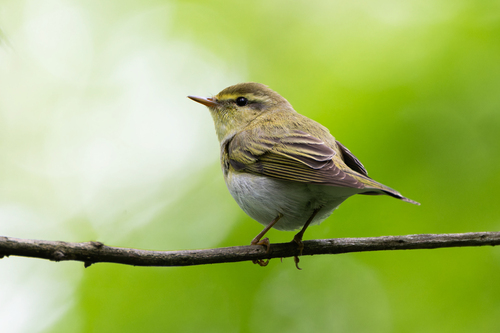
Wood Warbler (Phylloscopus sibilatrix) Wood Warbler
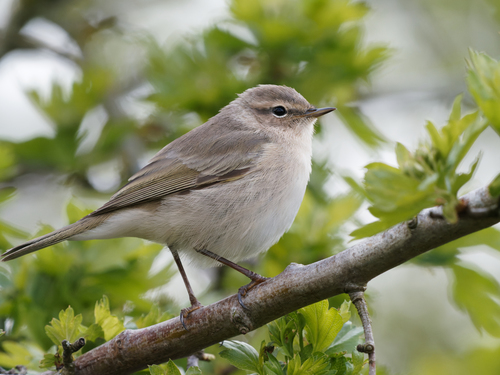
Common Chiffchaff (Phylloscopus collybita) Common Chiffchaff

Media

Loading…

In short

The Wood Warbler and Common Chiffchaff are both small leaf warblers, but they can be distinguished by their plumage and vocalizations. The Wood Warbler is more vibrant with a striking yellow throat and white underparts, while the Common Chiffchaff is duller with more uniform brownish-olive tones. Their songs are also distinct, with the Wood Warbler having a trilling song and the Common Chiffchaff producing a repetitive 'chiff-chaff' call.

Identification tips

Size

Both species are similar in size, but the Wood Warbler appears slightly larger and more robust compared to the Common Chiffchaff.

Plumage

The Wood Warbler has a bright yellow throat and chest with contrasting white underparts, and a greenish back. The Common Chiffchaff is more uniformly brownish-olive with a less distinct supercilium and lacks the bright yellow of the Wood Warbler.

Behaviour

Both species are active foragers, often seen flitting through foliage, but the Wood Warbler tends to be more conspicuous due to its brighter plumage.

Habitat

The Wood Warbler prefers deciduous woodlands with a well-developed understory, while the Common Chiffchaff is more adaptable, found in a variety of habitats including gardens and scrublands.

Voice

The Wood Warbler's song is a distinctive, accelerating trill, while the Common Chiffchaff's song is a repetitive 'chiff-chaff' sound. These vocal differences are often the most reliable way to distinguish them in the field.

Submit a better description

Use the same sections as the comparison. Your text is published immediately.

The Wood Warbler and Common Chiffchaff are both small leaf warblers, but they can be distinguished by their plumage and vocalizations. The Wood Warbler is more vibrant with a striking yellow throat and white underparts, while the Common Chiffchaff is duller with more uniform brownish-olive tones. Their songs are also distinct, with the Wood Warbler having a trilling song and the Common Chiffchaff producing a repetitive 'chiff-chaff' call.

  • Plumage: Look for the Wood Warbler's bright yellow throat and white underparts versus the Chiffchaff's duller, more uniform coloration.
  • Song: Listen for the Wood Warbler's trilling song compared to the Chiffchaff's 'chiff-chaff' call.
  • Habitat: Consider the habitat; Wood Warblers are more likely in deciduous woodlands, while Chiffchaffs can be found in a wider range of environments.

Both species are similar in size, but the Wood Warbler appears slightly larger and more robust compared to the Common Chiffchaff.

The Wood Warbler has a bright yellow throat and chest with contrasting white underparts, and a greenish back. The Common Chiffchaff is more uniformly brownish-olive with a less distinct supercilium and lacks the bright yellow of the Wood Warbler.

Both species are active foragers, often seen flitting through foliage, but the Wood Warbler tends to be more conspicuous due to its brighter plumage.

The Wood Warbler prefers deciduous woodlands with a well-developed understory, while the Common Chiffchaff is more adaptable, found in a variety of habitats including gardens and scrublands.

The Wood Warbler's song is a distinctive, accelerating trill, while the Common Chiffchaff's song is a repetitive 'chiff-chaff' sound. These vocal differences are often the most reliable way to distinguish them in the field.

Discard your changes?

You have unsaved edits. If you leave now, those changes will be lost.

Wood Warbler · Common Chiffchaff · My Tricky Birds