
Yelkouan Shearwater vs Balearic Shearwater
Puffinus yelkouan versus Puffinus mauretanicus
Play a quiz with Yelkouan Shearwater and Balearic Shearwater
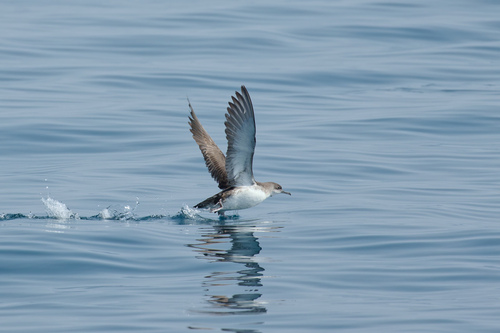 Yelkouan Shearwater
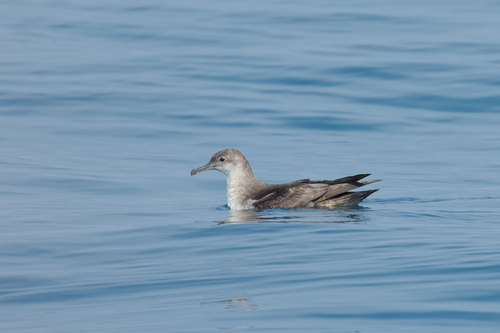 Balearic Shearwater
In short
The most reliable field mark between Yelkouan and Balearic Shearwaters is the contrast in their underparts: Yelkouan shows a cleaner, more sharply defined white underside, while Balearic appears dingier and less contrasting, with brownish or dirty tones below. Both species are medium-sized shearwaters with similar flight styles, and their ranges overlap in the Mediterranean, making them challenging to separate—especially at a distance or in poor light. No age-specific wing pattern or juvenile mark is noted as diagnostic between these two, so focus on overall plumage contrast and subtle differences in coloration. Structure and flight jizz are very similar, so field separation relies almost entirely on careful scrutiny of plumage tones and contrast.
Identification tips
- Underpart contrast is the best field mark: Yelkouan Shearwater shows a much cleaner, brighter white underside, sharply divided from the dark upperparts. Balearic Shearwater's underparts are dingier, often appearing brownish or dirty white, with a less distinct boundary from the upperparts.
- Upperpart color: Both are dark brown above, but Yelkouan may appear slightly darker and more uniform, while Balearic can look a bit paler or more washed out, especially in worn plumage.
- Face and neck: Yelkouan's face and neck are often cleaner and less smudged than Balearic, which may show a duskier or more blended look around the throat and sides of the head.
- Flank and vent shading: Balearic often shows brownish or dirty shading along the flanks and vent, further reducing the contrast with the belly. Yelkouan's flanks and vent are usually whiter and cleaner.
- Flight appearance ('flying cross'): Both species display the classic cross shape in flight, but Yelkouan's white underparts flash more distinctly as the bird banks, while Balearic's underside is less striking.
- No diagnostic age-specific wing pattern: Unlike some Puffinus species, neither Yelkouan nor Balearic has a unique juvenile or immature upperwing mark that separates them in flight. Focus on overall tone and contrast for all ages.
- Size is not reliable in the field: The slight difference in length and wingspan is not apparent unless birds are side by side, so do not rely on size alone.
- Bill and structure: Both have similar proportions and bill shapes; these are not useful for separation in the field.
- Mixed flocks and range overlap: Be aware that both species can occur together, especially in winter and around the Balearics and central Mediterranean. Mixed breeding colonies exist, so context is not always helpful.
- Lighting pitfalls: Poor light or distance can obscure the underpart contrast, making Balearic look cleaner or Yelkouan duller than they really are. Always try to assess birds in good light and from multiple angles.
- Do not rely on voice: No distinctive vocal differences are noted for field separation.
- Molecular and morphological overlap: Scientific studies suggest these species are extremely closely related, and some individuals may be impossible to separate without DNA or detailed measurements. Accept that some birds will remain unidentified.
- Summary for field use: Prioritize underpart contrast and overall cleanliness of the plumage. If the bird looks very white and sharply divided below, favor Yelkouan; if it looks brownish or dirty below with less contrast, favor Balearic.
Size
Yelkouan Shearwater is slightly smaller, measuring 30–35 cm in length with a wingspan of 70–84 cm. Balearic Shearwater is marginally larger at 34–39 cm long and a wingspan of 78–90 cm. In field conditions, this size difference is subtle and rarely diagnostic unless birds are side by side. Both are medium-sized for the genus and overlap considerably in apparent size.
Plumage
For all ages, the key difference is the underpart contrast: Yelkouan Shearwater has a more striking division between its dark brown upperparts and clean white underparts, giving a crisp, high-contrast look in flight and at rest. Balearic Shearwater, by contrast, is brown above and dirty white or brownish below, resulting in a more muted, less sharply defined appearance. This difference is consistent across ages and seasons, as no distinctive juvenile or immature wing pattern is described for either species. Both show the typical 'flying cross' pattern of the genus, but Yelkouan's white underparts stand out more, while Balearic's look smudgier and less clean. In mixed flocks or poor light, this distinction can be subtle, but in good light, Yelkouan should look noticeably cleaner underneath.
Behaviour
Both species display the classic 'shearing' flight of Puffinus shearwaters, gliding low over the water with stiff, slightly arched wings and few wingbeats, often dipping from side to side. Their flight jizz is nearly identical, and both can be seen traveling in loose flocks or singly over open water. Perched or on the water, they are similarly shaped and behave alike, so behavior is not a reliable separator.
Habitat
Both species are pelagic and overlap in the central Mediterranean, especially in winter. They may occur together in mixed flocks, particularly off the Balearic Islands and central Mediterranean coasts. There is at least one known mixed breeding colony (Menorca). Habitat and context alone will not reliably separate them, though Balearic is more strictly tied to the Balearic Islands for breeding.