Birdr

Yellow-bellied Sapsucker vs Pyrrhuloxia

Sphyrapicus varius versus Cardinalis sinuatus

Play a quiz with Yellow-bellied Sapsucker and Pyrrhuloxia
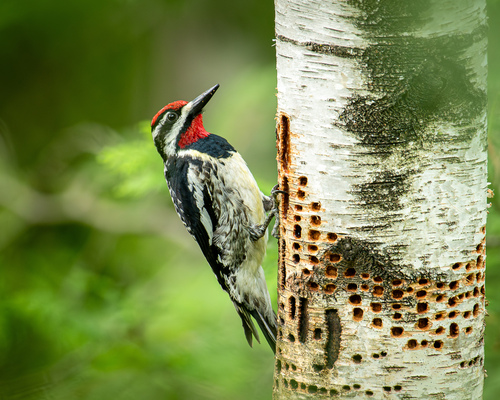
Yellow-bellied Sapsucker (Sphyrapicus varius) Yellow-bellied Sapsucker
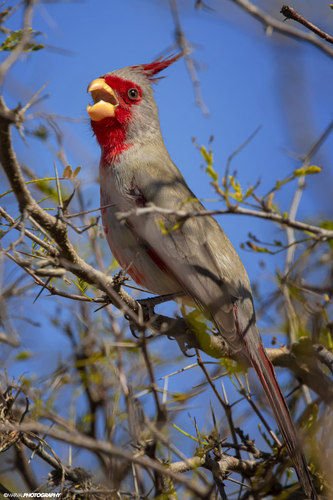
Pyrrhuloxia (Cardinalis sinuatus) Pyrrhuloxia

Media

Loading…

In short

The Yellow-bellied Sapsucker and Pyrrhuloxia are distinct in both appearance and habitat. The sapsucker is a woodpecker with a preference for forested areas, while the Pyrrhuloxia is a desert-dwelling songbird. Key differences include bill shape and plumage coloration.

Identification tips

Size

The Yellow-bellied Sapsucker is a medium-sized woodpecker, while the Pyrrhuloxia is similar in size to a Northern Cardinal, slightly smaller than the sapsucker.

Plumage

The Yellow-bellied Sapsucker has a distinctive black and white pattern with a red crown and throat (in males), and a yellowish belly. The Pyrrhuloxia has a gray body with a red face mask, crest, and chest, resembling a Northern Cardinal but with more muted colors.

Behaviour

Yellow-bellied Sapsuckers are known for drilling sap wells in trees, while Pyrrhuloxias forage for seeds and insects, often in flocks during non-breeding seasons.

Habitat

Yellow-bellied Sapsuckers inhabit forested areas, particularly those with aspen or birch trees. Pyrrhuloxias are found in open desert scrub in the southwestern United States and northern Mexico.

Voice

The Yellow-bellied Sapsucker has a drumming sound typical of woodpeckers, while the Pyrrhuloxia's song is similar to that of the Northern Cardinal, with clear whistled notes.

Submit a better description

Use the same sections as the comparison. Your text is published immediately.

The Yellow-bellied Sapsucker and Pyrrhuloxia are distinct in both appearance and habitat. The sapsucker is a woodpecker with a preference for forested areas, while the Pyrrhuloxia is a desert-dwelling songbird. Key differences include bill shape and plumage coloration.

  • Bill shape: Yellow-bellied Sapsucker has a straight, chisel-like bill, while Pyrrhuloxia has a thick, curved bill.
  • Plumage: Look for the red crown and throat on the sapsucker versus the red face and crest on the Pyrrhuloxia.
  • Habitat: Consider the environment; forested areas suggest a sapsucker, while desert scrub indicates a Pyrrhuloxia.
  • Behavior: Observe feeding habits; sap wells suggest a sapsucker, while seed foraging in flocks suggests a Pyrrhuloxia.

The Yellow-bellied Sapsucker is a medium-sized woodpecker, while the Pyrrhuloxia is similar in size to a Northern Cardinal, slightly smaller than the sapsucker.

The Yellow-bellied Sapsucker has a distinctive black and white pattern with a red crown and throat (in males), and a yellowish belly. The Pyrrhuloxia has a gray body with a red face mask, crest, and chest, resembling a Northern Cardinal but with more muted colors.

Yellow-bellied Sapsuckers are known for drilling sap wells in trees, while Pyrrhuloxias forage for seeds and insects, often in flocks during non-breeding seasons.

Yellow-bellied Sapsuckers inhabit forested areas, particularly those with aspen or birch trees. Pyrrhuloxias are found in open desert scrub in the southwestern United States and northern Mexico.

The Yellow-bellied Sapsucker has a drumming sound typical of woodpeckers, while the Pyrrhuloxia's song is similar to that of the Northern Cardinal, with clear whistled notes.

Discard your changes?

You have unsaved edits. If you leave now, those changes will be lost.

Yellow-bellied Sapsucker · Pyrrhuloxia · My Tricky Birds